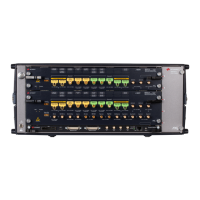
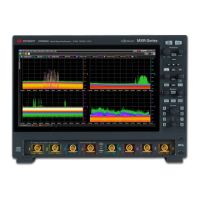
The Keysight M8000 Series BER Test Solutions are a comprehensive suite of high-performance Bit Error Ratio Testers (BERTs) designed for various testing applications. The series includes the M8020A High-Performance BERT, the M8040A High-Performance BERT 64 GBd, and the M8050A High-Performance BERT 120 GBd, catering to different speed and performance requirements. These BERTs are supported by a range of modules, including M8041A, M8009A & M8042A, M8043A, M8045A, M8046A, M8051A, M8052A, M8053A, M8054A, M8057A/B, M8058A, M8059A, M8062A, and M8067A, allowing for flexible configurations and expanded testing capabilities.
Function Description
The M8000 Series BERTs are primarily used for characterizing and validating high-speed digital interfaces and components by measuring their bit error rate. This involves generating precise test patterns and analyzing the received data for errors, providing critical insights into the performance and reliability of the device under test (DUT). The various modules enable specialized functions such as interference generation (M8053A) and different data rates (e.g., 64 GBd and 120 GBd for M8040A and M8050A, respectively), making the system adaptable to a wide array of testing scenarios in fields like data communications, computing, and consumer electronics. The system is designed to identify and quantify errors, helping engineers to optimize designs and ensure compliance with industry standards.
Important Technical Specifications
The M8000 Series offers high-performance BERT capabilities with specific data rates:
- M8020A: High-Performance BERT (general purpose).
- M8040A: High-Performance BERT with a data rate of 64 GBd.
- M8050A: High-Performance BERT with a data rate of 120 GBd.
The system supports various connector types, each with specific torque requirements for proper connection:
- Precision 3.5 mm: 8 lb-in (0.90 Nm) using Torque Wrench 8710-1765. A torque of 5 lb-in (0.57 Nm) with Torque Wrench 8710-1582 will not cause damage.
- SMA: 5 lb-in (0.57 Nm) using Torque Wrench 8710-1582. When connecting male SMA to female precision 3.5 mm, use SMA torque value. When connecting male 3.5 mm to female SMA, use 3.5 mm torque value (8 lb-in).
- 2.92 mm (no dielectrics): 8 lb-in (0.90 Nm) using Torque Wrench 8710-1765. A torque of 5 lb-in (0.57 Nm) with Torque Wrench 8710-1582 will not cause damage.
- Precision 2.4 mm: 8 lb-in (0.90 Nm) using Torque Wrench 8710-1765.
- Precision 1.85 mm: 8 lb-in (0.90 Nm) using Torque Wrench 8710-1765.
- Precision 1.00 mm: 4 lb-in (0.45 Nm) using Torque Wrench 8710-2812.
The manual also specifies AC power requirements: 100 V, 120 V, 220 V ±10%, 240 V +5% / -10%, or 380 V (3 Phase). Expected grounding wire resistance is < 1 Ω, and voltage between neutral and ground line is < 1 V.
Usage Features
The M8000 Series is designed for ease of use while ensuring the integrity of connections and the longevity of the equipment. Key usage features include:
- Connector Handling: Detailed instructions are provided for connecting and disconnecting various cables and modules, including M8050A, M8042A, M8043A, M8067A, M8059A, M8058A, M8052A, and M8053A. This includes specific steps for grooved nuts, hex nuts, and center pins to prevent damage.
- Torque Wrench Application: The manual emphasizes the critical role of torque wrenches for making final connections. Users are instructed to hold the wrench lightly at the end of the handle and apply downward force until the "break" point is reached, without overtightening. This ensures consistent and secure connections, which are vital for accurate measurements and preventing connector damage.
- Cable Management: Specific warnings are given against repeated bending or sharp bends of cables, as this can cause instant and permanent damage. This is particularly important for semi-rigid cables used with modules like M8009A and M8042A, which are highly sensitive.
- Grounding: Proper grounding is essential for preventing electrostatic charge buildup, which can harm the instrument and operator. Users are advised to always use the supplied three-prong AC power cord and avoid damaging the earth-grounding protection.
- Instrument Settings: Users are encouraged to review measurement procedures and settings in the user guide before making measurements. Awareness that instrument settings may reset to factory defaults after certain repairs is also highlighted.
- Information Access: Keysight provides extensive online resources for product information, service, support, and service notes, ensuring users have access to the latest updates and assistance.
Maintenance Features
Preventing damage and ensuring the longevity of the M8000 Series BERTs and their modules is a central theme of the manual. Maintenance features and tips include:
- Connector Care:
- Handling and Storage: Keep connectors clean, extend sleeves or connector nuts, and use plastic end caps during storage. Avoid touching mating-plane surfaces and setting connectors contact-end down.
- Visual Inspection: Inspect all connectors carefully before every connection for metal particles, scratches, or dents. Never use a damaged connector.
- Gauging: Clean and zero the gauge before use, use the correct gauge type and calibration block, and gauge all connectors before first use. Avoid using out-of-spec connectors.
- Cleaning: Try compressed air first, use isopropyl alcohol, and clean connector threads. Avoid abrasives and getting liquid into plastic support beads.
- Making Connections: Align connectors carefully, turn only the connector nut, and use a torque wrench for final connections. Avoid applying bending force, overtightening preliminary connections, twisting or screwing connections, or tightening past the torque wrench's "break" point.
- Protecting Input/Output and RF Connectors:
- Limit the number of connections and disconnections to reduce wear.
- Inspect connectors for dirt, nicks, or wear before use.
- Clean dirty connectors to prevent poor electrical connections and damage.
- Avoid bending, bumping, or flexing the DUT connected to the instrument.
- Ensure externally connected items are properly supported.
- Always use torque wrench and gauge tools for RF connectors.
- Do not mix 50 Ω and 75 Ω connectors and cables.
- Overpowering Prevention: Estimate power values before applying signals, avoid exceeding maximum input levels, and reduce signal levels to minimum before turning connected equipment on or off. Consider using a DC block, limiter, or external attenuator as additional safety measures.
- Instrument Cooling (Airflow): Ensure minimum 50 mm (2 inches) clearance around vent holes for adequate airflow. Do not cover ventilation holes. Periodically check and clean cooling vents to prevent excessive operating temperatures, which can lead to instrument failures.
- Electrostatic Discharge (ESD) Precautions:
- Conduct testing at a static-safe workstation.
- Ensure grounded environment and personnel, and wear ESD-suitable clothing and shoes.
- Keep static-generating materials at least one meter away from components.
- Discharge test points using a probe grounded to a primary earthing terminal when testing passive DUTs.
- Be aware of charges held by capacitors in active DUTs and use an inline attenuator (e.g., 3 dB) to reduce voltage entering the instrument.
- Use the provided Cable Discharger box to discharge loose cables before connecting them to product connectors, shorting the center and outer conductors to release transient voltages. The discharger should be grounded to the AXle chassis.
- Lifting and Packaging: Lift the instrument by its handles when transporting. Avoid picking it up by the front panel connectors. Use a cart or two persons for heavy instruments. Retain original packaging for shipping and avoid using styrene pellets, which can cause static electricity and inadequate cushioning.

 Need help?
 General

 To Next Page