8. TRANSPORTING, STORAGE & EXERCISE
8.1 Transporting
When transporting the generator, turn the fuel valve lever OFF and keep the generator
level to prevent fuel spillage. Fuel vapors or spilled fuel may ignite. Never transport the
generator in a vehicle with gasoline in the tank.
8.2 Extended Storage
1. Be sure the storage area is free of excessive
humidity and dust.
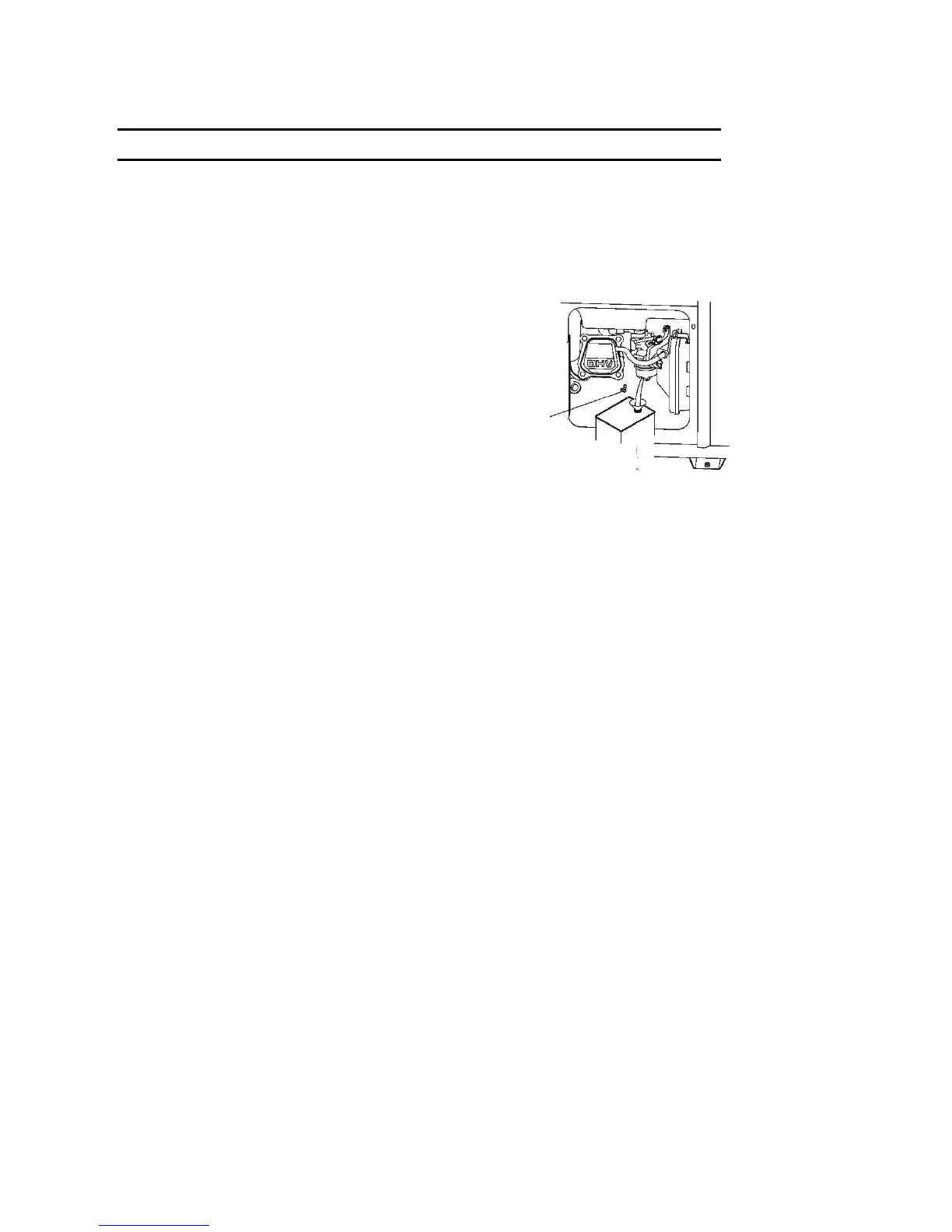
2. Drain the fuel
a. Open the left side maintenance cover.
b. Turn fuel valve lever to ON and then
loosen the carburetor drain screw. Drain the
gasoline from the carburetor and fuel tank into a suitable container.
c. Tighten the carburetor screw, close the fuel valve lever and left side maintenance
cover.
3. Once a month, recharge the battery.
4. Change the engine oil.
5. Remove the spark plug and pour a tablespoon of clean engine oil into the cylinder.
Crank the engine several revolutions to distribute the oil, and then reinstall the spark
plug.
6. Slowly pull the starter grip until resistance is felt. At this point, the piston is coming up
on its compression stroke and both the intake and exhaust valves are closed.
8.3 Fuel treatment and exercising the Generator
Any small engine is very susceptible to fuel varnishing. Fuel systems have very small
orifices and passageways which can easily become clogged by fuel residue that takes
the form of gum and varnish. This can lead to hard starting and rough running and
possibly cause the engine not to start at all. As EPA regulations dictate no kits available
to renew a carburetor, carburetor replacement will be necessary. Fuel preservatives are
readily available at leading RV and marine dealers. Regularly add a fuel preservative to
the generator fuel tank and fuel supply. Drain the carburetor bowl prior to any storage
period longer than 30 days. Exercise the generator by running it at a 50% load for two
hours every month. This insures fresh fuel is run through the fuel system and prevents
varnishing. In addition, seals and engine components are lubricated and the chance of
carbon buildup in the upper cylinder head is lessened. Any moisture that has
accumulated in the generator windings is baked out as well as keeping the battery
charged.


 To Next Page