30 Installation TP-5977 7/98
6.5 Fuel System
Explosive fuel vapors.
Can cause severe injury or death.
Use extreme care when handling,
storing, and using fuels.
WARNING
Fuel system. Explosive fuel vapors can cause severe
injuryordeath. All fuels are highlyexplosive ina vaporstate.
Use extreme care when handling and storing fuels. Store fuel
in a well-ventilated area away from spark-producing
equipment and out of the reach of children. Never add fuel to
the tank while the engine is running because spilled fuel may
ignite oncontactwith hotpartsorfrom spark. Donotsmoke or
permit flame or spark to occur near sources of spilled fuel or
fuelvapors. Keep fuellines andconnections tightand ingood
condition. Donotreplaceflexiblefuellineswithrigidlines. Use
flexible sections to avoid breakage caused by vibration. Do
not operate generator set in the presence of fuel leaks, fuel
accumulation, or sparks. Repair systems before resuming
generator set operation.
The following paragraphs describe the installation of
gasoline and LP gas fuel systems. Contact an
authorized Kohler service distributor/dealer for further
fuel system installation information.
6.5.1 Gasoline
Design the gasoline fuel system to operate
independently of the vehicle fuel system if operating
both the vehicle and the generator set simultaneously.
The best way to do this is to have separate fuel tanks;
however this is usually impractical because of space
restrictions.
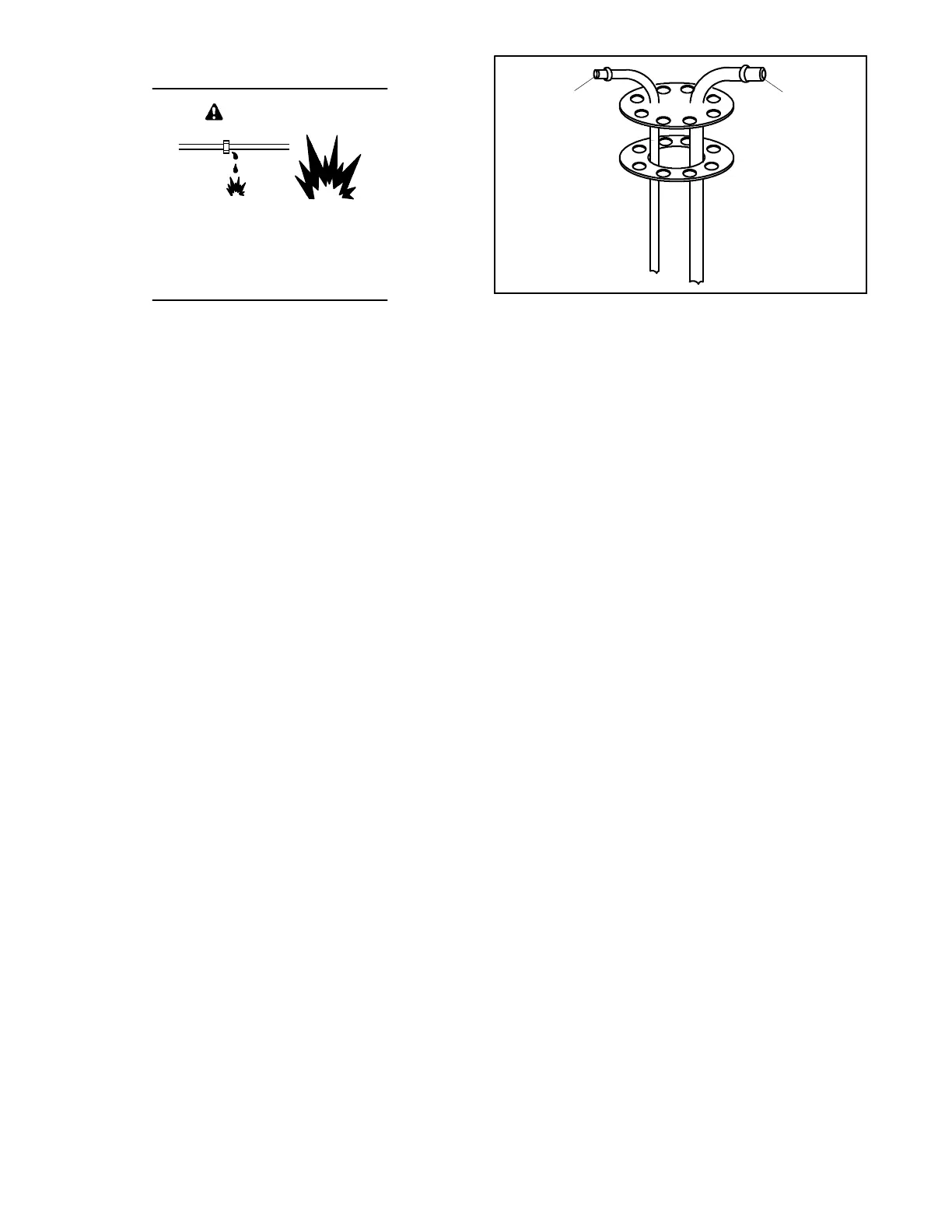
Dip tube design. In most installations, both engines
operate from a common tank with a separate dip tube
arrangement as shown in Figure 6-4. A dip tube
arrangement prevents the generator set from being
starvedof fuelby the vehicleengine. Thegeneratorset
dip tube is generally shorter than the vehicle dip tube.
With this arrangement fuel may not be available to the
generator set when the fuel supply is low.
5605613
1 2
1. Fuel line to generator set
2. Fuel line to vehicle engine
Figure 6-4. Two Dip Tubes in Fuel Tank
Tee fitting design. Use theteearrangement only as a
last resort. A simple tee fitting is sometimes used to
provide fuel for both the generator set and the vehicle
engine off a common tank; however, this usually
prohibits simultaneous operation. There is also the
probability that operation of either engine could
completely drain the fuel line and even the carburetor
fuel bowl of the other engine making starting difficult if
not impossible.
Donot teeinto fuelinjectedfuelsystems. Usea twodip
tube arrangement for fuel supply.
Gasoline fuel lines. Caremust betaken whenrouting
the fuel lines from the main tank to the generator set.
Keep fuel lines as short as possible but maintain
adequate clearance from exhaust system. Route the
fuel lines along the vehicles frame or
undercarriage—never run fuel lines inside the vehicle.
Locate fuel lines below the generator set compartment
with entry point nearthe fuelpump. Size the fuel lineto
handle the flow of fuel, to withstand road shock and
year-roundclimateconditions. Ifusingsteeltubing,use
1/8 in. (3.2 mm) I.D. minimum with an 8 in. (230 mm)
minimum flexiblesectionto allowfree movement of the
generator set.
6.5.2 LP Gas
LP fuel hose. Use a flexible fuel hose designated for
use with LP fuels between the generator set and the
main fuel tank. Care must be taken when routing the
fuel line. Maintain a 2 in. (51 mm) clearance between
the fuel line and any bare exhaust component. Do not
tieanyelectricalwiringto thefuelline. If theflexiblefuel
line passes through sheet metal, install grommets or
clamps to prevent hose abrasion. The LP fuel system
shall conform to section3-6.4 of NFPA58, Storage and
Handling of Liquified Petroleum Gases.



 To Next Page