14 Troubleshooting
14.1 Possible faults
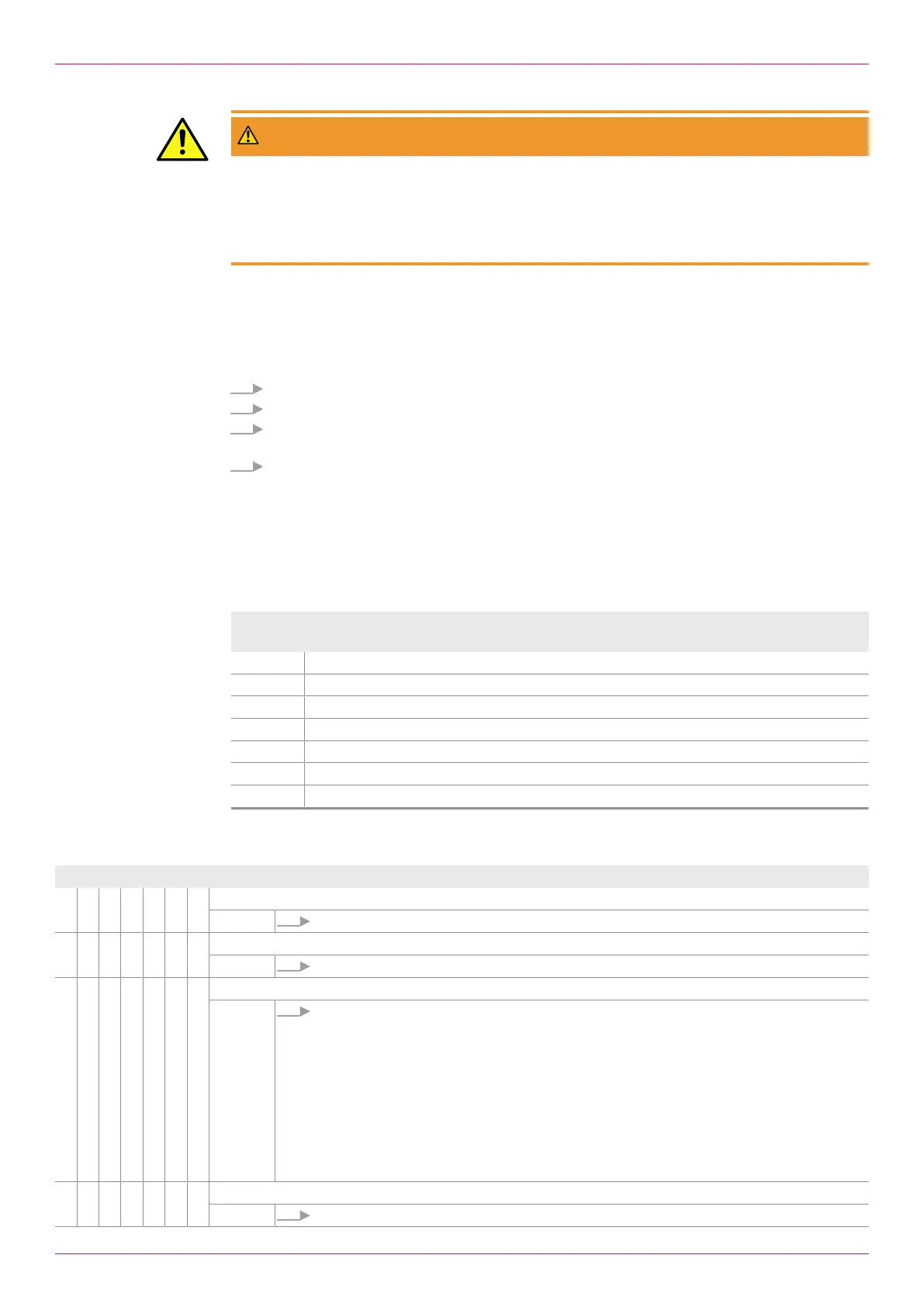
WARNING
Danger of poisoning and environmental damage through residues.
► Wear personal protective clothing during all the work. Ensure face protection.
► Before disposal collect any pumped liquid still present safely and dispose of it in an environment-
ally compatible manner in accordance with the applicable local regulations.
► Before disposing neutralize the residues.
Requirement:
ü Disconnect the pump unit from the power supply and secure it against being switched back on
ü Pump unit cooled down to the ambient temperature and disconnected from the pipe system
ü Pump emptied completely
ü Pump placed at a location suitable for dismantling
1. Dismantle the pump and disassemble it into its individual parts.
2. Clean residues of the pumped liquid from the individual parts.
3. Separate sealing elements made of elastomers and ceramics (SiC) from the pump and dispose
of them in separately.
4. Recycle iron parts.
14 Troubleshooting
14.1 Possible faults
Faults can have different causes. The following tables list the symptoms of a fault, the possible causes
and measures for troubleshooting.
Identifica-
tion
Fault
1 No pump suction
2 Delivery rate too low
3 Pump too loud
4 Motor overload
5 Uneven delivery rate
6 Pump has seized
7 Shaft seal leaks
14.2 Troubleshooting
Fault identification Cause Remedy
1 – – – – – – Pump suction line closed
Check the shut-off devices. If required, open.
1 2 3 – 5 – – Parts soiled (filter, suction line, suction valve, strainer)
Clean parts.
1 2 3 – 5 – – Suction head too high
Reduce the level difference.
-or-
Reduce the line length.
-or-
Increase the line cross-section.
-or-
Heat up the pumped liquid.
-or-
Install a filter / strainer with a larger mesh width. Ensure that the permissible mesh width
is not exceeded.
1 – 3 – – – – Level in the intake container too low
Fill the intake container.
Operating instructions
OIC 18en-GB Edition 2020-01
49


 To Next Page