4 Transport/Temporary Storage/Disposal
13 of 60
4.3 Storage/preservation
If properly stored indoors, the equipment is protected for a maximum of 12months.
This allows commissioning to take place some time after delivery. We recommend
that the following measures be taken:
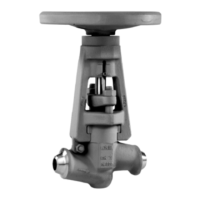
▪ Store the valve in a dust-free and vibration-free, frost-proof room where the
atmospheric humidity is as constant as possible (use suitable caps or film for
protection).
▪ Protect EPDM-encapsulated valve discs from sunlight or UV light from other
sources. Observe the DIN 7716 standard for the storage of elastomers.
▪ Close the valve using little force and store in the closed position.
▪ Protect the valve from contact with solvents, lubricants, fuels or other chemicals.
4.4 Return to supplier
1. Drain the valve as described in the manual.
2. Always flush and clean the valve, particularly if it has been used for handling
noxious, explosive, hot or other hazardous fluids.
3. If the fluids handled by the system leave residues which might lead to corrosion
damage when coming into contact with atmospheric humidity, or which might
ignite when coming into contact with oxygen, the valve must also be
neutralised and blown through with anhydrous inert gas for drying purposes.
4. When returning valves used for handling Fluids in Group 1
(ðSection5.2,Page15) always complete and enclose a certificate of
decontamination.
Always indicate any safety and decontamination measures taken.
(ðSection11,Page55)
NOTE
If required, a blank certificate of decontamination can be downloaded from the
following web site: www.ksb.com/certificate_of_decontamination


 To Next Page