This document provides installation, operating, and maintenance instructions for Lennox CSC/CSH and CDC/CDH air-cooled condensing units, ranging from 20 to 100 kW. It emphasizes the importance of reading the manual before any installation, repair, or maintenance work.
Function Description:
The Lennox CSC/CSH and CDC/CDH units are air-cooled condensing units designed for cooling-only or heat pump applications, depending on the model (CSC/CDC for cooling only, CSH/CDH for heat pump). These units are typically split systems, meaning they work in conjunction with an indoor air treatment unit. They are designed to manage air flow, cool or heat spaces, and maintain desired environmental conditions. The units incorporate components such as scroll compressors, fans, coils, expansion valves, and filter driers to facilitate the refrigeration cycle.
Important Technical Specifications:
The manual provides detailed physical and electrical data, operating limits, fan performances, piping drawings, and unit dimensions.
- Capacity Range: 20 - 100 kW.
- Refrigerant: R-410A.
- Electrical Data: Includes voltage (e.g., M: 400V/3/50), maximum absorbed power, total power, and start-up current for various models (020S to 100D).
- Operating Limits: Specifies indoor and outdoor temperature ranges for both cooling and heating cycles. For example, cooling operation indoor temperature is 23°C DB / 15°C WB, and outdoor temperature is 47°C DB. Heating operation indoor temperature is 20°C DB, and outdoor temperature ranges from -15°C to 27°C DB.
- Fan Performances: Detailed tables show available static pressure (Pa) at different fan speeds (rpm) and air flow rates (m³/h) for various models (020S to 100D). The units can be configured with variable pulley systems to adjust air flow.
- Unit Dimensions: Provides detailed drawings and tables for both standard horizontal discharge and optional vertical discharge configurations, including measurements for different models (20S-45D, 55D-85D, and 100D).
- Refrigerant Charge: Tables specify the R-410A refrigerant charge in grams for 0 meters of line for various models in both cooling-only and heat pump configurations, as well as charge per meter of line for different pipe sizes.
- Electrical Connections: Includes power supply requirements for different components (compressors, fans, heaters) and connection details for control elements and communication capabilities (BMS MODBUS_RS485, LONWORKS_Echelon, BACnet).
Usage Features:
- Installation Flexibility: Units can be floor-mounted or hung from the ceiling, and can be installed outdoors. Proper shock-absorbing material is recommended for floor mounting to mitigate vibrations.
- Air Flow Regulation: The outdoor units feature a variable pulley system on the activating motor, allowing adjustment of the fan's diameter to modify air flow as needed. This is done by turning the mobile part of the pulley in specific directions.
- Belt Tensioning: Belts can be easily tensioned using a tensing screw incorporated into the motor bases, which also facilitates servicing.
- Refrigerant Connections: Detailed instructions for connecting refrigerant lines, including evacuation procedures and charging guidelines. It emphasizes the importance of proper brazing techniques in a nitrogen atmosphere and using only specified refrigerants.
- Electrical Connections: Comprehensive diagrams and tables for connecting power supply and control elements, including options for remote sensors (outdoor temperature, discharge, remote duct, air quality, differential pressure, smoke detector, hot water coil) and communication protocols for building management systems (BMS).
- Commissioning: Outlines preliminary checks before first installation and at startup, including verifying compressor rotation, checking pressures, and adjusting refrigerant charge and expansion valve settings.
- Safety Warnings: Prominent danger and warning signs highlight risks such as abrasive surfaces, low/high temperatures, moving objects, electrical voltage, and rotating objects. It stresses that all installation, service, and maintenance work must be carried out by qualified personnel, with power switched off to prevent electrical injury.
Maintenance Features:
- Preventive Maintenance: Emphasizes periodic inspections to prevent costly repairs. This includes checking the general state of the casing (paint, damage, rust, leveling, shock absorbers, panels), electrical connections (hoses, screws, earthing, current consumption, voltage), cooling circuit (pressures, leaks, pipe insulation, coil condition), compressor (oil level, silentbloc mountings), fans (free rotation, correct direction, noise), and control settings (set points, normal operation).
- Corrective Maintenance: Provides guidelines for replacing components, stressing the use of original replacement parts and proper refrigerant handling. It prohibits releasing refrigerant into the atmosphere and advises using pipe cutters instead of saws to avoid filings. Brazing must be done in a nitrogen atmosphere with silver alloy brazing rod. Special care is required for heat-sensitive components like 4-way or check valves.
- Compressor Oil Level: Instructions for checking oil level in the sight glass (between 1/4 and 3/4 when at rest, 3/4 and full when running) and adding synthetic POE oil (ICI Emkarate RL32-3MAF or Mobil EAC Artic 22C).
- Defrosting: Notes that an electrical heater and drainage connection might be necessary in the drip tray to prevent ice accumulation and ensure proper water drainage, especially in low outdoor temperatures or long cycle functioning.
- Failure Diagnosis: A table outlines common faults, possible causes, and corresponding solutions, covering issues like the unit not starting, high/low pressure stops, and abnormal noise in the compressor.
- ASTP Compressor Protection: Describes the ASTP (Advanced Scroll Temperature Protection) system, which protects the compressor against high discharge temperatures by stopping it and then restarting after a delay.
- Refrigerant Handling: Detailed precautions for handling R-410A, including using specific gauges and hoses, weighing the charge, using leak detectors, and ensuring proper evacuation and charging procedures. It also outlines the recycling and disposal of refrigerant and components in accordance with local and national legislation.

 Need help?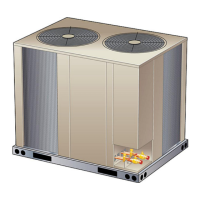


 To Next Page
 General