ATEX
16 GA02411_002_C0 - 10/2016 - © Leybold
Operation in a Pump System
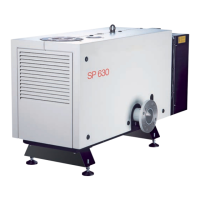
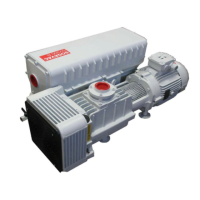
Joint operation of the SP 630 Cat 3 (inside) and a directly flanged on Roots
WAU 2001 Cat 3 (inside) in a pump system is possible. The resulting tem-
perature class results from the respective usage parameters of the Roots
WAU 2001, may, however, not be lower then the temperature class of the
Roots pump.
For other combinations, an assessment of the ignition risk for the pump sys-
tem must be performed
Areas of Application
The inside (process gas side) of this vacuum pump is so rated and designed
that the occurrence of foreseeable ignition sources can be excluded during
normal operation. Provided the pump is operated in accordance with the
parameters specified in the Operating Instructions the pump will offer a nor-
mal degree of protection. For this reason it is suited for operation under con-
ditions where it is unlikely that an atmosphere capable of exploding is created
by gases, dusts, vapours or mists in the air or if such atmospheres do occur
then this only rarely and only briefly (i.e. Zone 2).
The pump itself must not be installed and operated in explosion hazard
areas.
Areas in which explosive atmospheres (gases, dusts, vapours or mists) can
occur in the air are subdivided into three zones corresponding to the frequen-
cy and duration of occurrence of an explosive atmosphere. These zones are
designated as 0, 1 and 2.
The definitions for these zones are described in Annex I of the “ATEX
Directive (Directive 99/92/EG) for improving the safety and health protection
of workers potentially at risk from explosive atmospheres”.
Information as to the classification of the areas with explosive atmospheres in
the 3 Zones, is provided in the Directive 99/92/EG and the corresponding
guide (COM (2003) 515) together with the European standard EN 60079-10
(Electrical apparatus for explosive gas atmospheres - Part 10: Classification
of hazardous areas). Additionally, further information on the avoidance of
explosions and on the topic of explosion protection can be found in the
Directive 99/92/EG and the corresponding guide.
This information can be downloaded from the EC internet site.
Gas Composition
It is important to note that the composition of the gas at the intake on the
suction side of the pump and at the exhaust to the atmosphere may possibly
differ. This may possibly have an influence on the zone assignments (EG
Directive 99/92/EG).
DANGER



 To Next Page
 Loading...