Need help?
Do you have a question about the Lumens VC-A52S V01 and is the answer not in the manual?
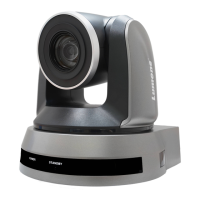
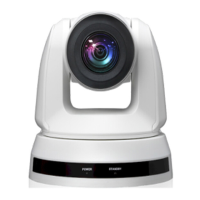
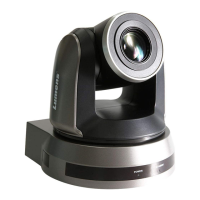
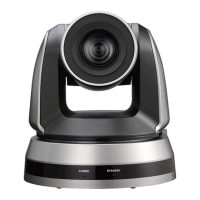
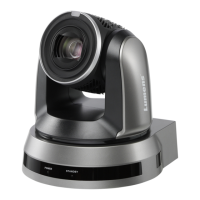
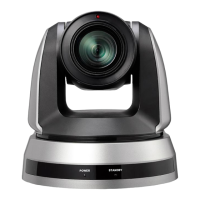
This document outlines the firmware upgrade procedure for the VC-A52S PTZ Video Camera, providing essential information for users to successfully update their device. The VC-A52S is a versatile PTZ (Pan-Tilt-Zoom) video camera designed for various applications, offering robust performance and flexible control. Its primary function is to capture and transmit high-quality video, making it suitable for environments such as conference rooms, educational settings, and live event productions.
The VC-A52S PTZ Video Camera is engineered to deliver clear and stable video output. As a PTZ camera, it features mechanical pan, tilt, and zoom capabilities, allowing users to remotely adjust the camera's field of view and focus on specific areas of interest. This remote control functionality is crucial for dynamic environments where manual camera adjustments are impractical or impossible. The camera supports various video output formats and resolutions, ensuring compatibility with a wide range of display and recording systems.
The core function of the VC-A52S involves capturing visual information through its lens and converting it into a digital video stream. This stream can then be transmitted over various interfaces to monitors, projectors, or recording devices. The camera's internal firmware manages all its operational aspects, from image processing and color correction to motor control for pan, tilt, and zoom movements. It also handles communication protocols, enabling remote control and integration into larger AV systems.
The firmware itself is a critical component, acting as the operating system for the camera. It dictates how the camera behaves, how it processes images, and how it interacts with external commands. Regular firmware updates are essential to enhance performance, introduce new features, fix bugs, and improve overall stability and security. The upgrade process detailed in this document ensures that the camera's internal software is kept current, allowing users to benefit from the latest improvements.
The VC-A52S offers several usage features that enhance its versatility and ease of operation. One of the most significant features is its remote controllability. Users can manipulate the camera's pan, tilt, and zoom functions from a distance, which is particularly useful in scenarios where the camera is mounted in an inaccessible location or when a single operator needs to manage multiple cameras. This remote control is typically achieved via an RS232 serial connection, allowing for precise command execution.
The camera's ability to support different firmware versions (VMC_VME_VZN and VZM_VZN_VMZ) highlights its adaptability to various hardware configurations or operational requirements. Users must identify their current firmware version to ensure they download the correct update package, preventing compatibility issues. This distinction is crucial for maintaining optimal performance and avoiding potential hardware limitations.
The upgrade process itself is designed to be user-friendly, albeit requiring careful attention to detail. It involves connecting the camera to a computer (PC or laptop) using an RS232 cable, and potentially an RS232-USB cable if a laptop is used. This direct serial connection ensures a stable and reliable communication channel for transferring the new firmware. The use of a dedicated software application, such as [VC-A51S_Download_AP], simplifies the selection and installation of firmware files. This application provides a graphical interface where users can browse for the firmware files, select the desired components (Master, CM, ISP), and initiate the upgrade process.
During the upgrade, the application displays a progress indicator, allowing users to monitor the update's status. This transparency helps in understanding the duration of the process, which is estimated to be around 1.5 minutes. After the firmware is successfully installed, the camera requires a power cycle (unplugging and reconnecting the power cord) to restart and load the new software. This ensures that all changes are properly applied and the camera initializes with the updated firmware.
Another important usage feature is the ability to verify the firmware version directly on the camera's On-Screen Display (OSD). After the upgrade and a factory reset, users can navigate through the camera's menu using a remote control to access the "Status" page. This page provides detailed information about the camera's current firmware versions for Master, CM, and ISP components, allowing users to confirm that the update was successful and the correct versions are running. This verification step is critical for ensuring the camera is operating as expected with the new firmware.
The camera's compatibility with various Windows operating systems (XP, 7, 8, 10) for the firmware upgrade tool ensures broad accessibility for users. However, the explicit mention that the firmware cannot be upgraded through MAC OS is an important limitation that users must be aware of, guiding them to use a Windows-based machine for the update process.
The firmware upgrade process itself serves as a key maintenance feature for the VC-A52S camera. By providing a structured method for updating the device's internal software, Lumens enables users to keep their cameras in optimal working condition. Regular firmware updates are crucial for:
The document emphasizes the importance of selecting the correct firmware file, warning that "Wrong FW file will cause the unit shutdown." This highlights a critical maintenance aspect: the need for precision and adherence to instructions during the upgrade. Users are guided to check their existing firmware version (VMC_VME_VZN or VZM_VZN_VMZ) before downloading, which is a preventative maintenance step to avoid irreversible damage or operational issues.
The requirement to perform a "Factory Reset" after a firmware upgrade is another important maintenance step. This ensures that any previous settings or configurations do not conflict with the new firmware, providing a clean slate for the camera to operate optimally. A factory reset helps in resolving potential software conflicts and ensures that the camera starts with default settings that are fully compatible with the updated firmware.
The detailed list of necessary equipment for the upgrade, including the VC Model, a PC with an RS232 port or laptop, RS232 cable, RS232-USB cable (for laptops), a monitor, and power adapter/cord, ensures that users are fully prepared before initiating the maintenance procedure. This comprehensive preparation minimizes the chances of interruptions or errors during the critical firmware update.
Finally, the ability to check the FW version on the OSD after the upgrade serves as a verification and quality control step. This allows users to confirm that the maintenance task was successfully completed and that the camera is running the intended firmware. This post-maintenance check is essential for ensuring the integrity and functionality of the device.
 General
| Video Output | HDMI |
|---|---|
| Aperture | F1.6 - F3.5 |
| Minimum Illumination | 0.5 Lux @ F1.6 |
| Day/Night | Yes |
| Wide Dynamic Range | Yes |
| Video Compression | H.264, MJPEG |
| Network Interface | 10/100Mbps |
| Protocol | ONVIF |
| Power Supply | DC 12V |

 To Next Page