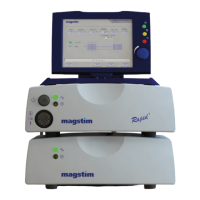
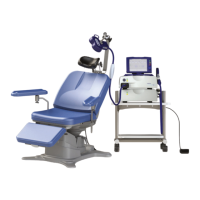
Magstim Rapid²
Operating Manual
© The Magstim Company Limited 1 MOP03-EN-03
SECTION 1 INTRODUCTION
1.1 Indications for Use
The Magstim Rapid
2
systems (Standard Rapid², Super Rapid² & Rapid² Plus¹) are magnetic
stimulators intended for non-invasive stimulation of neuromuscular tissue, by inducing small currents
in the tissue using a brief pulse of electromagnetic energy.
This method of stimulation enables deep, and otherwise inaccessible, nerves to be stimulated easily
and relatively painlessly. In addition, no skin preparation is required and stimulation can be achieved
through clothing.
The Magstim Rapid² systems are intended for use by, or under the supervision of, a medical
practitioner or investigator who has knowledge about the principles of TMS, physiology and potential
side effects of TMS.
The Magstim Rapid² systems are non-sterile reusable medical device intended for multi-patient use,
however is not intended to come into contact with the patient as this achieved through use of a
stimulating coil.
The Magstim Rapid² systems are intended to be stationary during use however, can be moved if
necessary when not in use.
The Rapid² systems are intended to be used on adults and children above the age of 2 years who do
not meet any of the contraindications listed in section 1.2. In all cases the subject is in a conscious
state.
USA Only: The Magstim Rapid² systems have not been cleared by the FDA for cortical stimulation.
Investigational uses require an IDE.
1.2 Contraindications
The Magstim Rapid² systems should not be;
• used on or in the vicinity of patients or users with cardiac demand pacemakers, implanted
medication pumps, cochlear devices, implanted defibrillators and/or implanted
neurostimulators
• used on or in the vicinity of patients with implanted metal objects
• used on patients where the skin in the area to be contacted is broken
• used on patients who suffer from multiple sclerosis
• used on those with large ischaemic scars
• used on pregnant women
• used on infants under the age of 2 years
• used on epileptic individuals
• used on those with a family history of convulsions
• used on individuals with brain lesions that could affect seizure threshold
• used on individuals suffering from multiple sclerosis
• used on individuals taking tricyclic antidepressants, neuroleptic agents or any other drug
that could lower seizure threshold,
• used on individuals suffering from sleep deprivation during rTMS procedures
• used on individuals with a heavy consumption of alcohol or those using epileptogenic
drugs
• Used on individuals with severe heart disease or with increased intracranial pressure be
used on those who have uncontrolled migraines
Magstim concurs with the recommendations given in the paper titled “Safety, ethical considerations,
and application guidelines for the use of transcranial magnetic stimulation in clinical practice and


 To Next Page