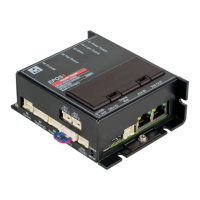
The device in question is the maxon EPOS4 50/5 Positioning Controller, a full-digital, smart positioning control unit designed for various drive applications.
Function Description
The EPOS4 50/5 is engineered to control both brushed DC and brushless EC (BLDC) motors, supporting power outputs up to approximately 250 Watts. Its primary function is to act as a slave node within a CANopen network, allowing it to be commanded and controlled efficiently. Beyond CANopen, the device offers versatile communication options, including USB and RS232, enabling connection to Windows or Linux workstations. An integrated extension interface further enhances its capabilities, allowing for the integration of optional communication interfaces like EtherCAT or other specialized functionalities.
The controller incorporates advanced motion control technologies such as field-oriented control (FOC), acceleration/velocity feed forward, and dual-loop control. These features, combined with high control cycle rates, facilitate sophisticated and user-friendly motion control.
The device is considered partly completed machinery according to EU Directive 2006/42/EC and is intended for integration into larger machinery or equipment. Therefore, it should not be put into service until the complete system complies with all relevant EU directives, health and safety aspects, and established interface requirements.
Important Technical Specifications
Electrical Rating:
- Nominal power supply voltage (+Vcc): 10...50 VDC
- Nominal logic supply voltage (+Vc): 10...50 VDC
- Absolute supply voltage (+Vmin / +Vmax): 8 VDC / 56 VDC
- Output voltage (max.): 0.9 x +Vcc
- Output current (Icont / Imax): 5 A / 15 A (<15 s)
- Pulse Width Modulation frequency: 50 kHz
- Sampling rate PI current controller: 25 kHz (40 µs)
- Sampling rate PI speed controller: 2.5 kHz (400 µs)
- Sampling rate PID positioning controller: 2.5 kHz (400 µs)
- Sampling rate analog input: 2.5 kHz (400 µs)
- Max. efficiency: 98%
- Max. speed DC motor: Limited by max. permissible speed (motor) and max. output voltage (controller).
- Max. speed EC motor (block): 100,000 rpm (1 pole pair)
- Max. speed EC motor (sinusoidal): 50,000 rpm (1 pole pair)
- Built-in motor choke: 3 x 15 µH; 5 A
Inputs & Outputs:
- Digital Inputs 1-4 (general purpose): DIP switch-selectable levels (Logic: +2.0...+30 VDC; PLC: +9.0...+30 VDC).
- Digital Outputs 1-2 (general purpose): Max. 36 VDC / I_L ≤500 mA (open collector with internal pull-up).
- STO Inputs 1-2: +4.5...+30 VDC (optically isolated).
- STO Output: Max. 30 VDC / I_L ≤15 mA (optically isolated with self-resetting short-circuit protection).
- Analog Input 1-2: Resolution 12-bit, -10...+10 V, 10 kHz, differential.
- Analog Output 1-2: Resolution 12-bit, -4...+4 V, 25 kHz, referenced to GND.
- Digital Hall sensor signals (H1, H2, H3): +2.0...+24 VDC (internal pull-up).
- Digital incremental encoder signals (A, A, B, B, I, I): EIA RS422, max. 6.25 MHz.
Sensor Signals (choice between multiple functions):
- Digital incremental encoder: 3-channel, EIA RS422, max. 6.25 MHz.
- Analog incremental encoder SinCos: 3-channel, resolution 12-bit, ±1.8 V, differential.
- SSI absolute encoder: Configurable, EIA RS422, 0.4...2 MHz.
- High-speed digital input 1-4: EIA RS422, max. 6.25 MHz.
- High-speed digital output 1: EIA RS422, max. 6.25 MHz.
Voltage Outputs:
- Sensor supply voltage (VSensor): +5 VDC / I_L ≤100 mA.
- Auxiliary output voltage (VAux): +5 VDC / I_L ≤150 mA.
Motor Connections:
- DC motor: + Motor, - Motor.
- EC motor: Motor winding 1, Motor winding 2, Motor winding 3.
Interfaces:
- RS232: Max. 115,200 bit/s.
- USB 2.0 / USB 3.0: Full Speed.
- CAN: Max. 1 Mbit/s.
- EtherCAT [c]: Full duplex (100 Mbit/s) as to IEEE 802.3 100 Base T (available with optional EPOS4 EtherCAT Card).
Physical:
- Weight: Approx. 206 g.
- Dimensions (L x W x H): 105.0 x 83.0 x 38.7 mm.
- Mounting: Mounting holes for M4 screws.
Environmental:
- Operation Temperature: -30...+50 °C (extended range +50...+80 °C with derating).
- Storage Temperature: -40...+85 °C.
- Operation Altitude: 0...10,000 m MSL.
- Humidity: 5...90% (condensation not permitted).
Limitations:
- Undervoltage switch-off: 8.0 V (recovery: 8.5 V).
- Overvoltage switch-off: 58 V (recovery: 56 V).
- Overcurrent switch-off: 20 A.
- Thermal overload switch-off: 100 °C (recovery: 90 °C).
Usage Features
The EPOS4 50/5 is designed for ease of use and flexibility in various applications.
- Plug & Play Cabling: maxon offers prefab cable assemblies to simplify and speed up commissioning. Users can also create their own cabling using a prepackaged connector kit.
- Motor Compatibility: The controller can drive both maxon DC motors (brushed) and maxon EC motors (brushless BLDC).
- Sensor Versatility: It supports a wide range of feedback options, including Hall sensors, digital incremental encoders, analog incremental encoders (SinCos), and SSI absolute encoders. The device allows for various combinations of these sensors to suit specific application needs.
- Digital I/O: Configurable digital inputs (Logic or PLC level) and open-collector digital outputs provide flexibility for system integration.
- Analog I/O: Differential analog inputs and outputs enable precise signal handling.
- Safe Torque Off (STO): This function ensures a torque-free, safe condition by switching off the drive output power stage via two independent inputs. An STO Idle Connector is included for easy activation of the power stage.
- Communication Interfaces: Multiple interfaces (CANopen, USB, RS232, EtherCAT) allow for broad connectivity with different control systems and development environments.
- DIP Switch Configuration: DIP switches (SW1) allow for easy configuration of the CAN ID (Node-ID), CAN automatic bit rate detection, CAN bus termination, and digital input levels.
- Extension Slots (EXT1 & EXT2): Two internal extension slots allow for the integration of optional extension cards, such as the EPOS4 EtherCAT Card, to expand communication capabilities or add advanced signal functionalities (e.g., additional absolute sensors).
- Status Indicators: LEDs provide clear visual feedback on the device's NET status (communication RUN states and errors), Device status (operation status and errors), and NET Port activity (link activity).
Maintenance Features
While the document does not explicitly detail "maintenance features" in a traditional sense (e.g., repair instructions), it emphasizes practices that contribute to the longevity and reliable operation of the device:
- ESD Protection: Users are instructed to wear working clothes and use equipment compliant with ESD protective measures, and to handle the device with extra care, to prevent damage from electrostatic discharge.
- Careful Cabling: The manual provides detailed pin assignments and recommends using maxon's prefab cable assemblies or carefully constructing custom cables to ensure correct connections and minimize potential issues.
- Hot Plugging Prevention: Explicit warnings are given against hot-plugging the USB interface or extension cards, as this can cause hardware damage due to potential differences in power supply. Users are advised to connect USB first and then power on the controller, and to switch off the controller's power supply before inserting or removing extension cards.
- Environmental Considerations: Specifications for operating and storage temperatures, as well as humidity, guide users in deploying the device in suitable environments to ensure optimal performance and lifespan. Derating curves for output current based on ambient temperature and altitude are provided to help users manage thermal loads effectively.
- Non-Certified STO: The STO functionality is not certified, implying that users should implement additional safety measures in their overall system design.
- Documentation: The comprehensive documentation set, including hardware references, EPOS Studio guides, communication guides, and application notes, serves as a crucial resource for proper installation, configuration, and troubleshooting, thereby aiding in the long-term maintenance and optimal performance of the controller.

 Need help?
 General

 To Next Page