Use
15
Preparing the laundry
Residual moisture
For an excellent finish and optimum ironing performance, the laundry
that is to be ironed should have the following levels of residual mois-
ture, depending on the type of ironing being carried out:
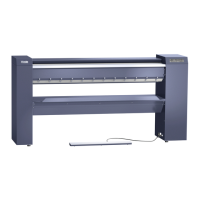
PRI214/217: 15–25% residual moisture
PRI210: 15% residual moisture
The ideal level of residual moisture depends on the fabric’s proper-
ties.
Sorting laundry
Sort the laundry according to type and fabric before starting to iron.
At the same time, please observe the instructions on the laundry care
label. We recommend sorting the laundry in the following order:
Type of material Symbol Temperature
Nylon and other synthetics 100–110°C
then
Woollens, silks 111–150°C
followed by
Cotton, linen 151–185°C
The ironer must not be used for laundry containing more than 50%
synthetic fibres (e.g. Dralon).
The high temperature of the ironer will cause the fabric to melt.
Laundry containing less than 50% synthetic fibres can be ironed at
low temperature (•range).
Starched laundry should always be ironed last.
Otherwise, any remaining starch residue on the heater plate may
have a negative effect when ironing other laundry items.
Making the appliance ready for use
Turn on the on-site main switch for the power supply.
Press the button to switch on the ironer.
The red symbol flashes.
Now gently press the underside of the finger guard.
The ironer switches to normal operating mode.
The ironer is only ready for use if the finger guard has been actuated
properly. Otherwise, the ironer will switch off again after a short
amount of time.
The red symbol will appear in the display and the heater plate will
heat up.



 To Next Page