Migomag SIM 200 LCD
Model No ASIM200LCD
28
2. Welding Techniques
The best way to teach yourself how to weld is with short periods of pracce at regular
intervals. All pracce welds should be done on scrap metal that can be discarded. Do not
aempt to make any repairs on valuable equipment unl you have sased yourself that
your pracce welds are of good appearance and free of slag or gas inclusions.
2.1 Holding the electrode
The best way to grip the electrode holder is the way that feels most comfortable to
you. To Posion the Electrode to the work piece when striking the inial arc it may be
necessary to hold the electrode perpendicular to the work piece. Once the arc is started
the angle of the electrode in relaon to the work piece should be between 10 and 30
degrees. This will allow for good penetraon, with minimal spaer.
2.2 Striking the arc
WARNING:
EXPOSURE TO A WELDING ARC IS EXTREMELY HARMFUL TO THE EYES AND SKIN.
• Never strike an arc or begin welding unl you have adequate protecon
• Wear ameproof welding gloves, heavy long-sleeved shirt, cuess trousers, high-
topped shoes and a welding helmet or shield
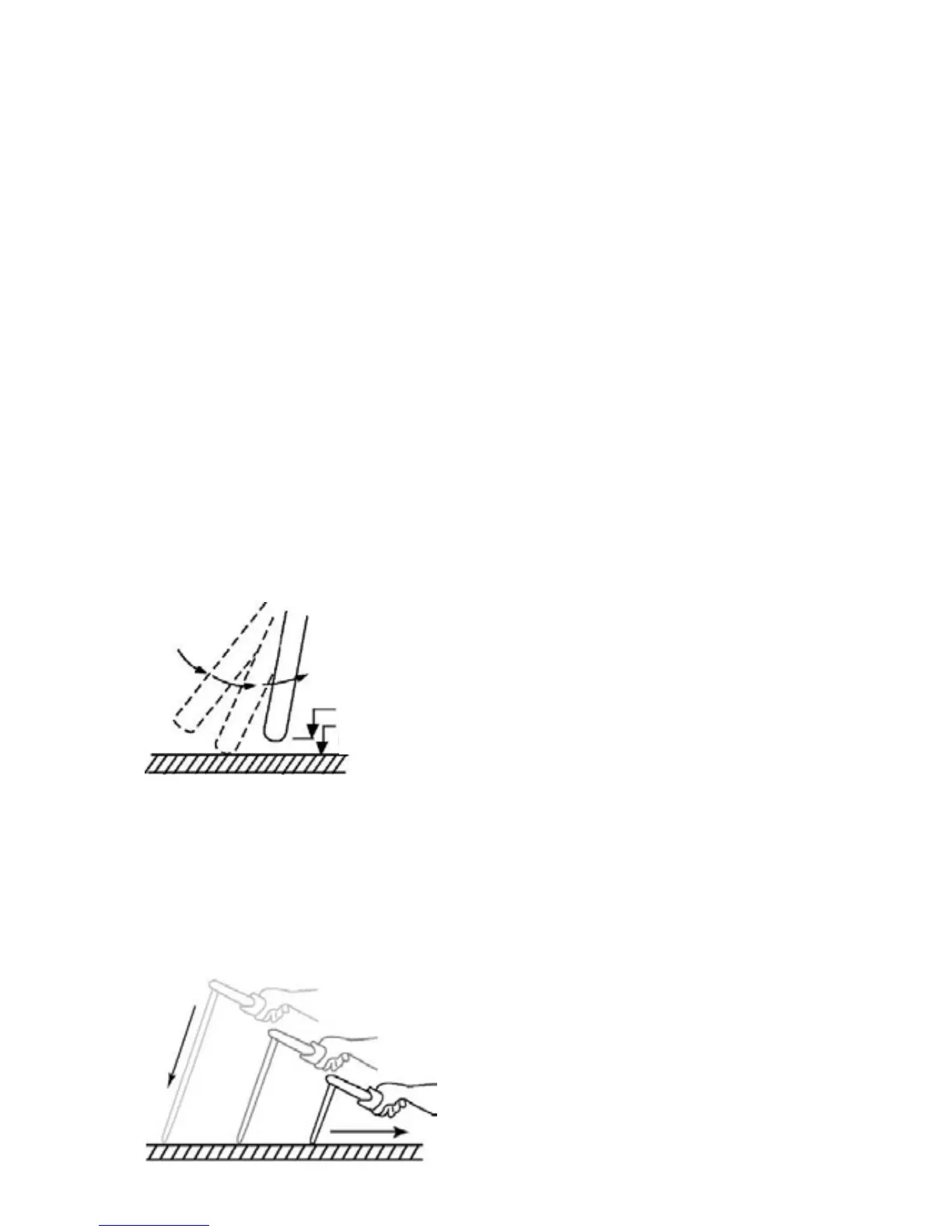
Scratch the work piece with the end of electrode to start arc and then raise it quickly
about 1/8 inch gap between the rod and the work piece. See following picture:
It is important that the gap be maintained during the welding process and it should be
neither too wide or too narrow. If too narrow, the rod will sck to the work piece. If too
wide, the arc will be exnguished. It needs much pracce to maintain the gap. Beginners
may get scking or arc exnguishing. When the rod scks to the work piece, gently rock it
back and forth to separate them. If not, the circuit is short connecon,
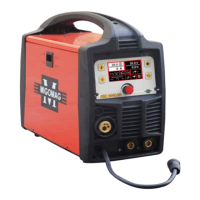
and it will overload the welder. A good arc is accompanied by a crisp, cracking sound. The
sound is similar to that made by eggs frying. To lay a weld bead, only 2 movements are
required; downward and in the direcon the weld is to be laid, as in following gure:
3.2mm


 To Next Page