Monticello Flying Club Pilot Transition Manual: Mooney M20F
Page 15 of 42
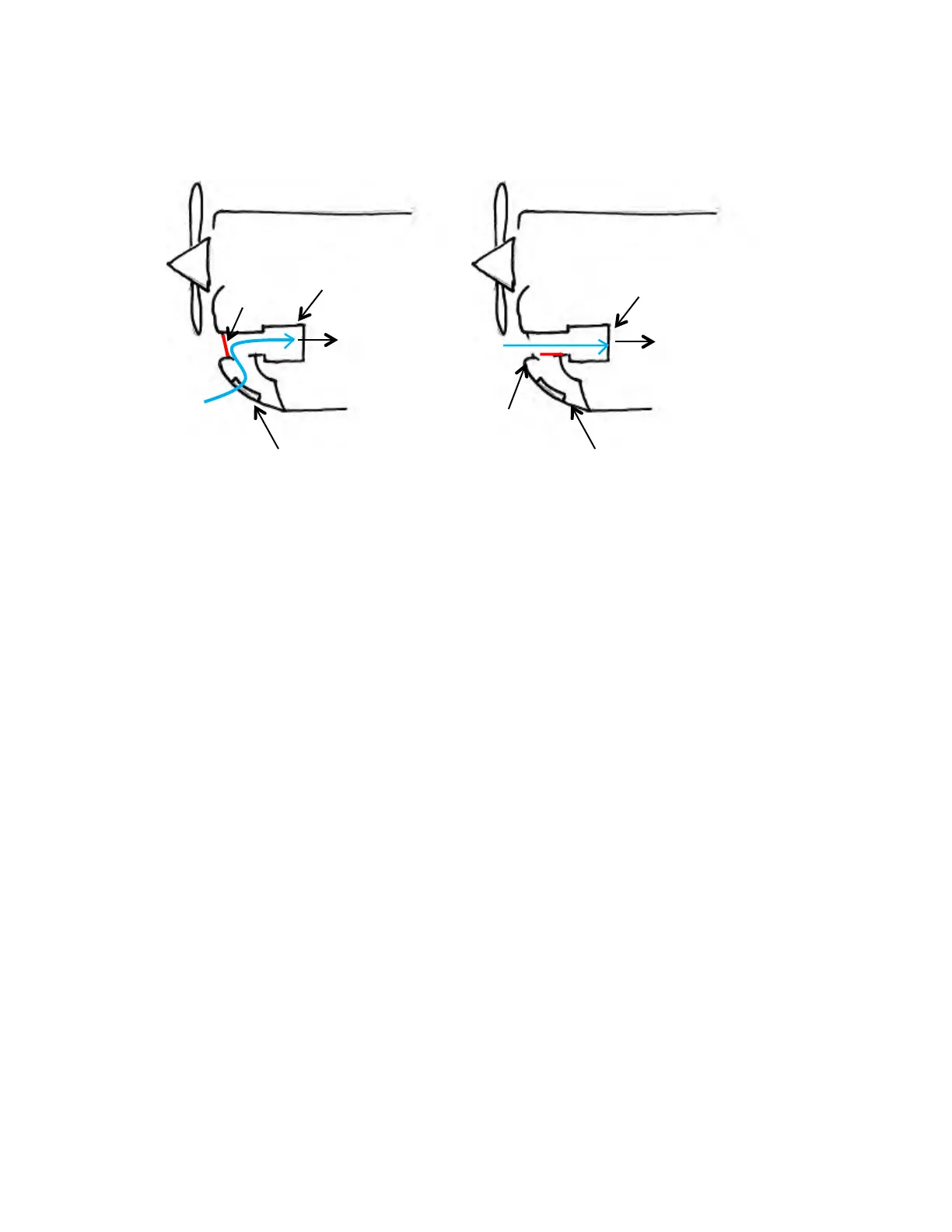
door in the induction system will open by induction vacuum to allow bypass air to enter the
engine.
Ram Closed Ram Open
INSTRUMENT VACUUM AND STANDBY VACUUM SYSTEMS
An engine driven, dry air vacuum pump supplies suction for the vacuum operated
gyroscopic flight instruments (the directional gyro in the HSI and the attitude indicator). The air
is passed through several filters before entering the instruments. A vacuum regulator valve is
incorporated to maintain the required operating vacuum throughout the engine power range. A
red vacuum annunciator light will flash when the vacuum drops below the 4.25 ± 0.2 in Hg
suction that is required to operate the instruments. The vacuum annunciator light glows steadily
when vacuum exceeds the normal setting of 5.5 ± 0.2 in Hg. Idle RPM settings will normally not
provide adequate vacuum for satisfactory instrument operation, so the low vacuum light may
illuminate while the engine is at idle.
If the primary system fails, as indicated by a “low” vacuum annunciator light, then the
pilot can activate the standby system by pulling the knob above the co-pilot’s knees. This knob
opens a valve to pull vacuum pressure off of the #3 cylinder. When the engine is running at
manifold pressures below atmospheric (approximately 30”), suction is created by the cylinders
(this suction pulls air into the engine). The standby vacuum uses this suction to run the
instruments.
Accordingly, the standby vacuum system will not operate at manifold pressures near or
above standard pressure (approximately 30”), because the cylinder is getting all the air it needs
from the fuel injector and thus is not creating a vacuum. This detail is important to remember if
shooting an approach in IMC while using the standby vacuum. If you execute a missed approach
and increase engine manifold pressure above 30”, you will lose standby vacuum pressure and
your DG and artificial horizon will slowly wind down. Anticipate this situation and rely on your
altimeter, turn coordinator, and VSI until you have sufficient altitude to safely reduce manifold
pressure below 30”. When you activate the standby vacuum, the “low” vacuum light will go out,
but the standby light on the far left side of the panel will stay lit.



 To Next Page