Monticello Flying Club Pilot Transition Manual: Mooney M20F
Page 22 of 42
CHAPTER 5. OPERATIONS PARTICULAR TO MOONEY AIRCRAFT
PREFIGHT
There are few things particular to a Mooney on the prefight inspection. Please take note
of these items and pay particular attention to them during the pre-flight inspection.
FUEL-RELATED ITEMS
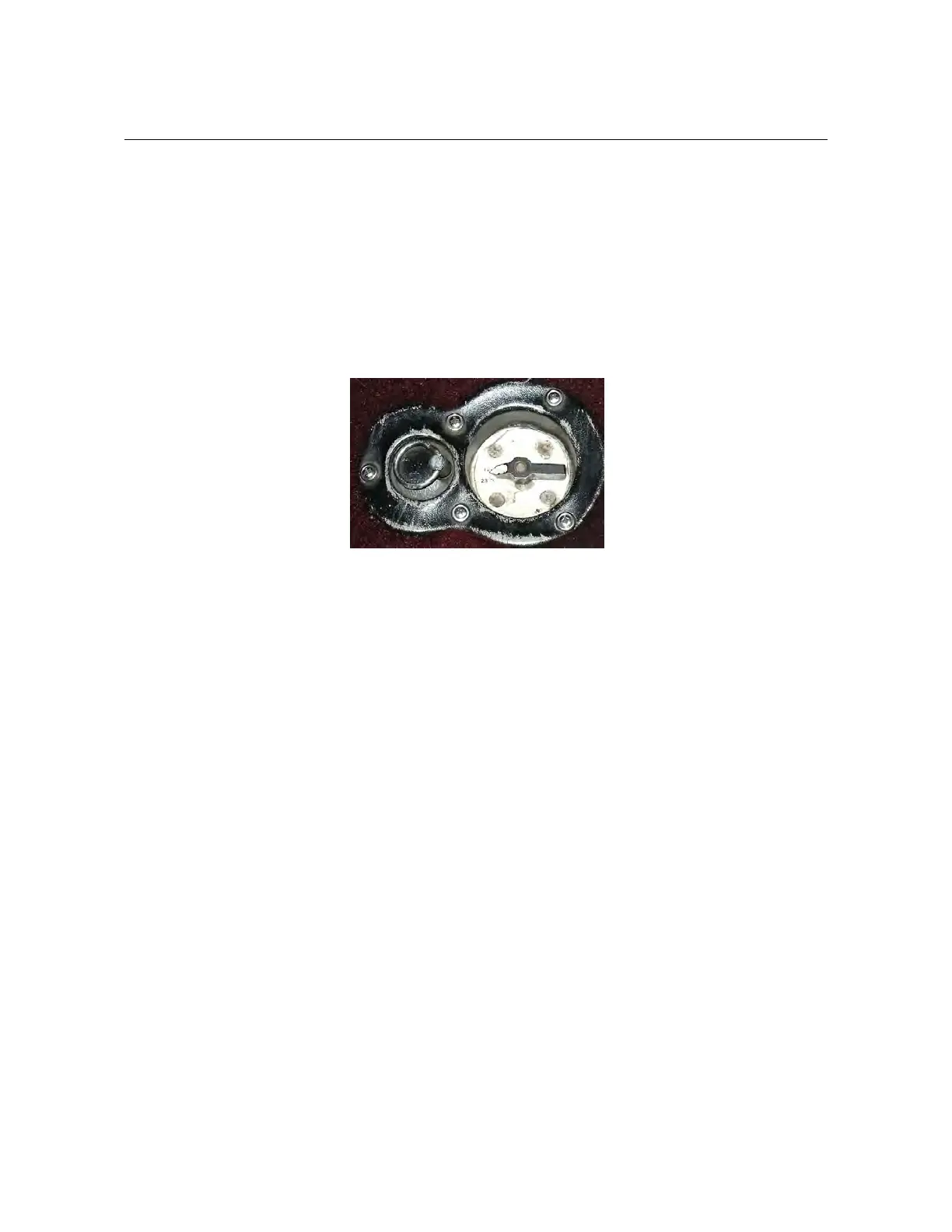
First is fuel straining. On the floor of the pilot side are the fuel selector and strainer
(below). Place the selector on the first tank and pull the ring solidly for a count of four, switch
tanks, and repeat.
Fuel Selector Knob and Strainer Ring
Standard club practice is to fill both fuel tanks to 1 inch below the top of the tank
following each flight (fuel charges may be billed directly to the club at the Charlottesville FBO,
and the treasurer will match up fuel charges with pilots based using the flight log). During pre-
flight, verify the fuel level in each tank. If the tanks were not refueled following the previous
flight (either due to pilot error or failure of the FBO to process the order), request that the
Charlottesville FBO refuel the aircraft to 1 inch below the top of the tank and make a note on the
flight log to make sure that fuel charges are billed to the appropriate pilot.
The bladders in the fuel tanks result in a situation where traditional dip-stick techniques
are not reliable for determining fuel quantity in our aircraft. This situation is why the club has
adopted the practice described above. Also, when fueling the aircraft, you will notice that the
bladders will expand as the tanks fill. As such, it is recommended to slow the rate of fueling as
the level of fuel reaches the top of the tank. In most cases, the bladders will expand at a slower
rate than the fueling rate. Quickly fueling a tank up to the top of the tank without allowing time
for the bladder to expand could result in taking on less fuel than expected.
Finally, you need to make sure the fuel caps (see photo below) are tight. Check the
tightness of the fuel caps by pushing down on one of the outer edges of the fuel cap. If it moves
around, then it is not tight, which can allow fuel to leak out and water to leak in. To tighten the
cap, remove it, turn it upside down, and then rotate the bottom clockwise. Tighten the cap such
that it does not move around when it is locked in place, but do not tighten it so much that you
cannot fully push down the metal locking tab.



 To Next Page