www.miinet.com Moore Industries-International, Inc.
- 12 -
User’s Manual
238-741-00K
May 2019
Programmable Smart HART Temperature Transmitter
THZ
3
/ TDZ
3
SECTION 1
2ohms
40ohms
35ohms
WARNING
RTD WIRE
RESISTANCE
Resistance
CAPTURED
VALUE
ALARM
2ohms
35ohms
Dierent Values Same Values
RTD WIRE
RESISTANCE
CAPTURED
VALUE
WARNING
& ALARM
200ohms
4,000ohms
3,500ohms 3,500ohms
WARNING
T/C CIRCUIT
RESISTANCE
CAPTURED
VALUE
ALARM
200ohms
Dierent Values Same Values
T/C CIRCUIT
RESISTANCE
CAPTURED
VALUE
WARNING
& ALARM
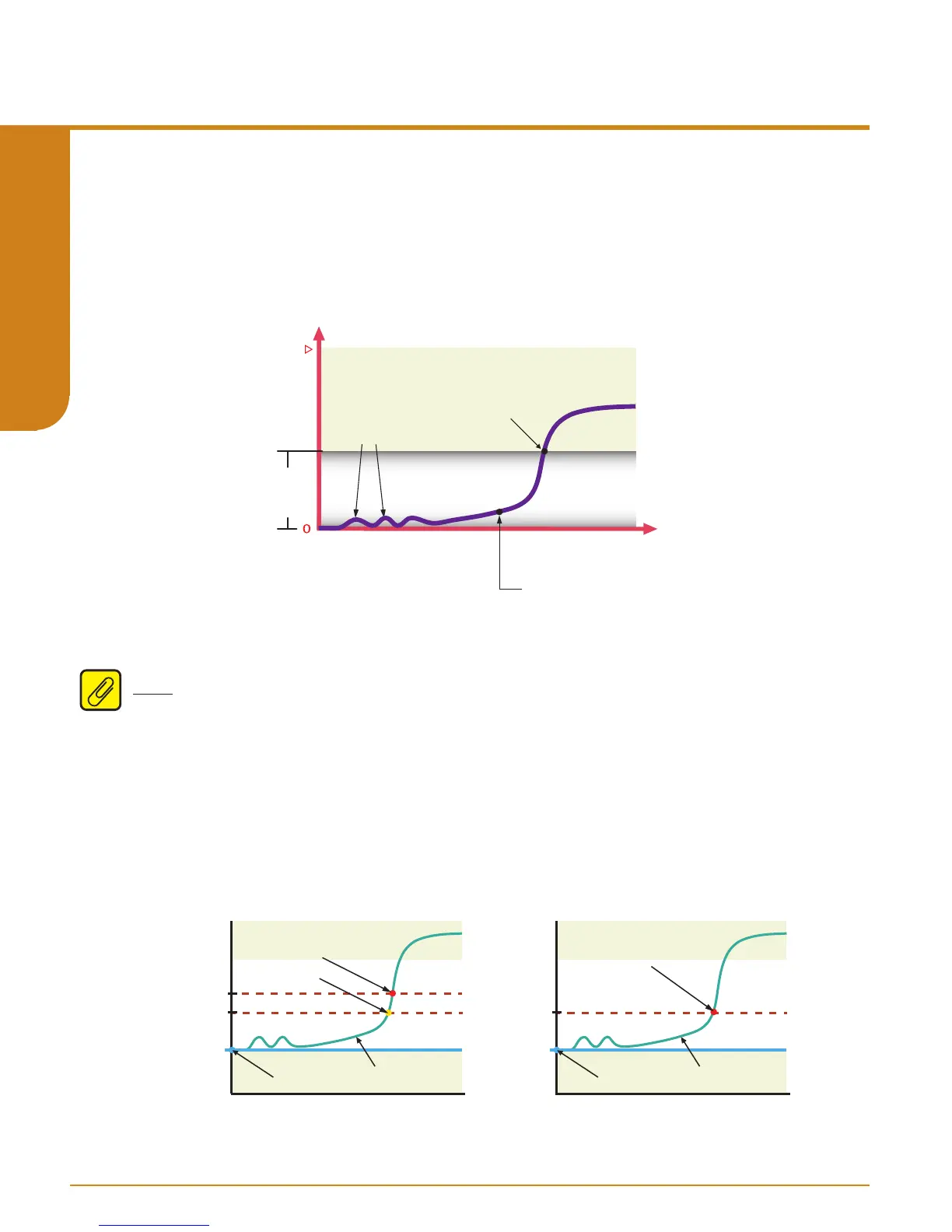
TIME
Initial
Minimal
Dierence
Typical Drift Over Time
T
USER
DEFINED
DRIFT
LIMITS
Drift Alert
Activated
Sensor Drift Detection
Drifting in sensors occurs from a number of dierent causes including environmental
contamination, vibration, and extreme temperature uctuations. This can lead to false sensor
readings. The THZ
3
/TDZ
3
can be congured to detect these false readings by using a Range
Alarm to monitor the absolute dierential between two sensors (i.e. RTD & T/C or two RTDs or
T/Cs) at the same point. This method can provide a range alarm warning or alarm to indicate
that there is an issue with one of the sensors. See Chart below for clarication.
In this example a Range Alarm is set with the Absolute Dierential as the source. An out of
range warning or alarm is congured with the low and high limits set to 0C° to 5C° respectively,
creating an alarm when Sensor 1 and Sensor 2 readings drift apart by more than 5C°.
Note: When setting the drift limit please allow for sensor tolerances and differences in sensor
response times to avoid false drift alerts.
Corrosion Detection
Corrosion of the sensor connections is primarily caused by oxidation or electrolysis which can
lead to inaccurate readings with RTD measurements. The THZ
3
/TDZ
3
is able to detect corrosion
on 3W or 4W RTDs by measuring the change in compensating lead wire resistance between
terminals 3 and 4 providing an alert when preset value limits are exceeded.
Additionally the THZ
3
/TDZ
3
monitors the status of T/C circuits. High resistance values in T/C
circuits could indicate a potential impending T/C burnout.


 To Next Page