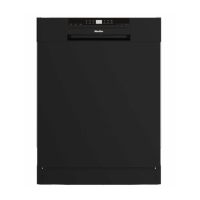
USING YOUR ULTRA COMPACT
IMPORTANT! To get the best performance from your dishwasher,
read all operating instructions.
PRIOR TO USE:
LOADING THE DISHWASHER:
The following should be checked before starting the dishwasher.
1. The dishwasher is level.
2. The water supply is open.
3. There are no leaks at the connections.
4. The plug is connected securely to a properly grounded outlet.
5. The power is switched on.
6. The inlet and drain hoses are properly connected.
7. All packing and printed materials are removed from the dishwasher.
A properly loaded dishwasher is key for optimal performance. Never overfill the
dishwasher as it can reduce the unit’s efficiency. Improper placement of items can
also affect the dishwasher’s performance. Position the dishes and utensils so they
are secure during the wash cycle and will not be moved by sprayed water.
NOTE: DO NOT wash items that are not listed as dishwasher safe.
NOTE: Some types of glasses may become dull after a large number of washes.
NOTE: Silver and aluminum may tarnish or discolor during washing.
NOTE: Cast iron items may rust after being washed in a dishwasher.
For best performance, follow these guidelines when loading:
If the dishwasher is to be
built-in, after the dishwash-
er has been balanced, use
the two screws provided to
screw into the allocated
area on both sides of the
dishwasher to secure it to
the cabinet. Then put on the
side safety caps.
TIPS:
- After installation, save this User Manual for future reference.
- NOTE: Each product is tested before leaving the manufacturing facility. If you
notice a yellowish water during the initial use, do not worry. That is normal due to
water residue. We recommend running an empty cycle during initial use to remove
any foreign residue.
1. Scrape off any large amounts of leftover food. Soak burnt food in pans to
loosen. It is not necessary to rinse the dishes under running water.
2. Place items such as cups, glasses, pots/pans etc. face down so that water will
not collect in them.
3. Curved items, or those with recesses, should be loaded at a slant so that water
can run off.
4. All utensils should be placed in a manner so that they cannot tip over.
5. All utensils should be placed in the way that prevents them from interfering
with the spray arm during washing.
6. Items should not be inside one another or covering other items.
7. DO NOT let large glasses touch each other. Doing so may damage them.
8. Most silverware should be placed in the cutlery basket with handles down.
9. Small knives and sharp objects should be placed handle up to prevent injury.
10. Large sharp objects such as long-bladed knives can present a hazard and
should be placed horizontally in the rack.
11. DO NOT put small items that can fall out of the basket in the dishwasher.
12. DO NOT overload your dishwasher.
13. When pushing the basket back, do not let any sharp utensils cut the door
seal/gasket.
14. The top coating of the basket should not be scratched; otherwise, it may rust.
15. Move the spray arms manually after pushing the basket in, to check if the
spray arms can freely rotate.
11


 To Next Page