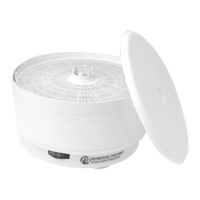
1. Before cleaning, the dehydrator must be disconnected from the power
supply and cooled thoroughly.
2. Use a soft damp cloth to wipe inside the dehydrator. DO NOT use metal
scouring pads, abrasive cleaners or harsh chemicals to clean your
dehydrator as these could damage the appliance. NEVER IMMERSE THE
BASE IN WATER OR ANY OTHER LIQUID.
3. The mesh sheet, drip tray, and drying trays should be washed in warm,
soapy water, rinsed and dried thoroughly. Do not soak with detergent or
similar cleaners. Drying trays can be washed on top rack of dishwasher. DO
NOT wash the mesh sheet or drip tray in a dishwasher.
4. Ensure that all the parts are completely cooled, clean, and dry before
storing the dehydrator.
Vegetables
1. Thoroughly wash your vegetables to remove any dirt. Peel the vegetable, if
desired, and slice it into even sizes so that they dry at the same rate.
2. Pretreatment is necessary for all vegetables in order to neutralize their
natural enzymes. Specifically, steam blanching is the preferred method.
3. Bring a large pot that is filled 75% with water to a boil. Place your vegetables
in a colander or basket and place carefully in the pot ensuring that there is
a small gap for the steam to enter and cover with a lid. See vegetable drying
guidelines chart on page 9.
4. When you are done blanching, place the vegetables in cold water to cool
them o.
5. Remove vegetables from the water and dry them.
6. Place them in a single layer on the dehydrator trays making sure they are
not touching or overlapping.
7. To determine if your vegetables are done drying, take out a few pieces from
dierent trays in the dehydrator. If you cannot break the vegetable in half
with little eort, place them back in the dehydrator for more time. Repeat
the process until finished.
8. Once the vegetables are dried to your liking, allow to cool for 30 minutes.
9. Store in a sealed container or
vacuum sealed bag
in a cool, dry place away
from direct light,
preferably below 60° F.
7
Dehydrating Tips
Care and Cleaning


 To Next Page