EasyManua.ls Logo

Nikon ECLIPSE TE2000-S - User Manual

Nikon ECLIPSE TE2000-S
74 pages
Print Icon
To Next Page IconTo Next Page
Loading...
M314E 04.7.CF.3(1/5)
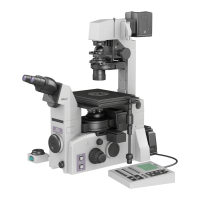
Inverted Microscope
ECLIPSE TE2000-E
ECLIPSE TE2000-U
ECLIPSE TE2000-S
Instructions

Questions and Answers

  • M
    morganryanSep 10, 2025
    Why doesn't the brightness adjustment dial work on the power supply of my Nikon Microscope?
    • M
      mark45Sep 10, 2025
      If the brightness adjustment dial on the power supply of your Nikon Microscope isn't working, the EXTERNAL switch on the power supply (CTRL switch when TE-PS30/TE-PSE30 is used) might be ON; turn it OFF.
  • H
    Heather JeffersonAug 22, 2025
    Why can't I focus with 20x and 40x objective on my Nikon ECLIPSE TE2000-S Microscope?
    • M
      Monica BrownAug 22, 2025
      If you cannot focus with 20x and 40x objectives on your Nikon Microscope, the bottom plate thickness of the container may be outside the correction range of the objective. Use a container with a bottom plate thickness within the correction range.
  • J
    Julia AndersonAug 25, 2025
    Why is the view field too bright on my Nikon Microscope?
    • A
      Anthony LeAug 25, 2025
      To address a view field that's too bright on your Nikon Microscope, first, insert an ND filter into the optical path. If the issue persists, lower the lamp voltage using the brightness adjustment dial.
  • J
    jwoodsAug 26, 2025
    How to improve poor image quality on Nikon ECLIPSE TE2000-S Microscope?
    • C
      chavezdeniseAug 26, 2025
      If you're experiencing poor image quality, contrast, or resolution with your Nikon Microscope, start by cleaning the lens and container to remove any dirt or dust. Ensure the objective’s correction ring is correctly set to the bottom plate thickness of the container. If the issue continues, verify that the bottom plate thickness of the container is within the objective's correction range, or perform condenser focusing and centering correctly.
  • X
    xvangAug 27, 2025
    What to do if the view field is too dark on my Nikon Microscope?
    • M
      Melissa ConleyAug 27, 2025
      If your Nikon Microscope's view field is too dark, the condenser aperture diaphragm may be stopped down too far; normally, it should be set to 70 to 80% of the objective N.A. Also, ensure the field diaphragm image is correctly focused on the specimen surface by performing condenser focusing and centering. Finally, check that the optical path switchover dial is set to 100% observation.
  • M
    michael14Aug 29, 2025
    Why does the image flow on my Nikon ECLIPSE TE2000-S Microscope?
    • P
      philip03Aug 29, 2025
      If your Nikon Microscope image flows, make sure the specimen is correctly positioned on the stage. Also, ensure the revolving nosepiece is correctly installed and rotated to the click stop position. In addition, center the condenser annular diaphragm and raise the dia-illuminator till it hits the limit.
  • T
    teresa49Sep 18, 2025
    What to do if focus adjustment doesn't work on my Nikon Microscope?
    • R
      Rachel HarrisSep 18, 2025
      If there is no focus adjustment when the selector switch on the T- EFN focus knob is switched on (only when the TE2000-E is used) for your Nikon Microscope, the knob connection cable may not be connected or is improperly connected. Connect the cable properly.
  • B
    Bobby PatelSep 12, 2025
    What causes uneven focus on a Nikon ECLIPSE TE2000-S?
    • K
      Kathleen GatesSep 12, 2025
      If you're experiencing uneven focus with your Nikon Microscope, the revolving nosepiece may not be installed correctly or not rotated to the click stop position. Install it correctly and rotate it to the click stop position.
  • B
    Becky WebsterSep 8, 2025
    What causes the dia-illumination ON/OFF switch to not work on my Nikon ECLIPSE TE2000-S?
    • A
      Anna NolanSep 8, 2025
      If the Dia-illumination ON/OFF switch on your Nikon Microscope isn't working, the lamp might be burnt out; replace it with a specified lamp. Additionally, ensure the control cable is properly connected.
  • R
    Robert ShepherdSep 5, 2025
    What to do if Nikon ECLIPSE TE2000-S image is not in focus?
    • K
      Kevin AdamsSep 5, 2025
      If your Nikon Microscope image is not in focus even when the objective is raised to the highest position, ensure the stage is mounted correctly. Also, check if the objective refocusing ring is clamped; if so, release the clamp by turning the ring counterclockwise to the limit.

Summary

Safety Information and Symbols

Warning and Caution Symbols

Explains symbols used in the manual and on the equipment for safety.

General Safety Warnings

Covers intended use, disassembly, voltage checks, heat, hazardous samples, and general safety.

Handling, Installation, and Disposal Precautions

Provides guidance on careful handling, proper installation location, and disposal of the microscope.

Microscope Parts and Identification

Microscope Base and Controls (TE2000 Series)

Details components and controls on the left and right sides of the TE2000-E microscope bases.

Adapters and Port Connections

Lists adapters for front, side, and bottom ports for attaching external devices.

Illumination and Condenser Systems

Describes the Dia-illuminators and Condenser modules for microscopy applications.

Stages, Focusing, and Rear Components

Covers stages, focusing modules, and rear-mounted components like controllers.

Power Supplies and Specifications

Explains the power supply units and their electrical specifications for operation.

Microscopy Techniques

Bright-field Microscopy Setup and Operation

Step-by-step guide for bright-field observation setup and execution.

Phase-contrast Microscopy Setup and Operation

Step-by-step guide for phase-contrast observation setup and execution.

Photomicrography with 35 mm Camera

Instructions for capturing images using a 35mm camera attached to the microscope.

Operation of Key Components

Power Management and Optical Path Switching

Details power controls and how to direct the light path to different observation ports.

Brightness, Filters, and Diaphragm Adjustments

Explains methods for adjusting illumination intensity, using filters, and controlling diaphragms.

Objective, Diopter, and Focusing Module Usage

Covers objective handling, diopter adjustment, and focusing module operation.

Assembly and Installation

Base, Eyepiece Tube, and Nosepiece Assembly

Instructions for assembling the main body, eyepiece tube, and nosepiece.

Illuminator, Condenser, and Lamp Installation

Procedures for mounting the dia-illuminator, condenser, and installing the lamp.

Power Supply and Port Connections

Guides on connecting power cords and attaching devices to microscope ports.

Troubleshooting Guide

Optical and Operational Issues Resolution

Lists common optical and operational problems and their recommended solutions.

Electrical System Faults and Fixes

Addresses electrical issues like power, lamp, or brightness control problems and their countermeasures.

Technical Specifications

System Configuration Specifications

Lists technical specs for different microscope system combinations with illuminators.

Adapter, Cord, and Standard Compliance Details

Covers AC adapter, power cords, and certifications like FCC, EU Directives.

System Diagrams and Configurations

TE2000-E System Diagram

Visual representation of the TE2000-E system components and their interconnections.

TE2000-U;TE2000-S System Diagram

Visual representation of the TE2000-U/TE2000-S system components and interconnections.

Nikon ECLIPSE TE2000-S Specifications

General IconGeneral
TypeInverted Microscope
StageMechanical Stage
Objective LensesCFI60 series objectives (various magnifications and N.A.)
IlluminationHalogen Lamp
Camera CompatibilityDigital Cameras
FocusingCoarse and fine focusing
Nosepiece6-position nosepiece
Eyepiece TubeBinocular / Trinocular
Power SupplyAC 100-240V, 50/60Hz
Optical SystemNikon CFI60 optical system

Related product manuals