6.2
Bar Check
The bar check is a simple test that is used to verify that the draft corrections are holding constant.
Periodic bar checks will help ensure that the system is stable and help account for changes in vessel
loading. Bar checks are typically carried out using the Nadir beams to reduce the influence of ray
bending due to sound velocity changes.
For best bar check results, NORBIT recommends that the WBMS be set up with the following
configuration:
• Set Adaptive Gates to Off
• Set ping rate to Fixed 3 Hz
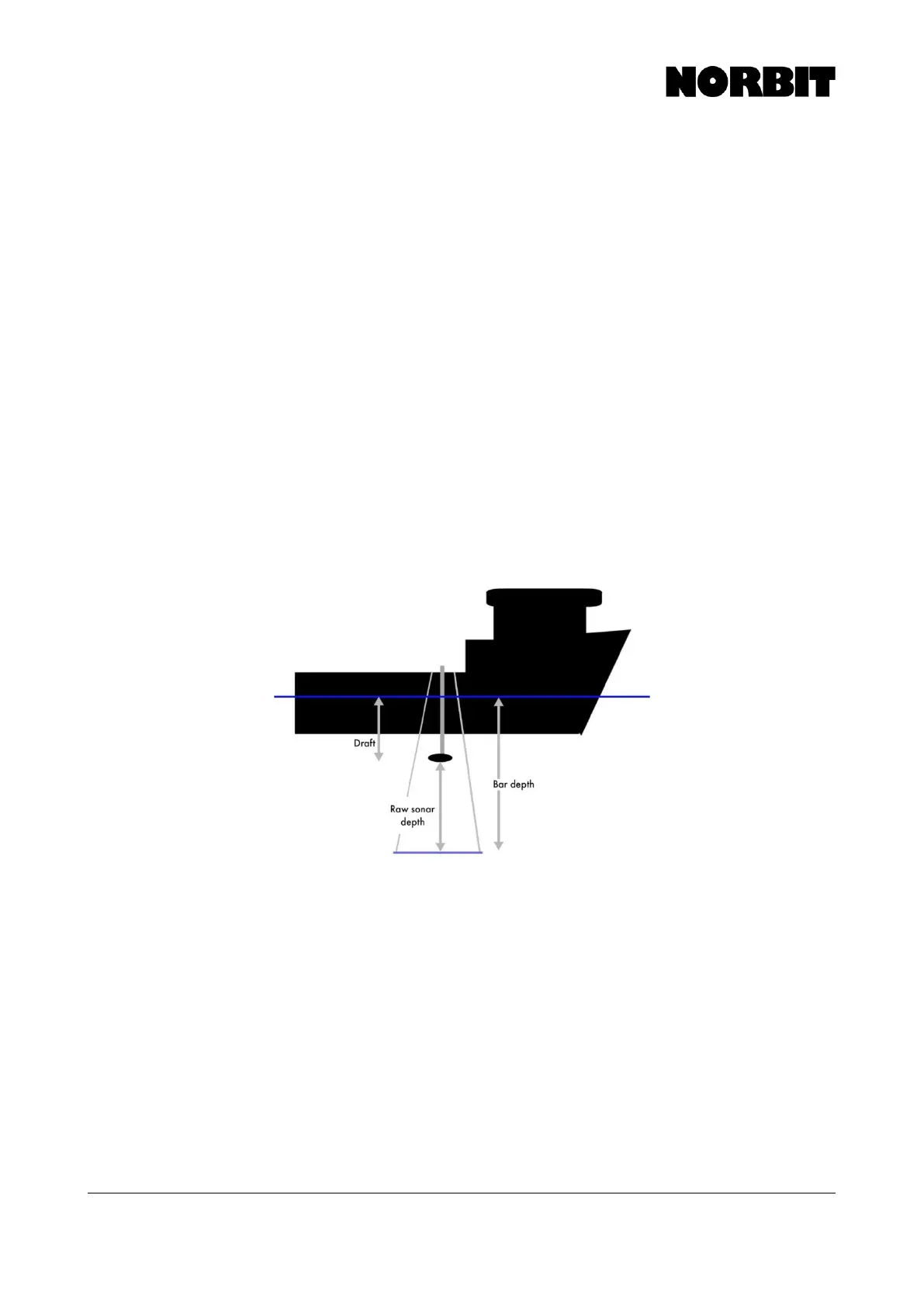
To conduct a bar check, an apparatus, that will reflect sound, must be lowered below the sonar to a
known water depth. When the object becomes visible on the GUI a depth reading should be taken.
This raw reading will be the depth below sonar head. The measurement should be corrected for the
predefined draft of the sonar. For example, if the bar depth is 3m and the sonar head has a draft of
1m the depth below sonar head will be 2m and when the 1m draft is accounted for the multibeam
measured depth will match the bar depth. If the corrected depth does not match the bar depth further
investigation may be warranted.
A bar check apparatus can be made from a metal plate secured so it will hang level in the water.
The depth of the plate is measured from the face.
6.3
Surface Sound Speed Verification
It is good practice to periodically verify the reading from the surface sound speed probe. This can
be completed by comparing the readings from the surface probe to the reading from another sound
velocity probe. If comparing to a sound velocity cast be sure to select a reading that is as close to
the draft of the sonar as possible. It should be expected that the two readings be within 1m/s of each
other. Should this not be the case further investigations may be warranted.



 To Next Page