6.4
GNSS Independent Plate Check
To ensure that all systems are operating properly and to verify offsets a
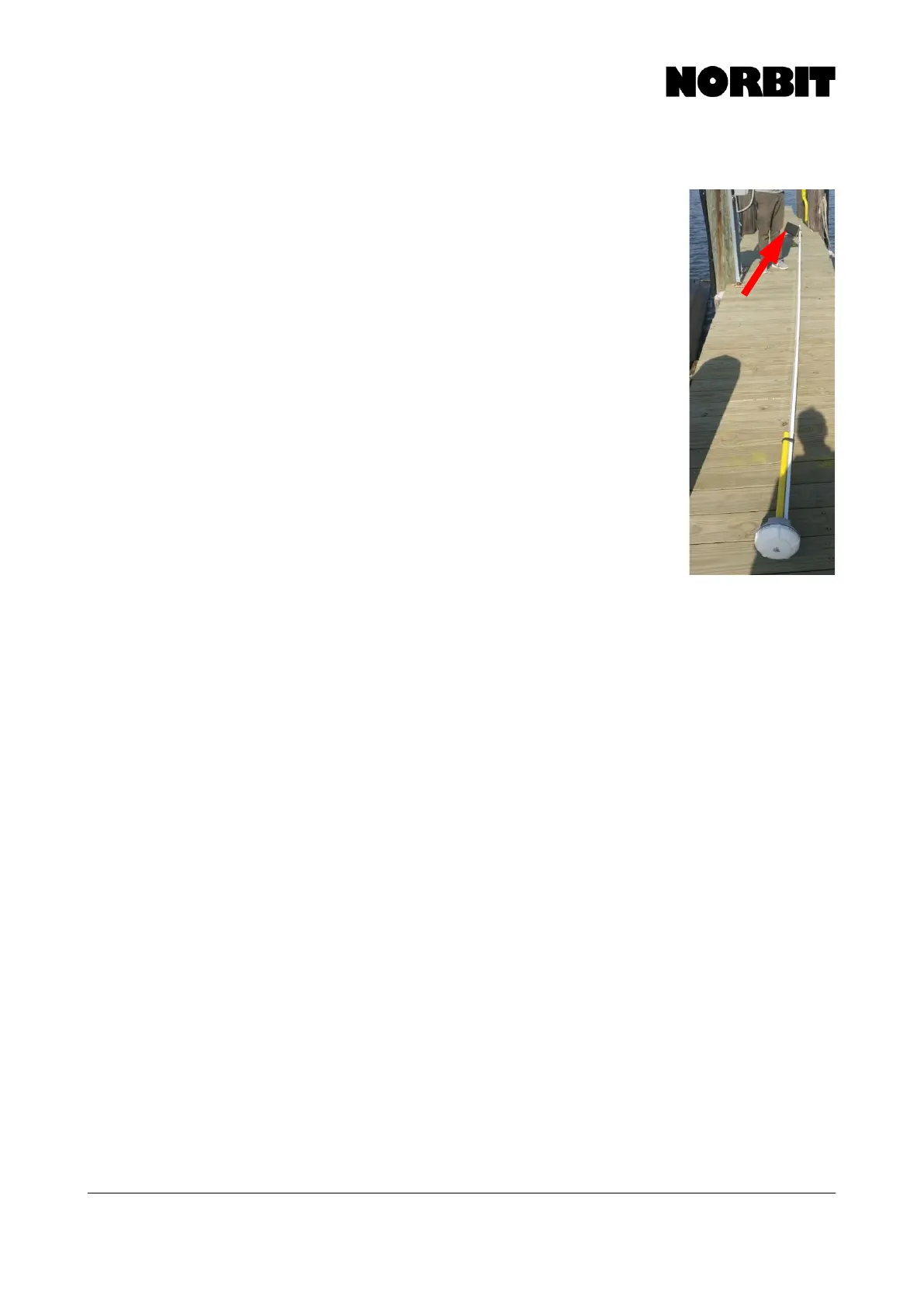
Seahorse plate check was performed. The plate check consists of a metal
plate attached to a fiberglass survey rod approximately 1m from the bottom
of the rod.
The rod is then extended and an independent GNSS rover antenna is placed
at the top. The measurement from the GNSS antenna to the plate is taken
and placed as the antenna height in the rover. The rod with the attached
plate and GNSS antenna is lowered into the water so that the plate is visible
within the sonar wedge.
At the same time, GNSS measurements are taken from the rover and
NORBIT data is recorded. The elevation of the rover shots and the final
processed elevation of the soundings is then compared. If all sonar
equipment is functioning properly and the offsets have been measured
correctly then the final difference should be within 1-2cm and often better.
The elevation of the plate, determined by the GNSS rover, can use the same
base station as the NORBIT. However, using a different base station can
add another level of independence from the sonar system. This can even
help check that the base station you are using for the sonar is sending out
the proper corrections.



 To Next Page