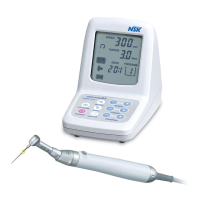
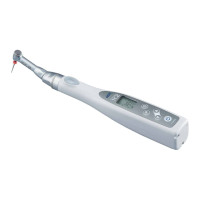
This document is a service manual for NSK EX series handpieces, including models EC-30, E4R, E10R, E16R, E20RI, and E64R. It provides instructions for the disassembly and reassembly of these dental handpieces, which are essential tools in various dental procedures.
Function Description:
NSK EX series handpieces are precision dental instruments designed for a range of applications, from restorative dentistry to prophylaxis. These handpieces are typically driven by an air motor or electric motor, transmitting rotational power to burs or other attachments for cutting, polishing, and shaping dental materials or tooth structure. The modular design of the EX series, as indicated by the disassembly procedures, allows for specific components to be serviced or replaced, ensuring the longevity and optimal performance of the instrument. The different models within the series likely cater to varying speed, torque, and application requirements, offering versatility to dental professionals.
Important Technical Specifications (Inferred from Disassembly Procedures):
While specific technical specifications like RPM, torque, or air pressure are not explicitly detailed in this service manual, the disassembly steps reveal key internal components and their arrangement, which are indicative of the handpiece's design and functionality.
- Modular Construction: The handpieces are designed with a modular structure, comprising several distinct assemblies such as the Sheath, Elbow Ass'y, Drive Shaft Ass'y, Rear Joint, Dog Clutch Shaft Ass'y, and Reduction Gear Ass'y. This modularity facilitates maintenance and replacement of individual components.
- Drive Mechanism: The presence of a "Drive Shaft Ass'y" and "Dog Clutch Shaft Ass'y" suggests a mechanical drive system that transmits power from the motor to the working end of the handpiece. The "Dog Clutch" mechanism is typically used for engaging and disengaging rotational power, often found in systems requiring precise control over power transmission.
- Gear Reduction: The "Reduction Gear Ass'y" indicates that some models, particularly those with higher torque or lower speed requirements, incorporate a gear reduction system. This system modifies the rotational speed and torque output from the motor to suit specific clinical applications. For example, a 1:1 reduction gear maintains the motor's speed, while a 1:4 or 1:16 reduction gear (as might be implied by model numbers like E4R or E16R) would reduce the speed and increase the torque, suitable for tasks like caries removal or polishing. Conversely, a speed-increasing gear (e.g., 1:5) would be used for high-speed cutting.
- Coupling Mechanism: The "Rear Joint" and its interaction with the Sheath suggest a coupling mechanism that connects the handpiece body to the dental unit's motor or hose. This joint is critical for secure attachment and proper power transmission.
- Material Durability: The instruction to "Protect the Sheath and the Elbow Ass'y with Emery Cloth" during disassembly implies that these external components are made of materials that, while robust, can be scratched or damaged if not handled carefully. Dental handpieces are typically constructed from high-grade stainless steel or other durable alloys to withstand repeated sterilization and daily use.
Usage Features (Inferred):
The manual focuses on servicing rather than direct usage, but the design elements revealed through disassembly hint at user-centric features:
- Ease of Maintenance: The detailed disassembly steps suggest that the handpieces are designed for relatively straightforward servicing, allowing dental technicians or trained personnel to perform repairs and component replacements. This is crucial for minimizing downtime in a busy dental practice.
- Versatility across Models: The mention of various models (EC-30, E4R, E10R, E16R, E20RI, E64R) implies a range of handpieces with different gear ratios or configurations, catering to diverse clinical needs. For instance, models with "R" might denote a specific reduction ratio (e.g., E4R for 4:1 reduction, E16R for 16:1 reduction), while "RI" could indicate an internal water spray system or another specific feature. The EC-30, being a separate case, might be a straight handpiece or have a unique design.
- Robust Construction: The need for specific tools like pliers (T-2) and the use of emery cloth for protection during disassembly underscore the robust and tightly fitted nature of the components, designed for precision and durability in a demanding clinical environment.
Maintenance Features:
The service manual is primarily a guide for maintenance, outlining the essential steps and tools required for disassembly and reassembly.
- Required Tools: The manual explicitly lists "T-2 (Pliers)," "Emery Cloth," and "Stick etc" as necessary tools.
- T-2 (Pliers): These pliers are used for gripping and turning components, particularly for unscrewing the Sheath from the Elbow Ass'y or the Rear Joint. The design of the pliers, as shown in the images, appears to be specialized for gripping the handpiece components without causing damage.
- Emery Cloth: This is used to protect the surfaces of components like the Sheath, Elbow Ass'y, and Rear Joint from scratches or damage while being gripped by pliers. This highlights the importance of preserving the aesthetic and functional integrity of the handpiece's external surfaces.
- Stick etc: A "Stick" is used for pushing out internal components, specifically the Reduction Gear Ass'y. This implies that some internal parts are press-fitted or require a gentle push for removal, rather than being threaded.
- Disassembly Procedure:
- Caution against losing parts: The instruction "Disassemble on a tray to prevent losing parts" emphasizes the small size and precision of the internal components, which are critical for the handpiece's function.
- Sheath Removal: For both EC-30 and other models (E4R, E10R, etc.), the first step involves removing the Sheath. This is done by turning it counterclockwise with T-2 pliers, while protecting the components with emery cloth. This suggests a threaded connection for the Sheath.
- Elbow Ass'y / Rear Joint Removal: After the Sheath, the Elbow Ass'y (for EC-30) or the Rear Joint (for E4R, E10R, etc.) is exposed. The images show these components being separated, revealing the internal drive shaft.
- Dog Clutch Shaft Ass'y Removal: For the E4R and similar models, the Dog Clutch Shaft Ass'y is removed, indicating its position further inside the handpiece's drive train.
- Reduction Gear Ass'y Removal: The Reduction Gear Ass'y is removed by pushing it with a stick, suggesting it is either press-fitted or held in place by friction.
- Reassembly Procedure: The manual states, "Reverse the procedure for disassembly." This implies that reassembly involves carefully following the disassembly steps in reverse order, ensuring all components are correctly aligned and secured. Proper torque for threaded connections and correct seating of press-fitted parts are crucial for the handpiece's function and longevity.
- Part List Reference: The note "Please refer to the part list for the more detailed disassembly" indicates that this manual provides a general overview, and a separate part list would offer specific details about each component, including part numbers, which is essential for ordering replacements.
In summary, this service manual provides critical guidance for maintaining NSK EX series handpieces, emphasizing careful handling, specific tools, and a systematic approach to disassembly and reassembly. The design of these handpieces, as revealed through the maintenance instructions, points to a modular, precision-engineered instrument with robust construction and features tailored for various dental applications.

 Need help?
 General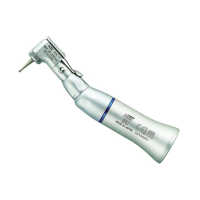

 To Next Page