52 26.11.07 1 689 979 924N
2.3 Safety notes for the operator/owner
The brake test stand must be marked as brake test
stand by means of a warning light and a warning sign
or it must be equipped with a protective barrier.
The edges of the installation pit for the roller set must
be marked by a warning paint (according to DIN
4844).
Brake test stands to be installed above a working pit
must be operated only with safety devices (prescri-
bed in the Federal Republic of Germany).
Tread protection devices must be installed between
the roller sets.
The brake test stand must not be used for brake tests
according to §29 StVZO and the Appendix VIII StVZO
in connection with § 41 StVZO before the correction
of defects. Routine check tests must be performed
again within 4 weeks.
The electrical system must be protected from moistu-
re and wetness.
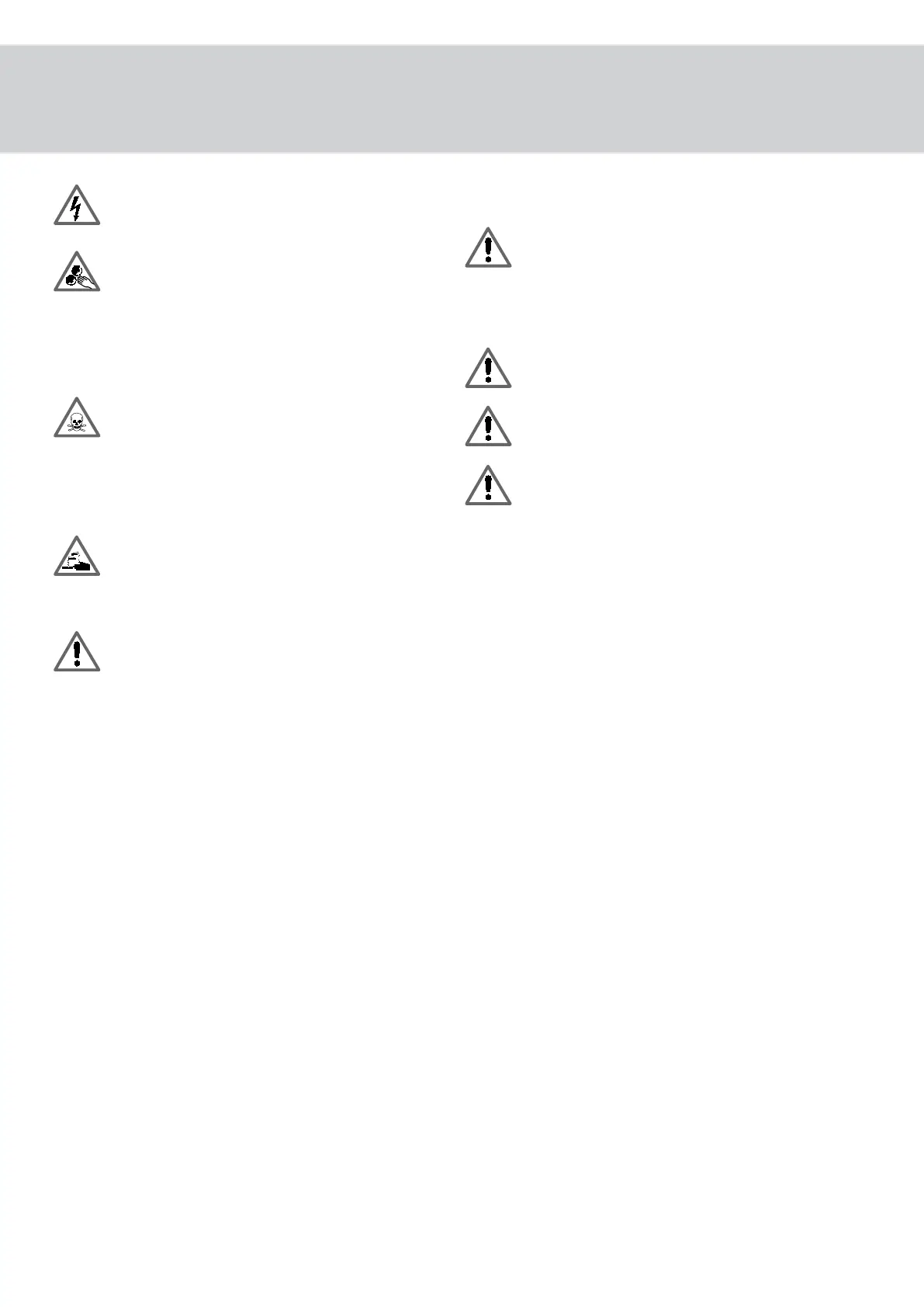
Danger of electric shock!
Do not perform adjustment work when the test
rollers are running.
Danger of injury!
2.2 Handling of dangerous substances
Brake fluid is toxic!
Store brake fluid only in closed original containers!
If brake fluid is filled in beverage bottles, it might be
drunk unintentionally.
Danger to life!
Immediate medical assistance is necessary!
If brake fluid comes into contact with the skin or the
eyes, it must be flushed out immediately with a liberal
amount of clean water.
Please seek medical assistance in case of eye or skin
irritations.
Avoid contact with brake fluid by suitable protective
clothes.
! Oil or brake fluid is hazardous waste.
(According to the waste disposal catalogue, it has the No.
55 356, category II.) Brake fluid must be collected and
disposed of separate from waste oil.
! Storage batteries are hazardous waste.
They must be disposed of according to special regulations.
! Primary batteries are hazardous waste.
They must be disposed of according to special regulations.



 To Next Page