
 To Next Page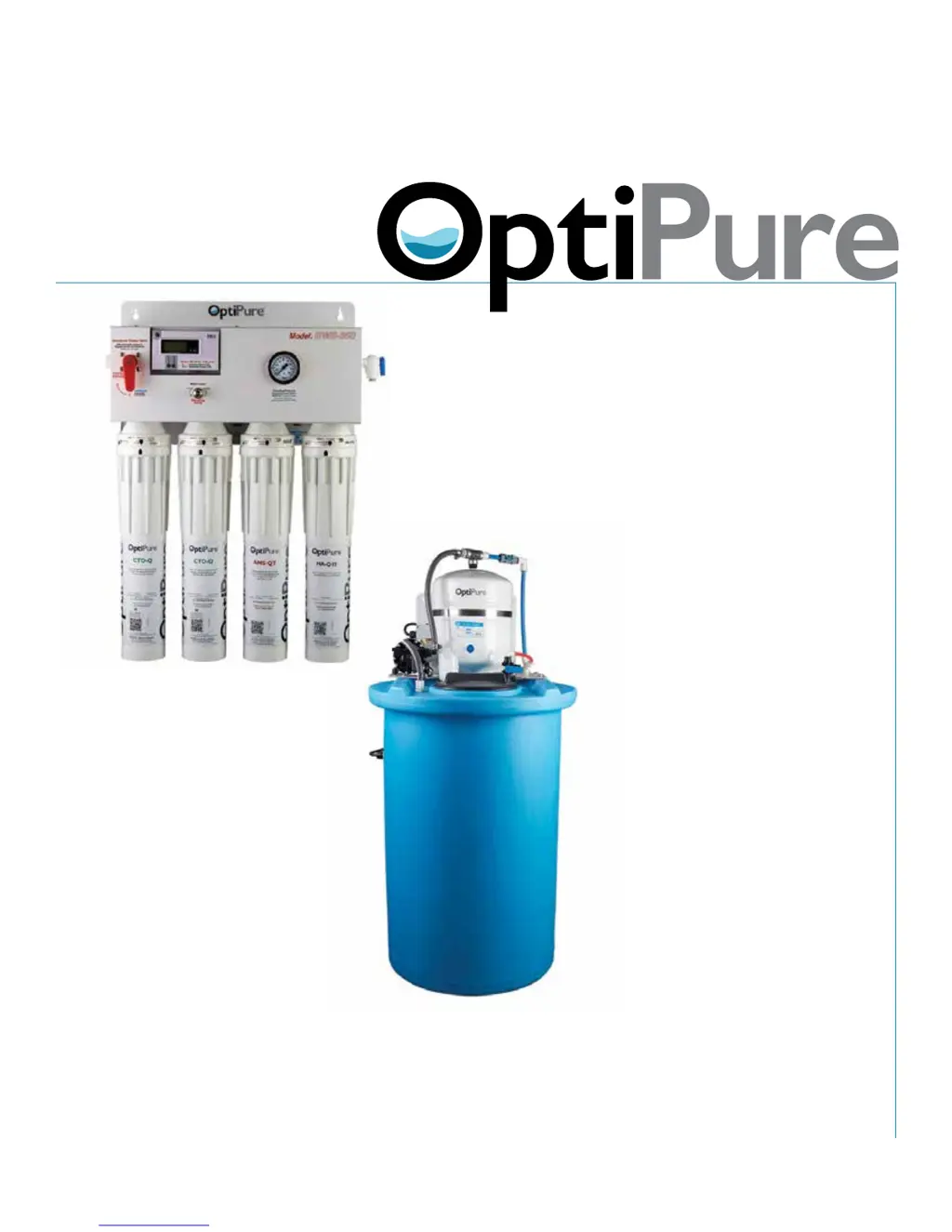
B
Brandy RobertsSep 9, 2025
What to do if OptiPure BWS350 Water Filtration Systems Operating Pressure reduced?
- TTerry PerezSep 10, 2025
Pre-Filters need to be replaced.

What to do if OptiPure BWS350 Water Filtration Systems Operating Pressure reduced?
Pre-Filters need to be replaced.
How to resolve a High Level Float Switch Open in OptiPure Water Filtration Systems?
Remove the Storage Tank lid and actuate the Float Switch up and down.
What to do if there is Low Feed Water Pressure in OptiPure BWS350 Water Filtration Systems?
Install optional Feed Water Pressure Booster Pump.
What to do if there is Very cold Feed Water temperature in OptiPure BWS350?
Raise water temperature to increase production or determine if a higher capacity system is required.
Electrical work safety precautions for qualified electricians.
Contact information for local maintenance and technical support.
Specifies the operating conditions for the BWS350 system.
Details symbols used on the water processor and their meanings.
Key safety precautions for connecting and operating the system.
Device to check Total Dissolved Solids (TDS) of water.
Locating and identifying CTO-Q Pre-Filters and AMS-QT Membrane.
Adjusts optimized water TDS by blending filtered and RO water.
System for storing optimized water with high/low level switches.
Key parameters like TDS rejection, temperature, and pressure.
Guidelines for system placement and drain connection.
Power source specifications and feed water connection details.
Water quality requirements and storage tank placement.
Physical dimensions and space requirements for the main processor.
Dimensions for 50-gallon and 16-gallon tank assemblies.
Essential clearance for maintenance and service access.
Connecting power cord and feed water supply line.
Routing reject and optimized water lines to the tank.
Connecting pump, buffer tank, and water lines.
Installing level switches and optional post-treatment.
Guidelines for securely mounting the processor unit to the wall.
Connecting drain, feed water, and checking tank components.
Connecting optimized water lines between components and to equipment.
Connecting the RP assembly to the processor and tank.
Information on placing the repressurization assembly remotely.
Procedure for inserting CTO-Q, AMS-QT, and MA-Q15 cartridges.
Steps for filling, flushing, and testing the system.
Final connections for optimized water delivery to equipment.
Procedure for adjusting the optimized water TDS level.
Final steps and owner familiarization.
Description of the RP pump's pressure switch and buffer tank.
How high/low level float switches and indicator lights work.
Feed water, reject water, and optimized water line connections.
Identification of CTO-Q, AMS-QT, MA-Q15 cartridges and control valves.
Pressure gauge, water quality monitor, and electrical box.
Buffer tank, inlet divert valve, float valves, and foot valve.
RP pump, air breather, buffer tank valve, and outlet.
High and low level float switches for tank monitoring.
Explains RO process, product/reject ratio, and optimized water.
Steps for adjusting the reject flow control valve.
Important safety notes regarding reject flow control valve operation.
Guidelines for safe operating flow rates and ratios based on conditions.
Procedures for collecting and measuring water flow.
How blending affects flow and valve limitations.
Instructions for changing the CTO-Q carbon/sediment pre-filters.
Guide for removing and replacing the reverse osmosis membrane.
Procedure for replacing optional post-treatment cartridges.
Resolutions for running out of water or low operating pressure.
Addressing poor water quality due to blend valve or membrane issues.
Troubleshooting short filter life related to sediment or feed water.
Resolving problems with the high level float switch or solenoid valve.
Diagnosing issues when the RP pump does not activate.
Addressing issues with worn brushes or trapped air in the pump.
Instructions for using push-to-connect fittings for tubing.
Procedure for testing the high level float switch functionality.
 General
| Flow Rate | 50 GPD (Gallons Per Day) |
|---|---|
| Dimensions | 15.5 x 5.5 x 17.5 inches |
| Weight | 15 lbs |
| Operating Pressure | 40 - 85 psi |
| Operating Temperature | 40 - 100°F |
| Product Type | Reverse Osmosis System |
| Filtration Stages | 5 |
| Membrane Type | Reverse Osmosis Membrane |
| Capacity | 350 GPD (Gallons Per Day) |
| Filter Life | 6-12 months (depending on usage) |
| Daily Production | 350 GPD |