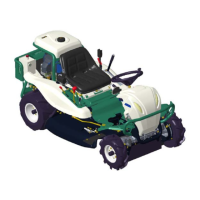
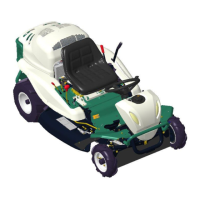
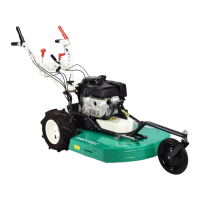
CONTROLS
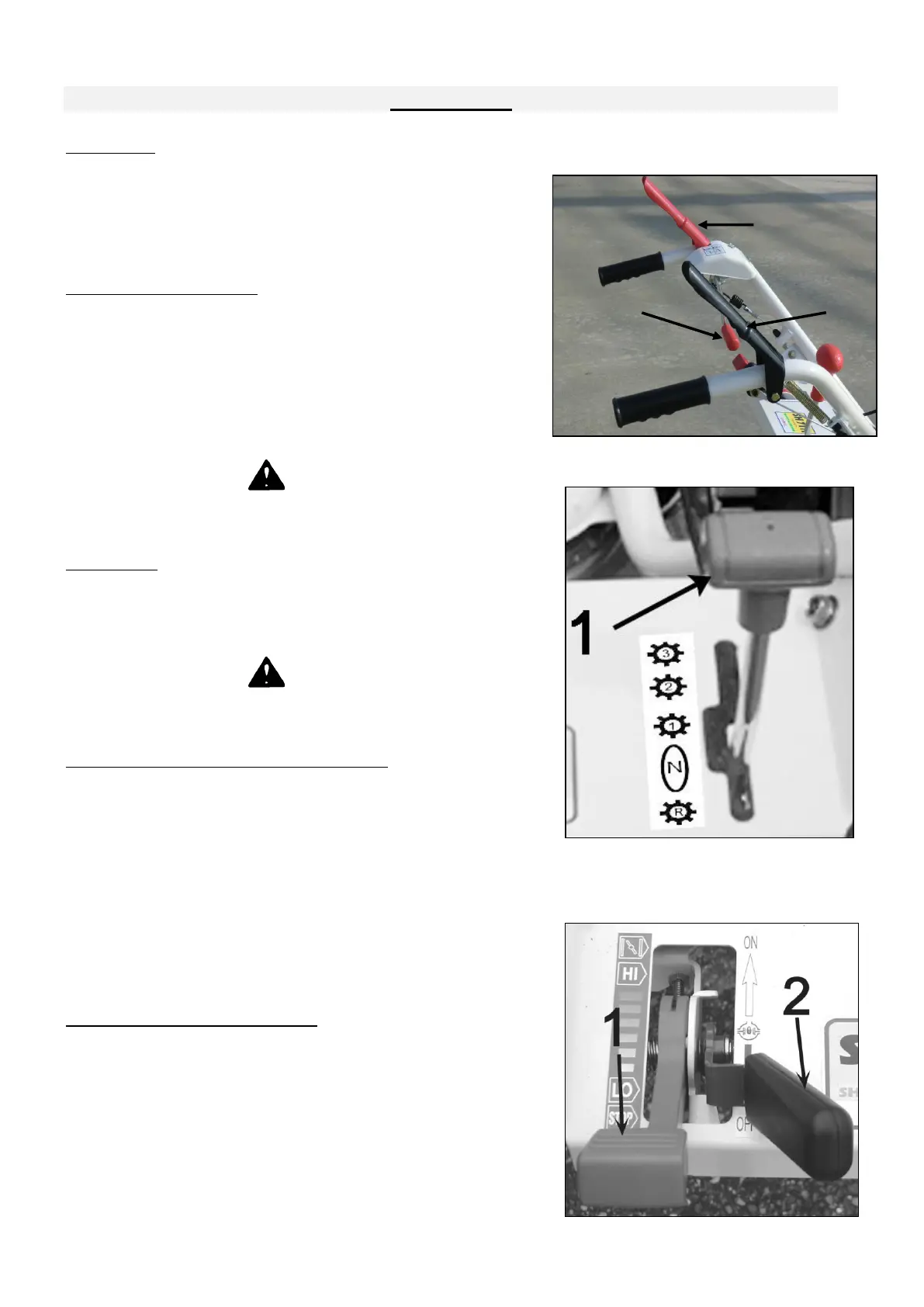
Travel lever
Grip the lever (1,Figure 2) with handlebar, to make the
machine moving. Release the lever, then parking brake is
activated and machine stops. Parking brake is inactivated
when travel lever is pressed.
Cutting blade clutch lever
Cutting blade Clutch lever make the engine power transmit the
blade to mow
(2, 3 Figure 2, ).
First Grip the lever (2,figure2) with handlebar, Then pull up th
lever (3, figure 2) to make the blade turning. Release the lever
(2,figure2), then the blade stops.
WARNING
Never try to start or stop the engine with blade engaged.
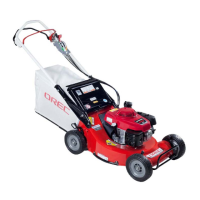
Speed lever
This lever allowed to change the travel speed from 1 (low
speed) to 3 (high speed). Put the lever on “R” to go on reverse.
(1, figure 3). (N) position is neutral.
WARNING
Change the travel speed only when the machine is stopped.
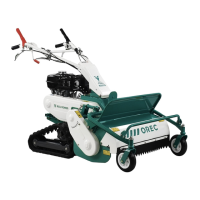
Throttle lever and Choke lever (1 Figure 4)
Push the lever (1, figure 4) completely forward to operate the
choke to start cold engine, when engine has start release it.
Push the throttle lever forward to « HI » to increase engine
speed, pull the throttle lever rearward to « LO » to decrease
engine speed to idle. Always operate mower at full engine speed.
Pull the throttle lever rearward to « STOP » in order to stop the
engine.
IMPORTANT
Do not use the choke when the engine is hot, it did not start.
Differential lock lever (2 Figure 4)
This lever is normaly used in “OFF” position. It is recommended
to use this lever in “ON” position, in the conditions such as slope,
slipping area, place where one of rear wheel is slipping, and
loading / unloading on the truck. When the differential lock lever
is in “ON” position, rear wheels are connected and machine
certainly goes straight.
However, when the machine is turning, differential lock must be
“OFF” because turning radius is bigger, one of the rear wheel is
worn, and transmission may be damaged.


 To Next Page