HYDROFIT™ Owner’s Information Manual
WARNING: The use and ownership of this
Chapter 2: Performance and Safety
If anything improper is discovered, corrective action must be taken
immediately. Do not attempt to repair the equipment. For safety
reasons, only a trained, authorized elevator mechanic should ever
Knowing what to look for is probably the most important aspect of elevator
awareness. When you know how to spot issues in performance, you can influence
the efficiency of your equipment by taking care of issues before they become
problems.
The following information suggests ways you can look after your
investment and help keep it running at optimum performance. More information
about general maintenance procedures can be found in Chapter 4.
You or a member of your building staff should go t
regularly with each elevator car:
Emergency Lighting/Alarm Bell
system provides passenger
reassurance in emergencies
You should be aware of several things in ord
potential hazards. The following seven
be applied on a regular basis to most elevator systems.
How long must passengers wait for an elevator at the lobby?
Well-timed arrival
s and departures, as well as proper acceleration and deceleration,
are critical to fast, efficient service.
HYDROFIT™ Owner’s Information Manual
WARNING: The use and ownership of this
work is defined in the legend upon the front page hereof.
Chapter 2: Performance and Safety
If anything improper is discovered, corrective action must be taken
immediately. Do not attempt to repair the equipment. For safety
reasons, only a trained, authorized elevator mechanic should ever
r elevator.
Knowing what to look for is probably the most important aspect of elevator
awareness. When you know how to spot issues in performance, you can influence
the efficiency of your equipment by taking care of issues before they become
The following information suggests ways you can look after your
investment and help keep it running at optimum performance. More information
about general maintenance procedures can be found in Chapter 4.
You or a member of your building staff should go t
hrough the following procedures
regularly with each elevator car:
Emergency Lighting/Alarm Bell
system provides passenger
reassurance in emergencies
1. Test the operations and safety devices
Test alarm bells, stop switches,
intercoms, telephone
emergency lighting systems to make sure
they will work in an emergency.
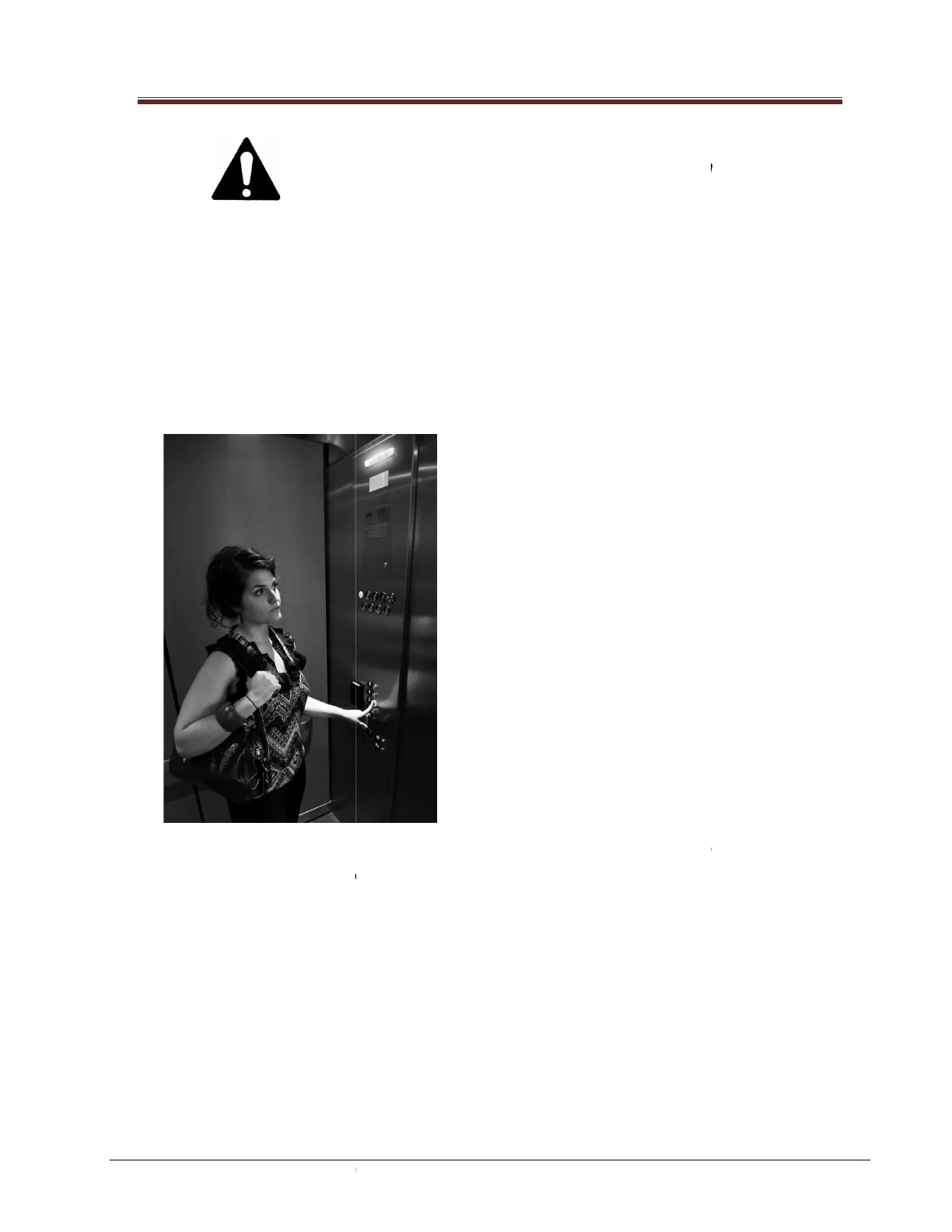
2. Ride the elevators.
Ride the elevator and pay attention to the
smoothness of starting and stopping, to
any unusual sounds (such as squeaks or
scrapes), and to any
vibrations, or odors. Close your eyes to
increase awareness of irregularities.
3. Listen during rush hours.
Stand in the lobby during peak traffic
periods listening to passengers'
comments.
You should be aware of several things in ord
er to prevent equipment failure and/or
potential hazards. The following seven
-
point safety and performance checklist can
be applied on a regular basis to most elevator systems.
How long must passengers wait for an elevator at the lobby?
s and departures, as well as proper acceleration and deceleration,
are critical to fast, efficient service.
10
work is defined in the legend upon the front page hereof.
If anything improper is discovered, corrective action must be taken
immediately. Do not attempt to repair the equipment. For safety
reasons, only a trained, authorized elevator mechanic should ever
Knowing what to look for is probably the most important aspect of elevator
awareness. When you know how to spot issues in performance, you can influence
the efficiency of your equipment by taking care of issues before they become
The following information suggests ways you can look after your
investment and help keep it running at optimum performance. More information
hrough the following procedures
1. Test the operations and safety devices
.
Test alarm bells, stop switches,
emergency lighting systems to make sure
they will work in an emergency.
Ride the elevator and pay attention to the
smoothness of starting and stopping, to
any unusual sounds (such as squeaks or
vibrations, or odors. Close your eyes to
increase awareness of irregularities.
3. Listen during rush hours.
Stand in the lobby during peak traffic
periods listening to passengers'
er to prevent equipment failure and/or
point safety and performance checklist can
How long must passengers wait for an elevator at the lobby?
s and departures, as well as proper acceleration and deceleration,


 To Next Page