PCS TCM2800 Quick Start Guide
Page 11
Ph: 804.227.3023
10511 Old Ridge Rd. Ashland, VA 23005
v 2.1
6 Calibrating the Transmission
This section will walk through the basics of tuning an electronic automatic transmission. First verify that the transmission
setup has been correctly programmed for your transmission. New calibration les provided with your install will give you
a good starting point. It is recommended you work on the calibration “A” tables rst. Then use these as a starting point for
Calibration “B”. The pressure tables are the most critical. It these are command a low pressure during shifting or steady
state, your transmission will fail. For this reason, we recommend getting these settings adjusted rst.
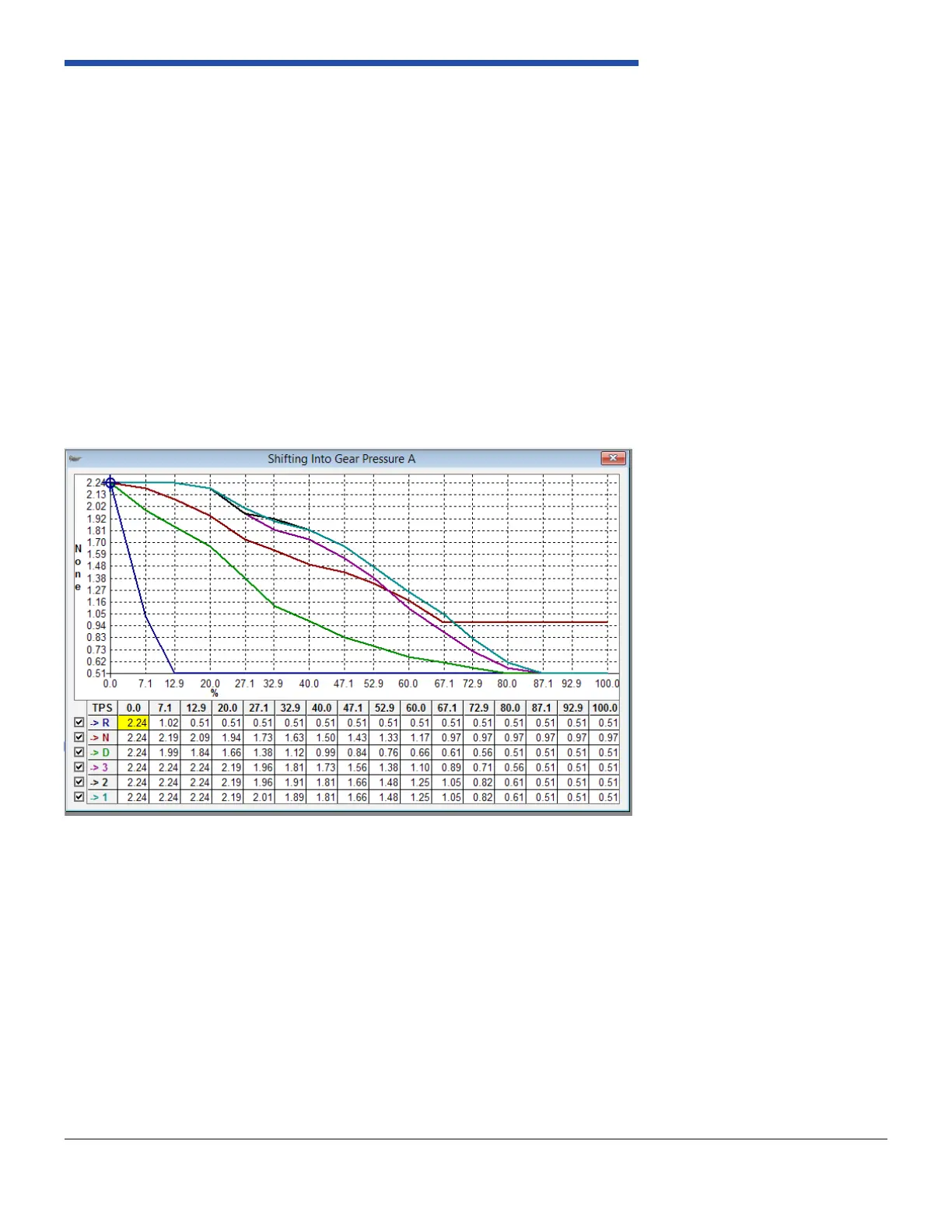
6.1 Shifting into Gear Pressure
Shifting Pressure are controlled by an electronic pressure control solenoid. The greater the amperage (Y-Axis) the lower
the Line pressure (shift pressure in this case). As TPS increases for a commanded shift, the amperage should decrease
to increase the shift pressure Keep in mind too low of pressure will cause long, soft shifts and will cause a durability
problem. Setting these values to low numbers and then gradually increasing them in the individual TPS/Load areas to
achieve the desired shift feel is a safer approach. Due this for each shift event. For the best results the transmission
calibration should be performed in the normal operating region (160-200). Remember to save your calibration le to your
computer. Reference Figure 18.
6.2 Steady State Pressure
Steady state pressure is the amount of pressure required to hold the applied clutch without slipping after the shift has
completed. As TPS/Load increases the amount of holding force needs to increase. This table is the transmission line
pressure that is commanded per gear after the shift is completed. Typically, these values are lower the shifting pressure
since the load transfers are completed at this point. While you may think it is safer to just let the transmission run at High
pressure all the time during this drive condition, you should consider the following. First, high pressure outputs from
the pump cause the transmission to run hotter. Second this also creates addition load which reduce engine power and
decreases fuel economy. Ideally you should set these to a point that has enough pressure to hold the clutch. Similar
to the “Shifting into Gear Pressure Tables”, Shifting Pressure are controlled by an electronic pressure control solenoid.
The greater the amperage (Y-Axis) the lower the Line pressure (shift pressure in this case). Reference Figure 19 on the
following page.
Figure 18: Shifting Into Gear Pressure A


 To Next Page