EasyManua.ls Logo

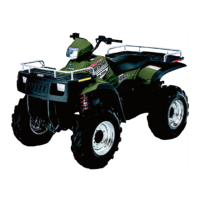
Polaris 600 - User Manual

Polaris 600
129 pages
Print Icon
To Next Page IconTo Next Page
Loading...
Owner's Manual
Vehicle Maintenance and Safety
2003
Sportsman 600
Sportsman 700
for
Read this manual carefully. It contains important safety information.
This is an adult vehicle only.
Operation is prohibited for those under 16 years of age.

Table of Contents

Questions and Answers

  • P
    pbowmanAug 9, 2025
    How to fix a Polaris Offroad Vehicle when the engine doesn’t turn over?
    • B
      Brian DaltonAug 9, 2025
      If your Polaris Offroad Vehicle engine doesn’t turn over, it could be due to several reasons. First, check if the circuit breaker has tripped and reset it if necessary. Low battery voltage can also prevent the engine from turning over, so recharge the battery to 12.5 VDC. Make sure that the battery connections and solenoid connections are secure and tight.
  • P
    Phillip CollinsAug 14, 2025
    What to do if Polaris 600 engine runs irregularly?
    • C
      Chase WardAug 14, 2025
      If your Polaris Offroad Vehicle engine runs irregularly, stalls, or misfires, several factors could be the cause. Start by inspecting, cleaning, and/or replacing fouled or defective spark plugs, and ensure the spark plug gap and heat range are correct by setting the gap to specifications or replacing the plugs. Check for loose ignition connections and tighten them as needed. Replace the fuel if water is present, or if the fuel is incorrect. Inspect and replace a kinked or plugged fuel vent line. Clean or replace a clogged air filter. If the battery voltage is low, recharge it to 12.5 VDC. For worn or defective spark plug wires, reverse speed limiter malfunction, electronic throttle control malfunction, or other mechanical failure, consult your Polaris dealer.
  • C
    Clayton PotterAug 18, 2025
    Why does my Polaris 600 engine backfire?
    • K
      Kayla MaddoxAug 18, 2025
      If your Polaris Offroad Vehicle engine backfires, it could be due to several reasons. Weak spark from the spark plugs can be a cause, so inspect, clean, and/or replace the spark plugs. Incorrect spark plug gap or heat range may also be the reason, set gap to specs or replace plugs. Old or non-recommended fuel could also be the culprit, so replace it with new fuel. For incorrectly installed spark plug wires, incorrect ignition timing, or mechanical failure, it's best to see your Polaris dealer.
  • C
    Christine MartinAug 25, 2025
    Why is my Polaris 600 Offroad Vehicle engine pinging or knocking?
    • C
      Charles LuceroAug 25, 2025
      To address engine pinging or knocking in your Polaris Offroad Vehicle, start by replacing any poor quality or low octane fuel with the recommended fuel. If the problem persists, the issue may be incorrect ignition timing or incorrect spark plug gap or heat range, set gap to specs or replace plugs. For incorrect ignition timing, it's best to see your Polaris dealer.
  • E
    Eric RobertsonOct 28, 2025
    What to do if my Polaris Offroad Vehicle engine turns over but fails to start?
    • W
      William FrazierOct 28, 2025
      If your Polaris Offroad Vehicle engine turns over but doesn't start, there are several potential causes. You might be out of fuel, so try turning the fuel valve to reserve and refueling. The fuel valve or filter could be clogged, requiring inspection and cleaning or replacement. Water in the fuel is another possibility, which means you should drain the system and refuel. Ensure the fuel valve is on and that you're using fresh, recommended fuel. Also, inspect the spark plug(s) for fouling or defects, and verify the stop switch is on. If none of these resolve the issue, there could be a mechanical failure, in which case you should consult your Polaris dealer. Also, check the fuel filter, and replace it if it's clogged. If the battery voltage is low, recharge the battery to 12.5 VDC. Another ...
  • S
    Samantha RobbinsNov 3, 2025
    Why does my Polaris Offroad Vehicle engine keep stopping or losing power?
    • K
      Kevin MilesNov 3, 2025
      If your Polaris Offroad Vehicle engine stops or loses power, several factors could be at play. You might be out of fuel, so switch to reserve and refuel. A kinked or plugged fuel vent line can also cause this, so inspect and replace if needed. Water in the fuel or using incorrect fuel are other possibilities, requiring you to replace the fuel. Overuse of the choke, or fouled or defective spark plugs can cause this issue, so inspect, clean, and/or replace the spark plugs. Also, incorrect spark plug gap or heat range might be the reason, set gap to specs or replace plugs. Loose ignition connections can also lead to power loss, so check and tighten them. Ensure your battery voltage isn't low by recharging it to 12.5 VDC. Finally, a clogged air filter can restrict airflow, so inspect, clean, o...

Summary

WELCOME

VEHICLE IDENTIFICATION NUMBERS

SAFETY

Safety Decals and Locations

Details warning decal placements for rider protection.

Safe Riding Gear

Essential protective clothing for ATV riding.

Operator Safety

Safe operating practices and responsibilities for the rider.

CONTROLS

Engine Electrical Switches

Explains primary electrical controls and switches.

Throttle Lever

Details throttle operation and safety.

Light Switches

Covers headlight controls.

Brake Lever

Explains front and rear brake activation.

Master Cylinder

Details brake fluid checks and maintenance.

Parking Brake

Explains setting and safeguards.

Auxiliary Brake

Describes the backup brake system.

Choke

Explains choke operation for starting.

Fuel Valve

Details fuel valve positions and use.

Fuel Tank

Specifies fuel type and filler location.

Fuel Filter

Notes filter replacement schedule.

Automatic Transmission Gear Selector

Explains gear selection.

Belt Life

Tips for extending drive belt longevity.

FEATURES

All Wheel Drive (AWD) System

Explains the 4WD system.

Instrument Cluster

Details display functions and indicators.

OPERATION

Fuel Safety

Critical safety guidelines for gasoline and exhaust fumes.

Break-In Period

Procedures for proper new engine break-in for optimal performance.

Pre-Ride Inspection

Essential checklist for verifying vehicle condition before each use.

Starting the Engine

Step-by-step instructions for starting cold and warm engines.

Cold Weather Operation

Specific considerations for operating the ATV in cold temperatures.

Hauling Cargo

Guidelines for safe loading, weight distribution, and towing.

Driving Safely

Covers various safe driving techniques and precautions.

Driving Procedures

Basic steps for safe ATV operation and handling.

Making Turns

Techniques for safely executing turns on the ATV.

Driving on Slippery Surfaces

Precautions and techniques for low-traction riding conditions.

Traveling Uphill

Procedures for safely ascending inclines.

Sidehilling

Dangers and precautions for riding across hillsides.

Traveling Downhill

Procedures for safely descending inclines.

Turning Around on a Hill

Method for safely turning the ATV on an incline.

Driving Through Water

Safe practices for crossing water obstacles.

Driving Over Obstacles

Safe techniques for navigating terrain hazards.

Driving in Reverse

Safety precautions and procedures for reverse operation.

Parking on an Incline

Steps for safely parking the ATV on inclines.

NOISE EMISSION CONTROL SYSTEM REGULATION

MAINTENANCE AND LUBRICATION

Accessories

Information on optional power outlets for accessories.

Periodic Maintenance Schedule

Schedule for regular vehicle upkeep and inspections.

Periodic Maintenance Record

Chart for logging performed periodic maintenance.

Lubrication Recommendations

Guidelines and chart for vehicle lubrication.

Engine Oil Check

Procedure for checking the engine oil level.

Oil and Filter Change

Steps for changing engine oil and filter.

Premium 4 Synthetic Lubricant

Details on recommended engine oil specifications.

Transmission Oil Check

Procedure for checking transmission oil level.

Transmission Oil Change

Steps for changing transmission oil.

Front Gearcase Oil Check

Procedure for checking front gearcase oil level.

Front Gearcase Oil Change

Steps for changing front gearcase oil.

Rear Gearcase Oil Check

Procedure for checking rear gearcase oil level.

Rear Gearcase Oil Change

Steps for changing rear gearcase oil.

Engine Cooling System

Information on the vehicle's cooling system.

Coolant Level

Procedure for checking the coolant reservoir level.

Radiator Coolant Level

Procedure for checking and adding radiator coolant.

Front Brake Adjustments

Checks for the front brake system's condition.

Rear Brake Checks

Notes on rear brake system maintenance.

Auxiliary Brake Checks

Notes on auxiliary brake system maintenance.

Toe Alignment Procedure

Procedure for checking and verifying toe alignment.

Steering Assembly Checks

Checks for loose nuts and bolts in the steering assembly.

Camber and Caster Information

Notes on non-adjustable alignment aspects.

Rear Spring Adjustment

How to adjust the rear shock absorber spring tension.

Handlebar Adjustment

Procedure for adjusting handlebar height.

Carburetor and Idle RPM Adjustment

Adjusting the carburetor for idle speed.

Throttle Cable Freeplay Adjustment

Procedure for adjusting throttle cable slack.

Side Panel Removal

Instructions for removing side panels from the vehicle.

Tire Tread Depth

Information on when to replace tires due to wear.

Wheel Removal

Step-by-step instructions for removing a vehicle wheel.

Wheel Installation

Step-by-step instructions for installing a vehicle wheel.

Wheel Nut Torque Specifications

Specifies torque values for wheel nuts.

Filter Systems

Section covering air and breather filter systems.

Air Filter Service

Procedure for servicing the main air filter and pre-filter.

Breather Filter and Hose Service

Service procedures for the breather filter and associated hose.

Headlight Lamp Replacement

Steps to replace a headlight bulb.

High Beam Adjustment

How to adjust the headlight beam aim.

Headlight Housing Replacement

Steps to replace the headlight housing assembly.

Lower Headlamp Replacement

Procedure for removing and installing the lower headlamp.

Taillight;Brakelight Replacement

Steps for replacing taillight and brakelight bulbs.

Spark Plugs

Information on spark plug types, gap, and torque.

Vehicle Immersion Procedures

Steps if the vehicle becomes immersed in water.

Spark Arrestor Cleaning

Procedure for periodically purging accumulated carbon from the spark arrestor.

PVT System Operation

Explanation of the Polaris Variable Transmission system.

Low vs. High Range Usage

Guidance on selecting low or high gear range.

PVT Drying Procedure

Procedure to dry the PVT system after water ingestion.

Battery Maintenance

Procedures for cleaning terminals and checking fluid.

Battery Removal

Step-by-step instructions for removing the vehicle battery.

Battery Installation and Connections

Procedures for installing and connecting the vehicle battery.

Battery Storage Guidelines

Guidelines for storing the battery during non-use periods.

Cleaning the ATV

How to properly clean the ATV's exterior.

Washing the ATV

Specific instructions for washing the ATV safely.

Waxing the ATV

How to wax the ATV's body finish.

Storage Tips

General tips for storing the ATV.

Engine Fogging Procedure

Procedure for fogging the engine for storage.

Alternative Engine Storage

Alternative method for engine storage preparation.

Battery Storage Care

Battery care during storage periods.

Storage Area and Covers

Advice on selecting storage areas and covers.

Transporting the ATV

Procedures to follow when transporting the vehicle.

TROUBLESHOOTING

Drive Belt and Cover Problems

Solutions for issues related to the drive belt and cover.

Engine Doesnt Turn Over

Troubleshooting steps for when the engine won't crank.

Engine Turns Over, Fails to Start

Solutions for when the engine cranks but doesn't start.

Engine Pings or Knocks

Causes and solutions for engine pinging or knocking sounds.

Engine Backfires

Troubleshooting steps for engine backfiring.

Engine Runs Irregularly, Stalls or Misfires

Solutions for inconsistent engine operation.

Engine Stops or Loses Power

Troubleshooting steps for engine power loss.

Engine Overheating

Causes and solutions for engine overheating.

POLARIS RECOMMENDED PRODUCTS

SPECIFICATIONS

WARRANTY

LIMITED WARRANTY

Details of the limited warranty coverage.

REGISTRATION

Requirements for warranty registration.

Engine Oil

Warranty notes concerning engine oil usage.

Polaris 600 Specifications

General IconGeneral
BrandPolaris
Model600
CategoryOffroad Vehicle
LanguageEnglish

Related product manuals