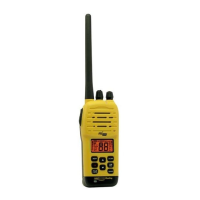
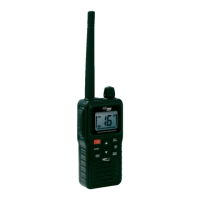
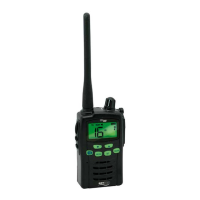
This document describes the Polmar Shark2 VHF Marine Transceiver, a Class D DSC (Digital Selective Calling) radio designed for use on non-SOLAS vessels. It operates on a 12VDC power supply and offers a range of features for marine communication and safety.
Function Description
The Polmar Shark2 is a VHF DSC Base Station Radio with an output power of 25/1 watt. Its primary function is to facilitate marine radio communication and distress signaling. When connected to a GPS receiver, it can display the vessel's current position (longitude and latitude) and GMT time. The radio supports DSC operations through a dedicated unit, enabling semi-automated establishment of radio calls for distress, urgency, safety, and routine communications. It is designed to be waterproof, complying with Japanese Industry Standard level 7, ensuring reliability in various marine conditions.
Important Technical Specifications
Frequencies:
- TX Frequency: 156.025 ~ 157.425 MHz
- RX Frequency: 156.375 ~ 162.000 MHz
- Channels: International Channels
Modulation:
Power:
- Output Power RF: High: 25W / Low: 1W
- Current Drain (12Vdc nominal):
- Transmission at 25W: 5A
- Receiving at max audio: 1.5A
- Receiving stand-by: 0.25A
Audio:
- Audio Output Power: 4W @ 4 Ohm
- Audio Distortion: 5%
- Sensitivity at 12dB Sinad: 0.25 µV
General:
- Antenna Impedance: 50 Ohm
- Microphone Type: Condenser type
- Power Supply: 12 VDC
- Dimensions (H x W x P): 71 × 161 × 147 mm
- Weight: 1.29 kg
NMEA 0183 Version (1.5 to 3.0) Input Sentences: GLL, GGA, RMC, GNS.
Usage Features
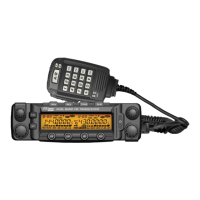
The Polmar Shark2 offers a user-friendly interface with both front panel controls and a compact fist microphone with digital buttons.
Controls and Display:
- Volume and Power On/Off: A rotary knob (0-270°) to power on the device and adjust audio level.
- Squelch: A rotary knob to set the squelch threshold, eliminating background noise.
- CH/Enter: A continuous rotary encoder with a momentary push function to change channel numbers, adjust menu values, and confirm settings.
- Band/Save: Selects international channel bands and sets memory channels.
- Cancel: Cancels the last selection or unsaved changes, steps back one menu level, and cancels DSC Distress calls or auto-retransmission.
- DSC/Menu: Accesses menu settings or DSC Call Menu for making DSC calls.
- Hi/Low/Mem: Toggles between 25W and 1W power output. Holding it down selects memory channels mode.
- Scan: Starts/stops normal or priority scanning of memory or priority channels.
- Watch: Activates/deactivates Dual Watch or Tri-Watch functions.
- 16 Button: Quickly selects emergency channel 16, or exits all other modes to enter channel 16.
- Distress Button: A spring-covered button used to send a distress signal in emergencies. Requires a user's MMSI to be entered.
- LCD Display: Large (39mm x 39mm) with a graph dot matrix for easy readability, displaying channel information, DSC icons, power settings, and GPS data.
- Built-in Speaker: Provides clear ring and voice communication.
Basic Operation:
- Transmission and Reception: Ensure antenna and power are connected. Turn on the radio, adjust volume and squelch. Select a channel using the CH knob. Select high or low power with the Hi/Lo key. Press the PTT button on the microphone to transmit, speak clearly, and release to receive.
- Channel Selection: Select international channels using BAND/SAVE. Enter "Mem mode" by holding HI/LO/MEMO to view only saved channels.
- Memory Channels (FAV): Save desired channels by holding BAND/SAVE. Delete channels by selecting them and holding BAND/SAVE until the FAV icon disappears.
- Time-Out Timer (TOT): Limits transmission time to 5 minutes to prevent unintentional transmissions. A warning beep sounds 10 seconds before automatic shutdown.
- Scan Modes: Four modes available: All scan, FAV CH scan, Priority scan, Priority FAV CH scan. Hold SCAN for 3 seconds to activate Priority scan.
- Watch Functions:
- Dual Watch: Monitors the current channel and channel 16.
- Tri-Watch: Monitors the current channel, channel 16, and channel 9.
- Position Indication: Displays vessel's longitude, latitude, time, and date when connected to a GPS. If no GPS is connected, an alert sounds every 4 hours to prompt manual input.
Digital Selective Calling (DSC):
- MMSI: A nine-digit code for selective calls. Must be programmed for DSC functions to work.
- DSC Call Types: Supports Individual, Group, All Ships, Distress, Position Request, and DSC Test calls.
- Sending Calls: Procedures for sending various DSC calls, including individual calls (from buddy list or manually), group calls, all ships calls (urgency/safety), position requests, and test calls.
- Receiving Calls: Procedures for receiving and acknowledging individual, group, all ships, test, position request, and geographic area calls.
- Distress Auto Procedure: Initiated by pressing the Distress button. Allows selection of distress nature. Transmits distress call on channel 70. Includes re-send, pause, and cancel options.
- Call Logs: Stores up to 20 received calls (excluding distress) and 20 distress calls for quick recall and re-sending.
Menu Settings:
- Buddy List: Stores up to 20 contacts with names and MMSI codes for frequent DSC calls. Allows adding, editing, and deleting entries.
- Backlight: 8 levels of display backlight adjustment.
- Contrast: 8 levels of display contrast adjustment.
- Local/Distant: Adjusts receiver sensitivity. "DISTANT" for normal sensitivity, "LOCAL" to reduce noise.
- GPS/Time: Configures GPS data input (manual or automatic), time format (12/24 Hr), time offset, COG/SOG display, and GPS alert settings.
- Radio Setup: Customizes channel names (up to 12 characters), ring volume (high/low), key beep volume (high/low/off), and internal speaker operation (on/off).
- DSC Setup: Manages MMSI (user and group), ATIS MMSI, ATIS enable, individual reply settings, DSC enable, position reply settings, auto switch, test reply, and timeout.
- Reset: Resets all settings to factory defaults, except for USER MMSI, GROUP MMSI, ATIS MMSI, and Buddy List.
Maintenance Features
The Polmar Shark2 is designed to be maintenance-free and is water-resistant (JIS level 7). To ensure optimal performance and longevity:
- Avoid Tampering: Do not unscrew the unit (base station or handset) as this will compromise its waterproof integrity.
- Cleaning: Clean with a moist cloth. Avoid using solvents like benzene or alcohol, which can damage the radio's surface.
- Professional Repair: If the radio malfunctions, do not attempt internal adjustments. Contact a local dealer for assistance.
Troubleshooting Guide:
- Unit not powering on: Check power connection to the base station and volume control.
- No sound from speaker: Set VOL to a suitable level and adjust squelch.
- Transmission impossible or high power not selectable: Check PTT switch, microphone, or MIC jack. Some channels are low power or receive-only; change channels if necessary. Push H/L to select high power.
- Low receiver sensitivity: Check antenna connection and coaxial cable connection to the base station.
Precautions:
- Power Supply: Never connect to an AC outlet or a DC source over 16V.
- Antenna: Avoid touching the antenna or connector during transmission.
- Children: Keep children away from the radio.
- Magnetic Devices: Keep the transceiver at least 1 meter away from magnetic navigation compasses.
- Temperature: Avoid using or placing the transceiver in areas with temperatures below -20°C or above +60°C, or in direct sunlight.
- Engine Operation: Do not operate in transmission mode with the vessel's engine off to prevent rapid battery discharge.
- Cable Routing: Keep power supply and antenna cables as far as possible from electrical pumps, generators, or other electronic devices to avoid malfunctions.
Licensing: The use of this equipment is subject to licensing and must comply with administrative obligations and national legislation. It can only be used on VHF channels specified by international channeling systems and on inland navigation vessels (Commission Decision 2000/637/EC).

 Need help?
 General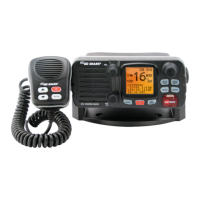

 To Next Page