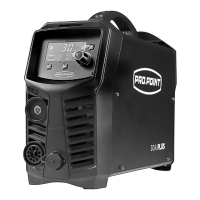
9085754 PROCUT 30A Digi Plus Plasma Cutter V1.0
10 For technical questions call 1-800-665-8685
FUMES AND GASES
WARNING! Stop welding and move to a location with ventilation if
your eyes, nose or throat become irritated. This indicates the
ventilation is not adequate to remove the fumes. Do not resume
welding or cutting until the ventilation is improved and the discomfort
ceases. Seek medical attention if the symptoms do not diminish or if
the welder experiences nausea, dizziness or malaise.
Welding or cutting may produce hazardous fumes and gas during the
welding process. A well-ventilated work area can normally remove the
fumes and gases, but sometimes the welding produces fumes and gases
that are hazardous to your health.
1. Only work in a confined space if the area is well ventilated or while
wearing a respirator or an air-supplied respirator. Welding fumes and gases
can displace air and lower the oxygen level causing injury or death. Be sure
the breathing air is safe. Always have a trained watchperson nearby.
1.1 If ventilation in the work area is poor, use an approved air-
supplied respirator. All the people in the work area must also
have air-supplied respirators.
2. Avoid positions that allow welding fumes to reach your face. Always
attempt to weld ‘upwind’ of the workpiece with the airflow across the
face of the welder. Airflow from behind may create a low-pressure area
in front of the welder and draw the fumes to the person.
3. Ventilate the work area to remove welding fumes and gases. The
fumes and gases should be drawn away from the user.
3.1 Ventilation should be enough to disperse fumes, but not enough
to disturb the shielding gas or flame during welding.
3.2 Ventilation exhaust shall be directed to a non-work area to avoid
exposing other people to potential toxic or dangerous fumes.
3.3 Air removed from the work area by the ventilation system must
be replenished with fresh air to avoid oxygen starvation or a
build-up of fumes or gases. Only use air to provide ventilation.
Any other combination of gases may be explosive or toxic to
people in the work area.
3.4 Ventilation methods that remove gas and fumes from the
welding point before they reach the welder’s face should be
given preference.


 To Next Page