© 2005 SANDVIK TAMROCK CORP.Page 18 - OPERATION
Operation S 83 STD
Noise dampening
Operating the hammer near residential areas or other noise sensitive areas can cause
noise pollution. In order to avoid unnecessary noise, please follow these basic rules:
1. When operating with the hammer, keep the tool at 90 degree angle to the mate-
rial and the feed force in-line with the tool.
2. Replace or fix all parts that are worn out, damaged or loosened. This not only
saves your hammer but it decreases the noise level.
PRINCIPLES OF BREAKING
To increase the hammer's working life, pay particular attention to correct working
methods and how to choose the correct tool for the job. There are essentially two
ways of breaking with a hydraulic hammer.
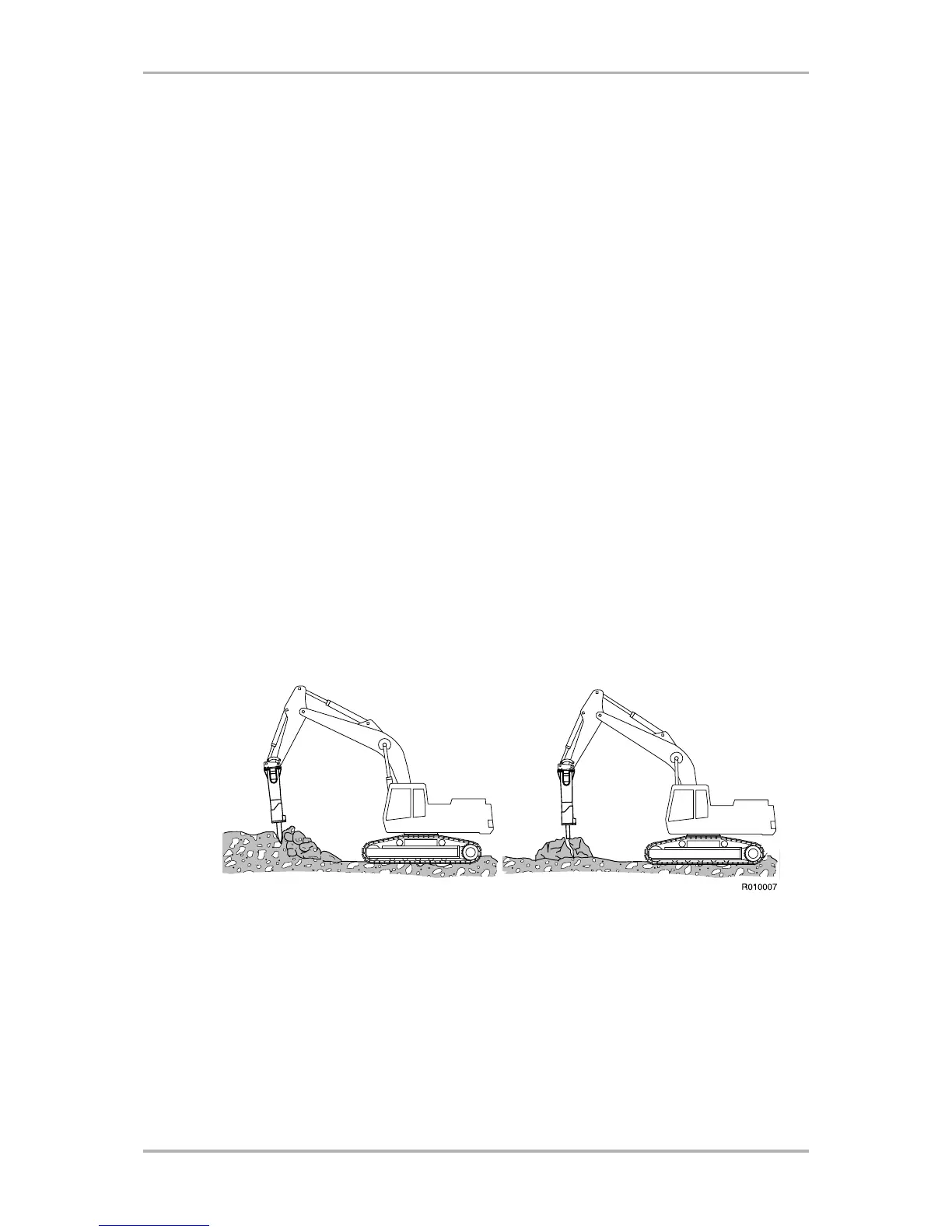
Penetrative breaking (or cutting)
In this form of breaking a moil point or chisel tool is forced inside the material. This
method is most effective in soft, layered or plastic, low abrasive material. The high
impact rate of the small hammers makes them ideal for penetrative breaking.
Impact breaking
With impact breaking, the material is broken by transferring very strong mechanical
stress waves from the tool into the material. The best possible energy transfer be-
tween the tool and the object is achieved with a blunt tool. Impact breaking is most
effective in hard, brittle and very abrasive materials. The use of a chisel tool in hard
material will cause the sharp edge to wear very quickly. The high impact energy of
the big hammers makes them ideal for impact breaking.
CHOOSING TOOLS
A selection of standard and special tools to suit each application are available. The
correct type of tool must be selected to get the best possible working results and
longest life time for the tool. Choosing the best tool type for an application may re-
quire some testing, please consult with your local dealer. See “Tool specifications”
on page 56.



 To Next Page