1-5
Safety On Board
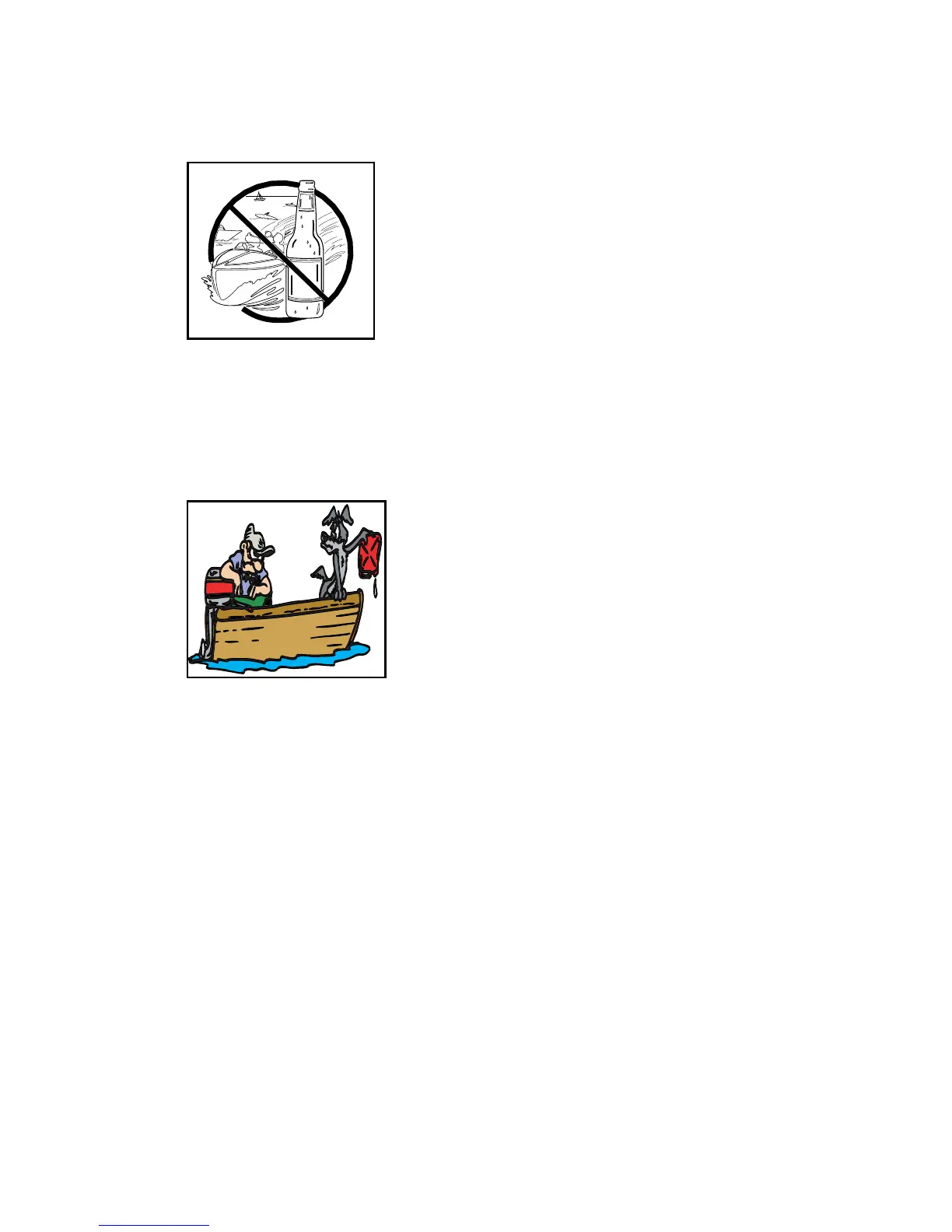
♦ Never drink and drive! As captain, you are
responsible for the safety of your passengers
and yourself. Alcohol and boating can be a
dangerous combination. DO NOT mix them.
Alcohol impairs the boat operators ability to
make conscious decisions and react to
emergency situations quickly.
♦ Never overload your boat! An overloaded boat, or one with uneven
weight distribution can be difficult to steer.
♦ Be certain there is enough fuel aboard
for your cruising needs. Include any reserve
that might be needed should you change your
plans due to weather or emergency. Practice
the “one-third rule: Use one-third of your
fuel going out, one-third to return and keep
one- third as a reserve.
♦ Always check the weather before departure. Be particularly cautious
of electrical storms and high winds.
♦ Αlways have up-to-date charts aboard. You will need current charts
of the area you’ll be cruising to stay on proper course. Charts can
be obtained at your closet marine outlet or store or by contacting
one of three federal government agencies.
♦
ΑΑ
ΑΑ
Αlways file a float plan. Leave details of your trip with someone
responsible who will be remaining on shore. Include expected return,
plus name and phone number of a contact person in case of
emergency.
♦ Use care, courtesy and common sense when launching, docking or
operating your boat.
1-5
Safety On Board
♦ Never drink and drive! As captain, you are
responsible for the safety of your passengers
and yourself. Alcohol and boating can be a
dangerous combination. DO NOT mix them.
Alcohol impairs the boat operators ability to
make conscious decisions and react to
emergency situations quickly.
♦ Never overload your boat! An overloaded boat, or one with uneven
weight distribution can be difficult to steer.
♦ Be certain there is enough fuel aboard
for your cruising needs. Include any reserve
that might be needed should you change your
plans due to weather or emergency. Practice
the “one-third rule: Use one-third of your
fuel going out, one-third to return and keep
one- third as a reserve.
♦ Always check the weather before departure. Be particularly cautious
of electrical storms and high winds.
♦ Αlways have up-to-date charts aboard. You will need current charts
of the area you’ll be cruising to stay on proper course. Charts can
be obtained at your closet marine outlet or store or by contacting
one of three federal government agencies.
♦
ΑΑ
ΑΑ
Αlways file a float plan. Leave details of your trip with someone
responsible who will be remaining on shore. Include expected return,
plus name and phone number of a contact person in case of
emergency.
♦ Use care, courtesy and common sense when launching, docking or
operating your boat.


 To Next Page