1-9
Safety On Board
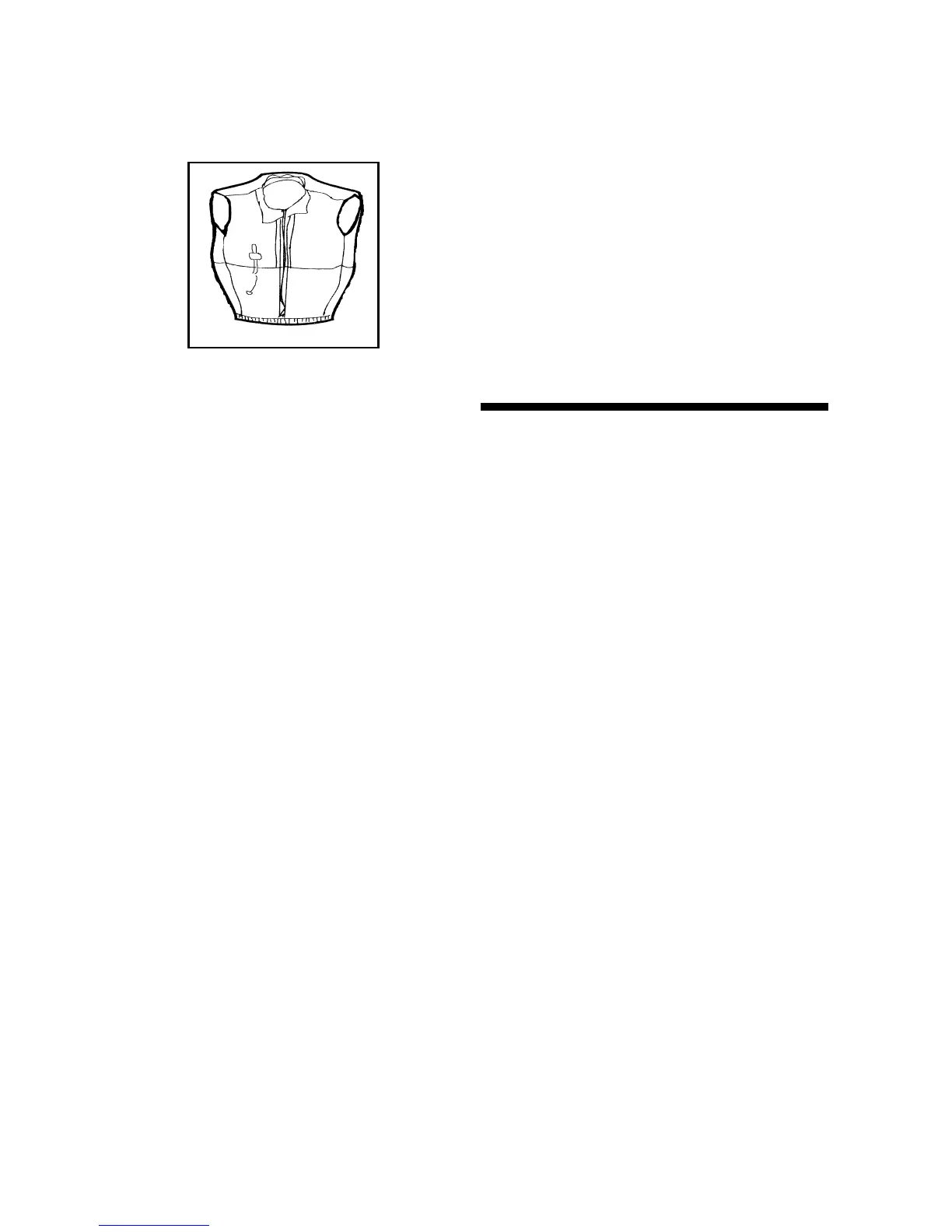
TYPE V HYBRID
• TYPE V- This is the least bulky of all
PFD’s. It contains a small amount of inherent
buoyancy, and an inflatable chamber. It is
rated even to a Type I, II, or III PFD (as noted
on the jacket label) when inflated. Hybrid
PFD’s must be worn to be acceptable.
Maintaining your PFD’s
A PFD is only useful if it is well maintained. Always be aware of PDF
age since it has a life expectancy like any other piece of equipment.
√ Do a periodic operation check of all PFD’s in shallow water.
√ Be sure to air dry all PFD’s after each use. Store in a dry, easily
accessible location.
√ Check periodically for broken zippers, frayed webbing, water soaked
kapok bags, missing straps, and sewing that has become undone.
√ Clean each PFD with mild soap and water only. Again, let dry
sufficiently before storing.
√ Keep PFD’s out of grease and oil since they can deteriorate the
jacket inner and outer materials.
√ Check any kapok-bagged jackets by squeezing. If you hear air
escaping the bag is defective and the PFD should be thrown away.
√ Grab the cover with the fingers. If the cover material rips, the PFD
is rotted and should be thrown away.
√ If the kapok bag is hard the PFD should be discarded.
1-9
Safety On Board
TYPE V HYBRID
• TYPE V- This is the least bulky of all
PFD’s. It contains a small amount of inherent
buoyancy, and an inflatable chamber. It is
rated even to a Type I, II, or III PFD (as noted
on the jacket label) when inflated. Hybrid
PFD’s must be worn to be acceptable.
Maintaining your PFD’s
A PFD is only useful if it is well maintained. Always be aware of PDF
age since it has a life expectancy like any other piece of equipment.
√ Do a periodic operation check of all PFD’s in shallow water.
√ Be sure to air dry all PFD’s after each use. Store in a dry, easily
accessible location.
√ Check periodically for broken zippers, frayed webbing, water soaked
kapok bags, missing straps, and sewing that has become undone.
√ Clean each PFD with mild soap and water only. Again, let dry
sufficiently before storing.
√ Keep PFD’s out of grease and oil since they can deteriorate the
jacket inner and outer materials.
√ Check any kapok-bagged jackets by squeezing. If you hear air
escaping the bag is defective and the PFD should be thrown away.
√ Grab the cover with the fingers. If the cover material rips, the PFD
is rotted and should be thrown away.
√ If the kapok bag is hard the PFD should be discarded.


 To Next Page