1-11
Safety On Board
U. S. Coast Guard approved fire extinguishers are required on all Regal
boats. Besides the minimum Coast Guard requirements always check
state and local agencies for additional requirements and equipment.
Coast Guard approved extinguishers are hand-portable, either B-I or
B-II classification. U. S. Coast Guard approved hand-portable and
semi-portable extinguishers contain a metal plate that shows the
manufacturers name and extinguisher type, capacity and opearting
instructions. They have a special marine type mounting bracket which
keeps the extinguisher solidly mounted until needed. The extinguisher
needs to be mounted in a readily accessible location but one out of
being bumped by people while underway. All approved extinguishers
need to have an indication gauge.
USCG- Approved Fire Extinguisher Types & Features
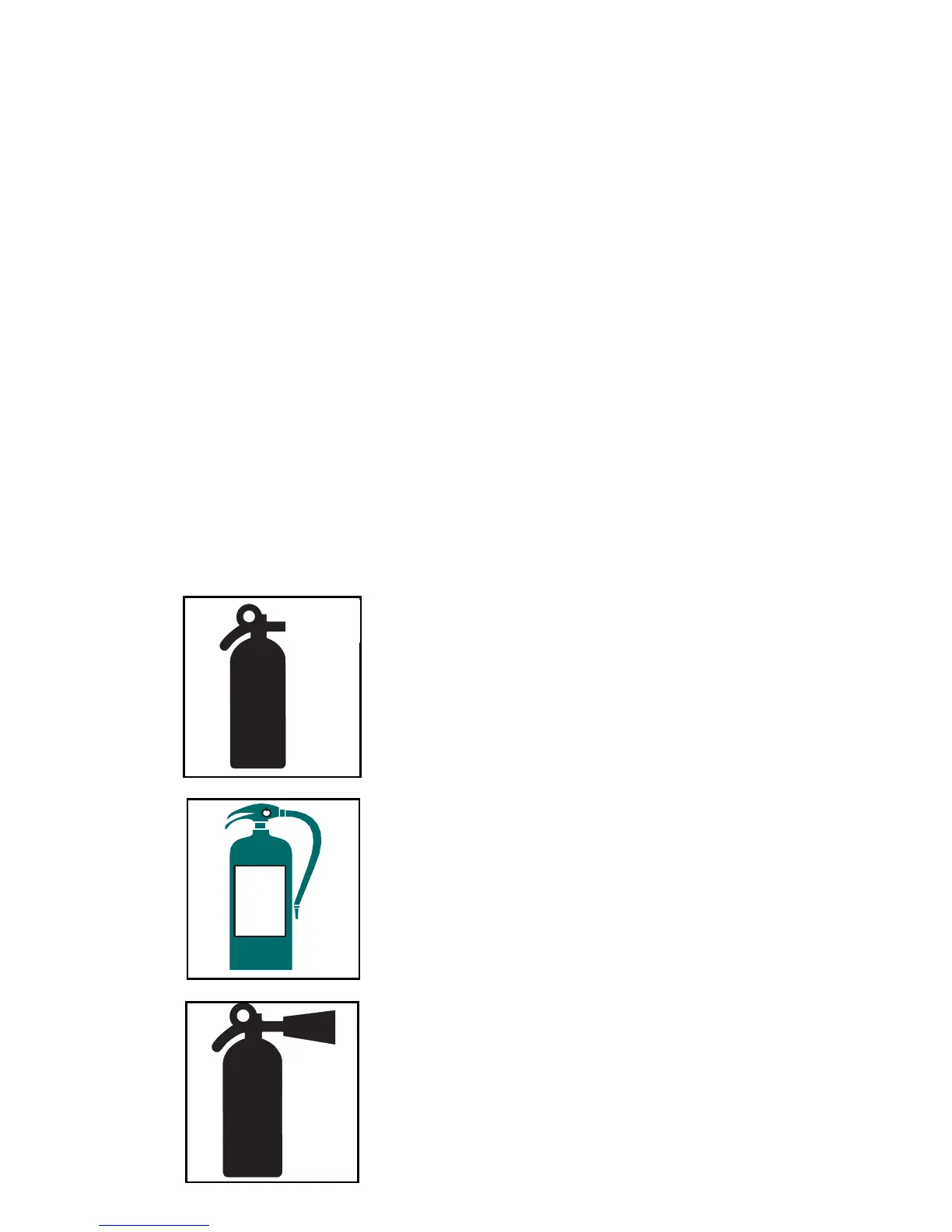
The dry chemical agent is widely used
because of its convenience and low cost. The
extinguisher canister is filled with a white dry
chemical power along with a pressurized gas. It
is a good idea to shake this type periodically
because they tend to “pack” on the canister
bottom.
The foam type uses a chemical foaming
agent plus water and is best when used for fires
involving flammable liquids- solvents, gasoline,oil,
grease and various paints. It will work on fires
involving rubber, plastics, cloth wood, and paper.
It leaves a messy residue. Not for electric fires.
The carbon dioxide unit uses CO2 gas under
high pressure, with a funnel discharge hoseusually
swivel mounted. This extinguisher leaves no
residue and does not cause interior engine harm.
To ensure workability, weigh the unit annually. A
10% max. wt. variance is allowed.
1-11
Safety On Board
U. S. Coast Guard approved fire extinguishers are required on all Regal
boats. Besides the minimum Coast Guard requirements always check
state and local agencies for additional requirements and equipment.
Coast Guard approved extinguishers are hand-portable, either B-I or
B-II classification. U. S. Coast Guard approved hand-portable and
semi-portable extinguishers contain a metal plate that shows the
manufacturers name and extinguisher type, capacity and opearting
instructions. They have a special marine type mounting bracket which
keeps the extinguisher solidly mounted until needed. The extinguisher
needs to be mounted in a readily accessible location but one out of
being bumped by people while underway. All approved extinguishers
need to have an indication gauge.
USCG- Approved Fire Extinguisher Types & Features
The dry chemical agent is widely used
because of its convenience and low cost. The
extinguisher canister is filled with a white dry
chemical power along with a pressurized gas. It
is a good idea to shake this type periodically
because they tend to “pack” on the canister
bottom.
The foam type uses a chemical foaming
agent plus water and is best when used for fires
involving flammable liquids- solvents, gasoline,oil,
grease and various paints. It will work on fires
involving rubber, plastics, cloth wood, and paper.
It leaves a messy residue. Not for electric fires.
The carbon dioxide unit uses CO2 gas under
high pressure, with a funnel discharge hoseusually
swivel mounted. This extinguisher leaves no
residue and does not cause interior engine harm.
To ensure workability, weigh the unit annually. A
10% max. wt. variance is allowed.


 To Next Page