23
Cosmetic Care & Maintenance
GENERATOR
Your vessel may be equipped with a generator. Read and
become familiar with the generator owner’s manual. It
provides a variety of operational, safety and
troubleshooting information.
The output voltage under a full load can be easily
periodically checked by observing the AC voltage meter
found on the AC/DC panel. The output voltage should
be between 110 -120 volts AC (60 hertz-US), and 220-
240 volts AC at (50 hertz- International). Voltages outside
these specifications could indicate a generator malfunction.
Make sure all fluid levels are checked before starting the
generator. Check to make sure the generator seacock is
open and the sea water strainer is cleaned periodically.
When starting the generator remember the generator on
switch provides power to the start circuit. The start switch
energizes the solenoid and starter which cranks the engine.
Make sure both the on and start switches are depressed
or the generator will not start.The generator features an
automatic shut down system of sensors controlling high
exhaust temperature, high water, low oil pressure, and high
RPM. If one of these sensors engages, the generator will
shut down. The source of the problem then needs to be
determined. Use the owner’s manual troubleshooting
section as a reference.
There is a fuel filter at the carburetor that periodically
needs cleaning. Service the fuel filter as recommended in
the owner’s manual. Check all fuel system connections
periodically.
Disconnect the battery cables before doing any generator
maintenance. Inspect and clean the carburetor flame
arrestor periodically by blowing off with compressed air.
Inspect all fuel system fittings for leakage periodically. Be
sure proper ventilation is present when servicing the fuel
system components. Inspect all water and heat exchanger
fittings periodically for leaks. Repair or replace components
as needed. Be sure the generator is completely cold before
performing any maintenance on the water system due to
possible hot water and or antifreeze filled components.
Be sure to catch and dispose of any antifreeze coolant
properly. recommendations for type and mixture
Refer to the generator owner’s manual regarding antifreeze
concentrations.
There is a zinc anode located in the raw water part of the
heat exchanger. Check it often for proper condition. Refer
to the owner’s manual for determining replacement status.
It is self sacrificing thereby reducing the effects of
electrolysis to the generator water system.
Check the drive belt deflection with the generator stopped.
At the longest span, push down at the center. You should
generate a movement of 3/8 to 1/2 inch. Refer to the
generator manual for more information.
When refilling the crankcase with oil follow the
specifications given in the owner’s manual. Dispose of used
oil properly. Use the attached sump hose to drain the
generator used oil. Change the oil every 50 hours of
operation. Use the specified oil type and weight.
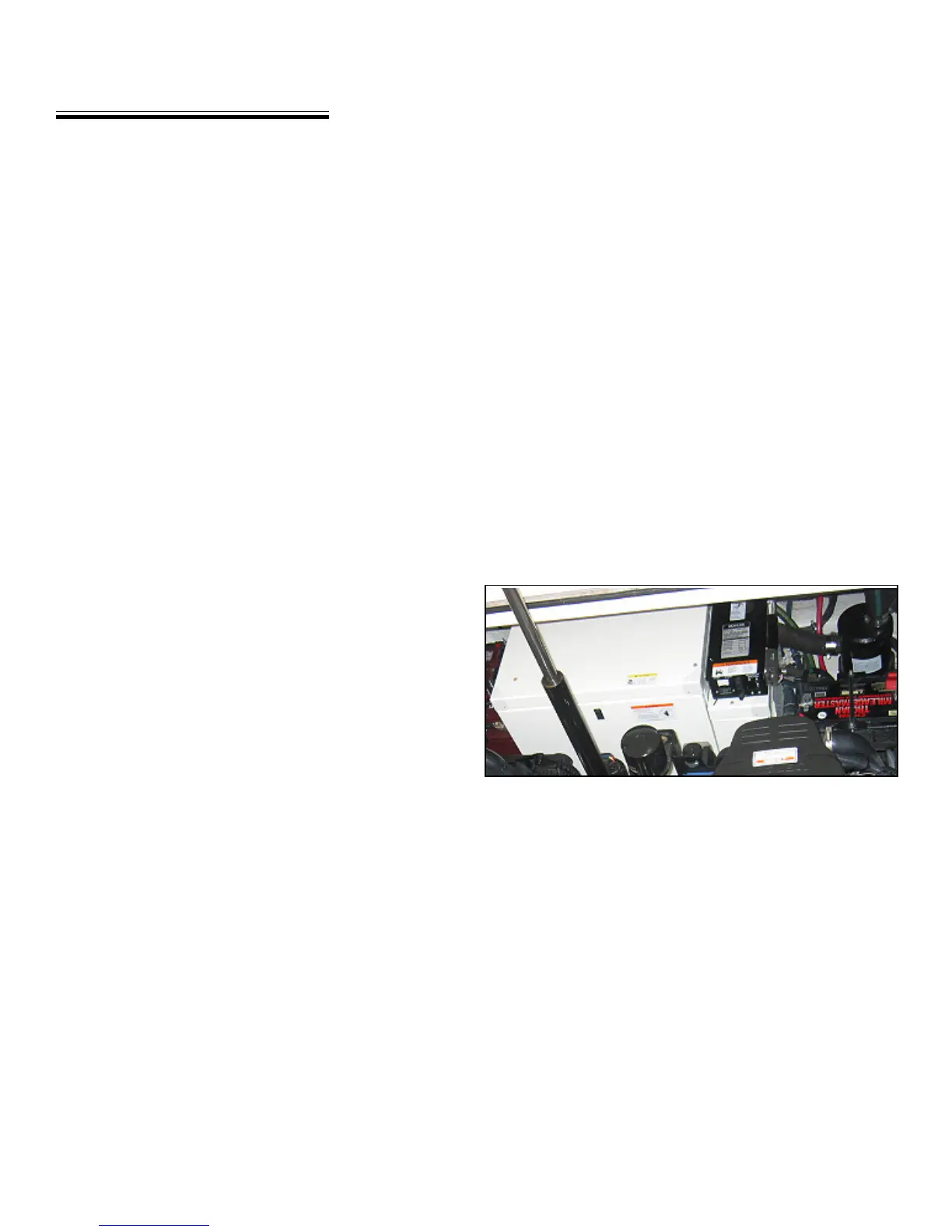
Typical Generator w/Sound Blanket
GENERATOR FUEL FILTER
The optional generator utilizes a fuel filter located on the
firewall. This filter should be serviced periodically. It re-
quires a special wrench to loosen the filter. Make sure you
use a metal drip pan to collect any spillage. Ventilate the
area & change the filter. Tighten it to filter manufacturer
recommendations and check for fuel leaks. With the hatch
up run the bilge blowers, start the generator and check for
fuel leaks. Shut down the system immediately if a leak oc-
curs and investigate the cause of the leak. Make sure to
dispose of any rags and fuel spillage properly.



 To Next Page