1.38
CHILD SEATS: attachment using the ISOFIX system (2/2)
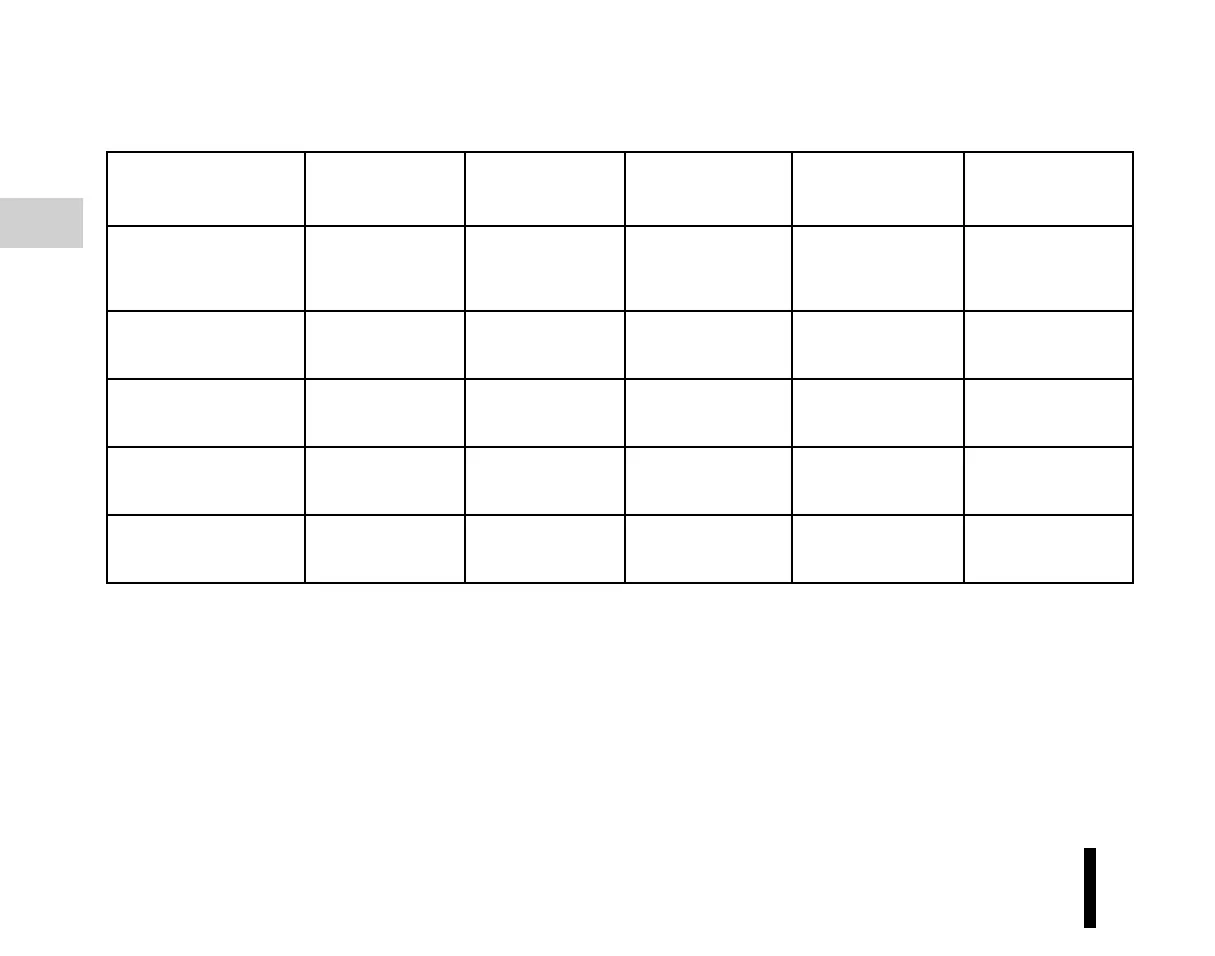
Type of child seat
Weight of
the child
Seat size ISOFIX
Front passenger
seat
Rear side seats Rear centre seat
Carrycot fitted
across the vehicle
Group 0
< 10 kg F, G X X X
Rear-facing seat
Groups 0 or 0 +
< 10 kg and
< 13 kg
E X IL (1) X
Rear-facing seat
Groups 0+ and 1
< 13 kg and 9 to
18 kg
C, D X IL (1) X
Forward-facing seat
Group 1
9 to 18 kg A, B, B1 X IUF - IL (2) X
Booster seat
Groups 2 and 3
15 to 25 kg and 22
to 36 kg
X IUF - IL (2) X
The table below summarises the information already shown on the diagram on the previous page, to ensure the regula-
tions in force are respected.
X = Seat not suitable for fitting child seats ISOFIX.
IUF/IL = On equipped vehicles, seat which allows a child seat with “Universal/Semi-universal or vehicle specific” approval to be
fitted using the ISOFIX system; check that it can be fitted correctly.
(1) If necessary, position the vehicle seat as far back as possible. Move the front seat as far forward as possible to install a rear-
facing child seat, then move back the seat in front as far as it will go, although without allowing it to come into contact with the
child seat.
(2) In all situations, remove the rear headrest of the seat on which the child seat is positioned. This must be done before fitting the
child seat. Please refer to the information on the “Rear headrests” in Section 3. Move the seat in front of the child forwards,
move the seatback forward to avoid contact between the seat and the child’s legs.





 To Next Page