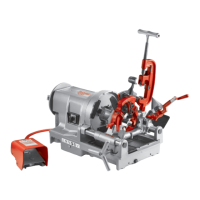
Doc # 18.47.1 – Ridgid 300 Safety Procedures
Printed copies of this document are uncontrolled.
• Guard or barricade the area when work piece extends beyond machine. A guard or
barricade that provides a minimum of three (3) feet clearance around the work piece will
reduce the risk of entanglement
6. Electrical Safety
•
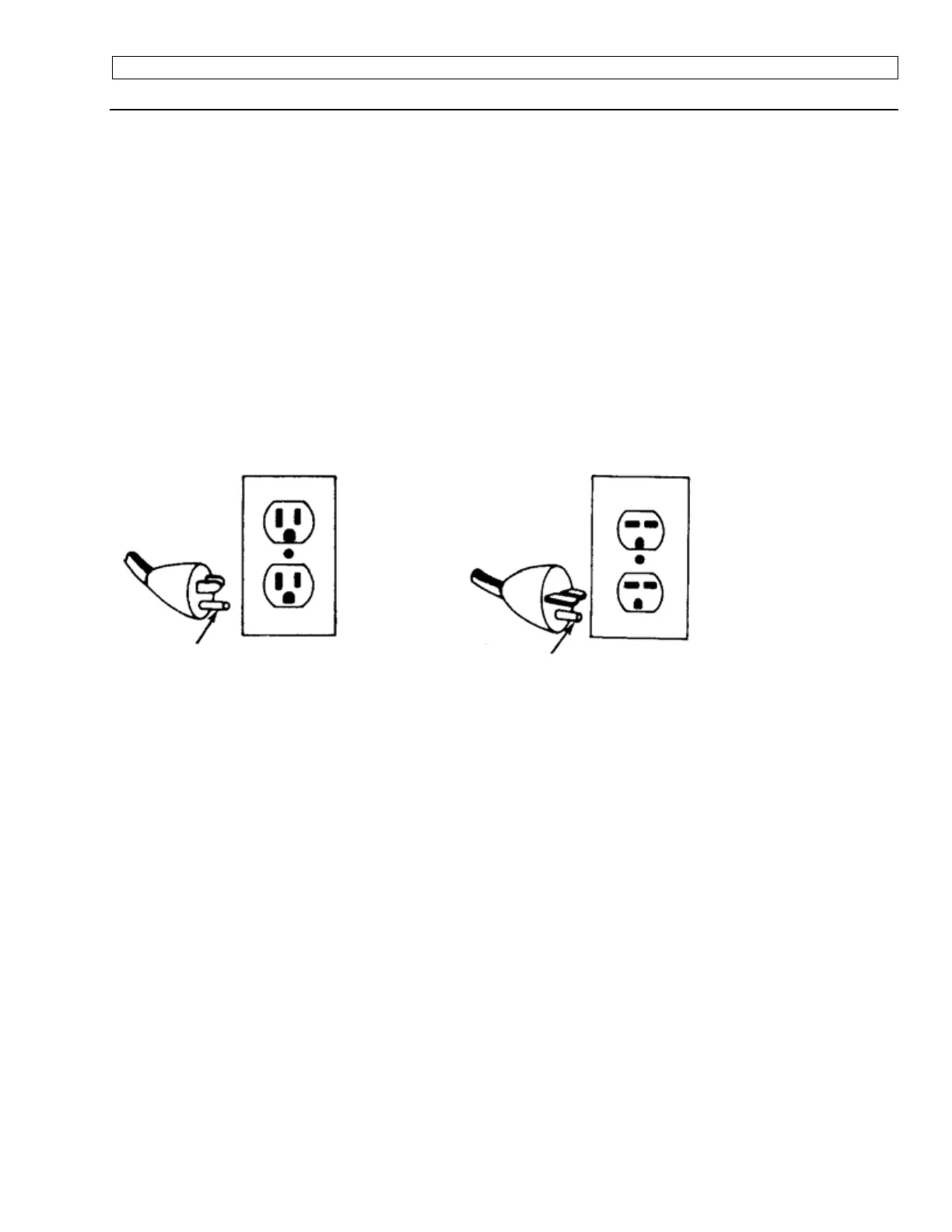
Grounded tools must be plugged into an outlet, properly installed and grounded in
accordance with all codes and ordinances. Never remove the grounding prong or modify
the plug in any way. Do not use any adapter plugs. Check with a qualified electrician if
you are in doubt as to whether the outlet is properly grounded. If the tool should
electrically malfunction or break down, grounding provides a low resistance path to carry
electricity away from the user.
• Avoid body contact with grounded surfaces. There is an increased risk of electrical shock
if your body is grounded.
• Don’t expose electrical tools to rain or wet conditions Water entering a tool will increase the
risk of electrical shock.
• Do not abuse cords. Never use the cord to carry the tools or pull the plug from an outlet.
Keep cord away from heat, oil, sharp edges or moving parts. Replace damaged cords
immediately. Damaged cords increase the risk of electrical shock.
• When operating a power tool outside, use outdoor extensions cord marked “W-A” or
“W”. These cords are rated for outdoor use and reduce the risk of electrical shock.
• Use only three-wire extension cords which have three-prong grounding plugs and three-
pole receptacles which accept the tool’s plug. Use of other extension cords will not ground the
tool and increase the risk of electrical shock.
Page 3 of 11


 To Next Page