34
Table of Contents
1. Important information to note before commissioning
1.1 Safety symbols
1.2 Packaging symbols
1.3 Contraindication
1.4. Intended patient population
1.5 Intended operators/users
1.6 Required skills/operator training
1.7 Environmental conditions
1.8 Warnings/caution
1.9 Scope of delivery
2. Battery handles
3. Commissioning (inserting and removing batteries and
rechargeable batteries)
4. Charging battery handles with rechargeable batteries
5. Attaching instrument heads
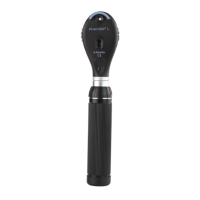
6. ri-scope® L otoscopes
7. ri-scope® L ophthalmoscopes
8. Slit and spot retinoscopes
8.1.1. Contraindication
8.1.2. Intended patient population
8.1.3. Intended operators/users
8.1.4. Required skills/operator training
8.1.5. Environmental conditions
9. Dermatoscope
9.1.1. Contraindication
9.1.2. Intended patient population
9.1.3. Intended operators/users
9.1.4. Required skills/operator training
9.1.5. Environmental conditions
10. Lamp holder
10.1.1. Contraindication
10.1.2. Intended patient population
10.1.3. Intended operators/users
10.1.4. Required skills/operator training
10.1.5. Environmental conditions
11. Nasal speculum
11.1.1. Contraindication
11.1.2. Intended patient population
11.1.3. Intended operators/users
11.1.4. Required skills/operator training
11.1.5. Environmental conditions
12. Tongue depressor holder
12.1.1. Contraindication
12.1.2. Intended patient population
12.1.3. Intended operators/users
12.1.4. Required skills/operator training
12.1.5. Environmental conditions
13. Laryngeal mirror
14. Operating otoscope for veterinary medicine
14.1.1. Contraindication
14.1.2. Intended patient population
14.1.3. Intended operators/users
14.1.4. Required skills/operator training
14.1.5. Environmental conditions
15. Operating otoscope for human medicine
16. Replacing the bulb
17. Care instructions
17.2 Cleaning and disinfection
18. Spare parts and accessories
19. Maintenance
20. Instructions
21. Electromagnetic compatibility
21.1. Disposal
21.2. Warranty


 To Next Page