EasyManua.ls Logo

Rosemount 3051SFA - User Manual

Rosemount 3051SFA
268 pages
Print Icon
To Next Page IconTo Next Page
Loading...
Reference Manual
00809-0100-4809, Rev DA
September 2015
The Rosemount
®
Annubar
®
Flowmeter Series
Rosemount 3051SFC_A
Compact Annubar
Flowmeter
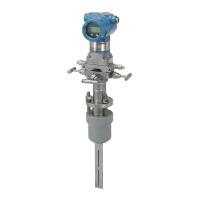
Rosemount 3051SFA
Annubar Flowmeter
Rosemount 3051CFA
Annubar Flowmeter
Rosemount 2051CFA
Annubar Flowmeter
Rosemount 485
Annubar Primary
Element
Rosemount 585 Severe
Service Annubar Primary
Element

Table of Contents

Questions and Answers

  • K
    kowensAug 17, 2025
    Why do Rosemount 3051SFA Measuring Instruments give a high reading?
    • K
      Kelly LeblancAug 17, 2025
      If your Rosemount Measuring Instruments are showing a high reading, here are a couple of things to check: * The Annubar sensor might not be installed in the proper pipe size. To resolve this, verify the actual pipe ID and wall dimensions and compare them to the Calculation Data Sheet. If the dimensions do not match, consult the factory. * The DP transmitter might not be zeroed or configured correctly. You should verify that the DP sensor has been zeroed properly, that the transmitter range is correct, and that the square root output is correct. Also, verify that the Annubar sensor calc sheet represents fluid density properly so that the transmitter is configured correctly for the application.
  • S
    Sarah FreemanAug 27, 2025
    What to do if the Annubar sensor won't fit in the drilled hole in Rosemount 3051SFA Measuring Instruments?
    • D
      Dillon WhiteAug 27, 2025
      If the Annubar sensor won't fit in the drilled hole for your Rosemount Measuring Instruments, here's what to investigate: * The drill hole might not be the proper size. Verify that the drill hole matches the size specified in the installation instructions. Re-drill the mounting hole with the proper drill hole size. * The drill hole might not be aligned properly with the Annubar sensor mounting hardware. Verify that the mounting hardware is centered over the pipe hole. If necessary, reinstall the mounting hardware. * The hole might have been torch-cut, leaving pipe fragments blocking the hole. Re-drill the hole in a different location as specified in the installation instructions.
  • K
    Krystal TranNov 6, 2025
    Why are my Rosemount 3051SFA showing a low reading?
    • E
      Erin WongNov 6, 2025
      If your Rosemount Measuring Instruments are showing a low reading, several factors could be at play: * The Annubar sensor might not be fully installed, failing to span the pipe's inner diameter. In this case, verify the pipe's ID and wall dimensions against the Calculation Data Sheet, and consult the factory if they don't match. During re-installation, mark the tip of the Annubar sensor, install, remove, and inspect the marking to ensure it contacts the opposite side of the pipe. * The sensor might not be aligned properly in the flow profile. Refer to the installation instructions for correct alignment straight across the pipe I.D., ensuring the upstream sensing holes face directly upstream in the flow profile. * The sensor could be installed in the wrong pipe size. Again, verify th...
  • B
    Blake HernandezNov 11, 2025
    What to do if Rosemount 3051SFA show erratic signal/ negative reading/ no reading?
    • F
      fosterashleyNov 11, 2025
      If you're getting an erratic signal, negative reading, or no reading at all from your Rosemount Measuring Instruments, consider these possibilities: * The Annubar sensor might be installed backward. Check that the flow arrow on the instrument connections points in the direction of flow. * The sensor could be broken or missing. Remove it to verify that the sensing element is intact and undamaged. * Instrument valves might be closed. Ensure both high and low instrument valves are open. * The flowmeter might be too close to a flow disturbance. Verify the installation against recommended distances in the Installation section. * Air might be trapped in the instrument impulse lines (for liquid applications). Reinstall the lines to eliminate high points where air can collect. * There...
  • K
    kristine05Nov 21, 2025
    What causes the Annubar sensor to be too long or too short in Rosemount Measuring Instruments?
    • S
      Sarah CarrollNov 21, 2025
      If the Annubar sensor appears too long or too short for your Rosemount Measuring Instruments, consider the following: * The pipe dimensions might not have been properly supplied. Verify the actual pipe ID and wall dimensions and compare them to the Calculation Data Sheet. Consult the factory if the dimensions do not match. * The mounting hardware supplied might not be the correct length. Check the mounting height and compare it to the dimensions shown in the Dimensional Drawings. Consult the factory if the dimensions do not match. * If the Annubar sensor looks too long (Pak-lok or Flange-lok Models), verify the actual pipe ID and wall dimensions and compare them to the Calculation Data Sheet. Consult the factory if the dimensions do not match. Also, review the installation instructi...
  • T
    tatechadDec 3, 2025
    How to fix severe vibration of the sensor in Rosemount 3051SFA Measuring Instruments?

    Summary

    Section 2: Installation

    2.1 Safety messages

    Special precautions are required for personnel safety during installation operations. Refer to safety messages before performing operations.

    2.6 Installation

    General installation procedures for various Annubar sensor models, including Pak-Lok, Flanged, and Flo-Tap types.

    Step 4: Insert Annubar sensor

    Steps for inserting the Annubar sensor into the mounting hardware, ensuring proper contact and alignment for accurate measurement.

    Step 5: Mount the transmitter

    Instructions for mounting the transmitter to the sensor head, including proper alignment and torque specifications for connections.

    2.6.2 Flanged with opposite side support Annubar sensor type (for 485 and 585 Annubar Flowmeters)

    Detailed installation procedures for flanged Annubar sensor types with opposite side support, covering component identification and assembly.

    Step 5: Insert the Annubar sensor

    Steps for inserting the Annubar sensor into the mounting flange, ensuring proper alignment and gasket compression.

    Step 6: Mount the transmitter

    Instructions for mounting the transmitter to the sensor head, including proper alignment and torque specifications for connections.

    2.6.3 Flange-Lok model (for 485 Annubar Flowmeters)

    Detailed installation procedures for the Flange-Lok model, including component identification and assembly steps.

    Step 2: Drill a hole into the pipe

    Instructions for drilling the correct size hole into the pipe for sensor installation, emphasizing proper deburring and avoiding torch cuts.

    Step 4: Insert into pipe

    Steps for inserting the sensor into the pipe and securing it with nuts, ensuring proper gasket compression.

    2.6.5 Flanged Flo-tap (for 485 and 585 Annubar Flowmeters)

    Installation procedures for the Flanged Flo-Tap model, covering component identification and the initial step of determining orientation.

    2.6.4 Threaded Flo-tap (for 485 Annubar Flowmeter)

    Installation procedures for the Threaded Flo-Tap model, including component identification and determining proper orientation.

    Step 2: Weld the mounting hardware

    Steps for welding the mounting hardware to the pipe, ensuring correct alignment and allowing for cooling.

    Step 3: Install the isolation valve

    Instructions for installing the isolation valve into the guide nipple, ensuring proper orientation for the Flo-Tap assembly.

    Step 4: Mount the drilling machine and drill hole

    Procedures for mounting the drilling machine and drilling the hole into the pipe wall, following manufacturer instructions.

    Step 6: Mount the Annubar sensor

    Instructions for mounting the Annubar sensor onto the isolation valve, ensuring flow arrow alignment and checking for leaks.

    Step 7: Insert the Annubar sensor

    Procedures for inserting the Annubar sensor using manual or gear drive options, ensuring firm contact with the pipe wall.

    Step 8: Mount the transmitter

    Instructions for mounting the transmitter to the sensor head, ensuring proper alignment and torque.

    Step 9: Retract the Annubar sensor

    Steps for retracting the Annubar sensor, ensuring proper counter-clockwise rotation to prevent binding.

    2.6.6 Main steam line (for 585 Annubar Flowmeters)

    Installation procedures specific to the Main Steam Annubar sensor assembly, including drilling mounting holes and welding.

    Step 2: Drill mounting hole into pipe

    Steps for drilling the mounting hole into the pipe, ensuring proper deburring and avoiding torch cuts.

    Step 3: Weld the mounting hardware

    Procedures for welding the mounting hardware, including alignment checks and using an alignment bar for precision.

    Step 4: Insert the Annubar sensor

    Steps for inserting the Annubar sensor into the mounting hardware, ensuring proper alignment and checking for leaks.

    2.7 Wire the transmitter

    Guidelines for wiring the transmitter, including proper sealing of conduit connections and avoiding damage to test diodes.

    2.7.1 Wiring diagrams

    Instructions for connecting transmitter wiring, emphasizing proper terminal connection and avoiding contact with leads.

    Section 3: Commissioning

    Section 4: Operation and Maintenance

    Section 5: Troubleshooting

    Appendix B: Product Certifications

    Rosemount 3051SFA Specifications

    General IconGeneral
    TypeDifferential Pressure Transmitter
    Measurement TypeDifferential Pressure
    Temperature Range-40 to 185 °F (-40 to 85 °C)
    Accuracy of URL±0.1% of URL
    Output Signal4-20 mA
    OutputDigital
    Process ConnectionFlanged
    Electrical Connection1/2 NPT
    Material316L Stainless Steel
    Process temperature range-40 to 85 °C
    Communication ProtocolFOUNDATION Fieldbus

    Related product manuals