EasyManua.ls Logo

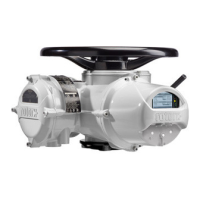
rotork IQ3 - User Manual

rotork IQ3
36 pages
Print Icon
To Next Page IconTo Next Page
Loading...
IQ Range
Instructions for Safe Use, Installation,
Basic Setup and Maintenance
This manual contains important safety
information. Please ensure it is thoroughly
read and understood before installing,
operating or maintaining the equipment.
PUB002-039-00
Date of issue 03/18

Questions and Answers

Summary

Introduction to Rotork IQ Actuators

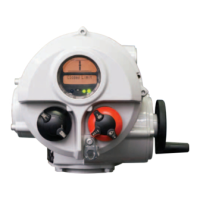
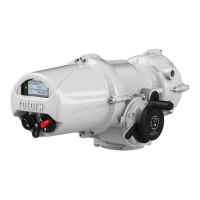
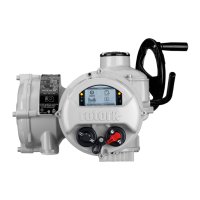
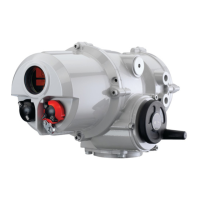
1.1 Identifying Actuator Parts

Details the physical components of the actuator, including handwheel, motor, base, terminal cover, etc.

1.2 Rotork Setting Tool

Describes the Rotork Bluetooth® Setting Tool Pro (BTST) for setup and mission configuration.

BTST Safety and Handling Instructions

Covers safe selection, installation, use, maintenance, repair, and inspection of the BTST.

1.3 Introduction to this manual

Outlines the manual's scope, covering operation, installation, commissioning, and maintenance procedures.

Health and Safety Guidelines

General User and Workplace Safety

Covers user competence, parts, adherence to manuals, responsibilities, and general hazard considerations.

Electrical and Mechanical Installation Standards

Details compliance with electrical regulations and mechanical standards, including hazardous area suitability.

Hazardous Area Installation Specifics

Focuses on installation in hazardous areas, including temperature, gas groups, and specific regulations.

Service Altitude and Temperature Warnings

Warns about service altitude limits and motor/surface temperature considerations.

Thermostat Bypass and Enclosure Material Safety

Addresses risks of thermostat bypass and properties of enclosure materials.

Remote Operation Start-Up Warning

Warns that actuators may start unexpectedly when set to remote operation.

2.1 ATEX;IEC EX Certified Actuators - Special Conditions

Specifies special conditions for ATEX/IEC Ex certified actuators, including low impact risk zones and cleaning.

Warning: External Enclosure Fasteners

Provides guidance on specific fastener materials for ATEX/IEC Ex enclosures and their grades.

Storage Procedures

Storage Recommendations

Advises on storing the actuator in a dry place and replacing transit plugs with metal ones for protection.

Operating your IQ Actuator

4.1 Operating by Hand

Explains how to operate the actuator manually using the handwheel, including safety warnings.

4.2 Operating Electrically

Details electrical operation, power supply checks, and the importance of basic settings before electrical operation.

Local, Stop, and Remote Control Selection

Explains how to select and lock the actuator into Local, Stop, or Remote control modes.

4.3 Display - Local Indication

Explains the various display elements and indicators on the actuator's segment and dot matrix displays.

4.4 Display - Home screen selection

Details how to select and set different home screen displays for the actuator's LCD.

Temporary Home Screen Display Configuration

Describes setting a temporary home screen using the setting tool or arrow keys.

Permanent Home Screen Display Configuration

Guides on setting a permanent home screen via the Settings menu, requiring a password.

4.5 Display Status Indication - Travel

Explains how the IQ display shows real-time travel status, using CLOSED LIMIT as an example.

4.6 Display Status Indication - Control

Describes how the display shows control status indication, using Remote Control as an example.

4.7 Display Alarm Indication

Details how the display indicates alarms using text and icons, including General and Battery alarms.

4.8 Battery Alarm and Status

Explains the battery alarm icon, low/discharged battery indications, and replacement advice.

Preparing the Drive Bush

5.1 IQ base all sizes types A and Z3

Describes the process of removing the drive bush and bearing assembly for IQ base actuators.

Disassembly of bearing assembly all sizes

Details the steps for disassembling the bearing assembly, including removing snap rings and split collars.

Reassembly Procedures

Provides instructions for correctly reassembling the drive bush bearing assembly and thrust base housing.

5.2 Non-Thrust Base Type B

Details removal procedures for drive bushes on Non-Thrust Base Type B actuators.

Types B3 and B4 Base Removal

Explains how to remove the drive bush for Type B3 and B4 bases using circlip pliers.

Types B1 Base Removal

Details the removal procedure for Type B1 drive bushes, noting the use of a custom spring circlip.

Mounting the Actuator

General Mounting Safety and Precautions

Covers valve security, safe lifting procedures with certified slings, and personnel requirements.

Actuator Support and Cover Tube Warnings

Emphasizes full actuator support during mounting and design considerations for cover tubes.

Lifting and Inverted Installation Warnings

Advises on correct lifting practices and the need for additional oil in inverted installations.

6.1 Rising Stem Valves Top Mounted

Guides on fitting the actuator and base assembly for top-mounted rising stem valves.

Fitting Thrust Base to Valve Actuator

Explains the procedure for fitting the thrust base to the actuator and then to the valve stem.

6.2 Valve with Gearbox - Side Mounting

Covers side mounting of the actuator to a valve with a gearbox, including shaft alignment.

6.3 Non-Rising Stem Valves - Top Mounting

Describes top mounting for non-rising stem valves, noting the requirement for a thrust nut.

6.4 Handwheel Sealing

Details how to ensure proper sealing of the handwheel and sealing cap to prevent moisture ingress.

6.5 IQM Modulating Actuators

Introduces the IQM range for modulating control, dynamic braking, and potential motor thermostat issues.

6.6 IQL & IQML Linear Drive Unit

Describes the IQL/IQML linear drive unit, its stroke capabilities, and optional yoke mounting adaptor.

6.7 IQL & IQML Adjusting Linear Stroke

Guides on adjusting the linear stroke for IQL/IQML actuators, including down stop settings and lubrication.

Cable Connections

7.1 Terminal Block Layout

Provides a diagram showing the numbering and layout of the actuator's terminal block connections.

Power Supply Isolation Warning

Critical safety warning to isolate power supplies before removing actuator covers or performing maintenance.

High Voltage Operation Warning

Safety advisory against using actuators on supply systems with phase-to-earth voltages exceeding 600 VAC.

7.2 Earth;Ground Connections

Explains the external protective earthing strap attachment and internal earth connection requirements.

7.3 Removing Terminal Cover

Details the procedure for removing the terminal cover using an Allen key, with warnings against levering.

7.4 Cable Entry

Covers requirements for explosion-proof cable glands/conduit in hazardous locations and sealing unused entries.

7.5 Connecting to Terminals

Describes field wiring connections using tags, insulation requirements, and securing screws for terminals.

Electrical Connection Safety and Compliance

Covers secure connections, correct washers, torques, and Ex e certification tag requirements.

Commissioning - Basic Settings

Accessing Settings and Control Cover Warning

Explains access via Setting Tool, warns against control cover removal, and notes warranty implications.

Basic Settings Overview and Verification

States the purpose of basic settings for correct operation and the need for verification.

8.1 Connecting to the Actuator

Details connecting to the actuator using the Rotork Bluetooth® Setting Tool Pro via Bluetooth.

Connecting to the actuator using Bluetooth

Explains the Bluetooth connection process, security, proximity, and auto-connection features.

Manual Bluetooth connection control

Describes how to manually turn off Bluetooth connection using specific key presses.

8.2 Security - Password

Covers the default security level, password entry for changing settings, and warnings for remote operation.

Password Entry and Verification

Explains the password screen, default password "ROTORK", and key presses for selection.

8.3 Basic Settings Menu

Presents the structure of the basic settings menu, outlining sections like Limits, Indication, Control, ESD, Security, and Defaults.

Navigating Settings and Entering Values

Guides on using arrow keys to change settings and the password requirement for initial function selection.

8.4 Basic Settings - Limits

Details how to access and set limits, including direction, action, torque, and set limit values.

Setting Limits: Close Settings

Explains setting direction, action, torque, and limit for closing the valve.

Setting Limits: Open Settings

Explains setting action, torque, and limit for opening the valve.

8.5 Close Settings

Covers setting the close direction, action (torque/limit), and torque value for closing the valve.

Setting Close Limits

Guides on setting the close limit position, including instructions for overrun.

8.6 Open Settings

Details setting the open action (torque/limit) and torque value for opening the valve.

7; 15. Set Open Limit

Guides on setting the open limit position, including instructions for overrun.

8.7 Torque Switch Bypass

Explains bypassing torque protection for opening and closing, including position settings for bypass.

11; 15. Opening Torque Bypass

Details enabling opening torque protection bypass for sticky valves, up to 150% of rated torque.

Maintenance, Monitoring and Troubleshooting

Routine Maintenance Tasks

Lists essential maintenance tasks like checking fixings, lubrication, and enclosure integrity.

Actuator Battery Function and Replacement

Details the battery's role in power-off indication and provides critical warnings for battery replacement.

Battery Removal Procedure

Guides on safely removing the battery, including power isolation and accessing the sealing plug.

Fitting Replacement Battery

Guides on fitting a replacement battery, reconnecting wiring, and tightening the sealing plug.

Oil and Grease Specifications

Lists the types of oil and grease suitable for actuator lubrication based on temperature ranges.

Torque and Position Monitoring

Explains real-time torque and position monitoring, its uses, and how torque trips are indicated.

Environmental Considerations

Disposal Advice

Provides guidance on the disposal of various actuator components and materials according to regulations.

Weights and Measures

Lubricating Oil and Grease Specifications

Specifies oil grades and grease types for different temperature ranges and actuator types.

Standard Weight and Lubricating Oil Capacities

Lists actuator weights and standard oil capacities for various sizes.

Inverted Installation Lubricating Oil Capacities

Provides oil capacities for actuators installed in an inverted orientation.

IQ Actuator Approvals

European Hazardous Area Approvals

Lists ATEX certifications and temperature ranges for European hazardous area installations.

IQ Cover Tube Specifications

Provides specifications for non-Rotork cover tubes regarding mass and moment parameters.

International Hazardous Area Approvals

Details IECEx, FM, and CSA hazardous area certifications and temperature ratings.

International Non Hazardous Approvals

Lists non-hazardous certifications like watertight (BS EN60529) and NEMA enclosure types.

Approved Fuses and Electrical Protection

Fuse Specifications

Lists approved fuse types (FS1, FS2) and their ratings for transformer wiring.

Vibration, Shock, and Noise Standards

Actuator Suitability for Vibration and Shock

Outlines the levels of plant-induced vibration, shock, seismic acceleration, and emitted noise actuators can withstand.

Conditions of Safe Use

15.1 Thread details for ATEX and IECEx Approved actuators

Provides thread sizes and lengths for flamepath components on ATEX/IECEx approved actuators.

15.2 Maximum constructional flamepath gaps for ATEX and IECEx Approved actuators.

Lists maximum constructional flamepath gaps and minimum lengths for various actuator components.

Summary

Introduction to Rotork IQ Actuators

1.1 Identifying Actuator Parts

Details the physical components of the actuator, including handwheel, motor, base, terminal cover, etc.

1.2 Rotork Setting Tool

Describes the Rotork Bluetooth® Setting Tool Pro (BTST) for setup and mission configuration.

BTST Safety and Handling Instructions

Covers safe selection, installation, use, maintenance, repair, and inspection of the BTST.

1.3 Introduction to this manual

Outlines the manual's scope, covering operation, installation, commissioning, and maintenance procedures.

Health and Safety Guidelines

General User and Workplace Safety

Covers user competence, parts, adherence to manuals, responsibilities, and general hazard considerations.

Electrical and Mechanical Installation Standards

Details compliance with electrical regulations and mechanical standards, including hazardous area suitability.

Hazardous Area Installation Specifics

Focuses on installation in hazardous areas, including temperature, gas groups, and specific regulations.

Service Altitude and Temperature Warnings

Warns about service altitude limits and motor/surface temperature considerations.

Thermostat Bypass and Enclosure Material Safety

Addresses risks of thermostat bypass and properties of enclosure materials.

Remote Operation Start-Up Warning

Warns that actuators may start unexpectedly when set to remote operation.

2.1 ATEX;IEC EX Certified Actuators - Special Conditions

Specifies special conditions for ATEX/IEC Ex certified actuators, including low impact risk zones and cleaning.

Warning: External Enclosure Fasteners

Provides guidance on specific fastener materials for ATEX/IEC Ex enclosures and their grades.

Storage Procedures

Storage Recommendations

Advises on storing the actuator in a dry place and replacing transit plugs with metal ones for protection.

Operating your IQ Actuator

4.1 Operating by Hand

Explains how to operate the actuator manually using the handwheel, including safety warnings.

4.2 Operating Electrically

Details electrical operation, power supply checks, and the importance of basic settings before electrical operation.

Local, Stop, and Remote Control Selection

Explains how to select and lock the actuator into Local, Stop, or Remote control modes.

4.3 Display - Local Indication

Explains the various display elements and indicators on the actuator's segment and dot matrix displays.

4.4 Display - Home screen selection

Details how to select and set different home screen displays for the actuator's LCD.

Temporary Home Screen Display Configuration

Describes setting a temporary home screen using the setting tool or arrow keys.

Permanent Home Screen Display Configuration

Guides on setting a permanent home screen via the Settings menu, requiring a password.

4.5 Display Status Indication - Travel

Explains how the IQ display shows real-time travel status, using CLOSED LIMIT as an example.

4.6 Display Status Indication - Control

Describes how the display shows control status indication, using Remote Control as an example.

4.7 Display Alarm Indication

Details how the display indicates alarms using text and icons, including General and Battery alarms.

4.8 Battery Alarm and Status

Explains the battery alarm icon, low/discharged battery indications, and replacement advice.

Preparing the Drive Bush

5.1 IQ base all sizes types A and Z3

Describes the process of removing the drive bush and bearing assembly for IQ base actuators.

Disassembly of bearing assembly all sizes

Details the steps for disassembling the bearing assembly, including removing snap rings and split collars.

Reassembly Procedures

Provides instructions for correctly reassembling the drive bush bearing assembly and thrust base housing.

5.2 Non-Thrust Base Type B

Details removal procedures for drive bushes on Non-Thrust Base Type B actuators.

Types B3 and B4 Base Removal

Explains how to remove the drive bush for Type B3 and B4 bases using circlip pliers.

Types B1 Base Removal

Details the removal procedure for Type B1 drive bushes, noting the use of a custom spring circlip.

Mounting the Actuator

General Mounting Safety and Precautions

Covers valve security, safe lifting procedures with certified slings, and personnel requirements.

Actuator Support and Cover Tube Warnings

Emphasizes full actuator support during mounting and design considerations for cover tubes.

Lifting and Inverted Installation Warnings

Advises on correct lifting practices and the need for additional oil in inverted installations.

6.1 Rising Stem Valves Top Mounted

Guides on fitting the actuator and base assembly for top-mounted rising stem valves.

Fitting Thrust Base to Valve Actuator

Explains the procedure for fitting the thrust base to the actuator and then to the valve stem.

6.2 Valve with Gearbox - Side Mounting

Covers side mounting of the actuator to a valve with a gearbox, including shaft alignment.

6.3 Non-Rising Stem Valves - Top Mounting

Describes top mounting for non-rising stem valves, noting the requirement for a thrust nut.

6.4 Handwheel Sealing

Details how to ensure proper sealing of the handwheel and sealing cap to prevent moisture ingress.

6.5 IQM Modulating Actuators

Introduces the IQM range for modulating control, dynamic braking, and potential motor thermostat issues.

6.6 IQL & IQML Linear Drive Unit

Describes the IQL/IQML linear drive unit, its stroke capabilities, and optional yoke mounting adaptor.

6.7 IQL & IQML Adjusting Linear Stroke

Guides on adjusting the linear stroke for IQL/IQML actuators, including down stop settings and lubrication.

Cable Connections

7.1 Terminal Block Layout

Provides a diagram showing the numbering and layout of the actuator's terminal block connections.

Power Supply Isolation Warning

Critical safety warning to isolate power supplies before removing actuator covers or performing maintenance.

High Voltage Operation Warning

Safety advisory against using actuators on supply systems with phase-to-earth voltages exceeding 600 VAC.

7.2 Earth;Ground Connections

Explains the external protective earthing strap attachment and internal earth connection requirements.

7.3 Removing Terminal Cover

Details the procedure for removing the terminal cover using an Allen key, with warnings against levering.

7.4 Cable Entry

Covers requirements for explosion-proof cable glands/conduit in hazardous locations and sealing unused entries.

7.5 Connecting to Terminals

Describes field wiring connections using tags, insulation requirements, and securing screws for terminals.

Electrical Connection Safety and Compliance

Covers secure connections, correct washers, torques, and Ex e certification tag requirements.

Commissioning - Basic Settings

Accessing Settings and Control Cover Warning

Explains access via Setting Tool, warns against control cover removal, and notes warranty implications.

Basic Settings Overview and Verification

States the purpose of basic settings for correct operation and the need for verification.

8.1 Connecting to the Actuator

Details connecting to the actuator using the Rotork Bluetooth® Setting Tool Pro via Bluetooth.

Connecting to the actuator using Bluetooth

Explains the Bluetooth connection process, security, proximity, and auto-connection features.

Manual Bluetooth connection control

Describes how to manually turn off Bluetooth connection using specific key presses.

8.2 Security - Password

Covers the default security level, password entry for changing settings, and warnings for remote operation.

Password Entry and Verification

Explains the password screen, default password "ROTORK", and key presses for selection.

8.3 Basic Settings Menu

Presents the structure of the basic settings menu, outlining sections like Limits, Indication, Control, ESD, Security, and Defaults.

Navigating Settings and Entering Values

Guides on using arrow keys to change settings and the password requirement for initial function selection.

8.4 Basic Settings - Limits

Details how to access and set limits, including direction, action, torque, and set limit values.

Setting Limits: Close Settings

Explains setting direction, action, torque, and limit for closing the valve.

Setting Limits: Open Settings

Explains setting action, torque, and limit for opening the valve.

8.5 Close Settings

Covers setting the close direction, action (torque/limit), and torque value for closing the valve.

Setting Close Limits

Guides on setting the close limit position, including instructions for overrun.

8.6 Open Settings

Details setting the open action (torque/limit) and torque value for opening the valve.

7; 15. Set Open Limit

Guides on setting the open limit position, including instructions for overrun.

8.7 Torque Switch Bypass

Explains bypassing torque protection for opening and closing, including position settings for bypass.

11; 15. Opening Torque Bypass

Details enabling opening torque protection bypass for sticky valves, up to 150% of rated torque.

Maintenance, Monitoring and Troubleshooting

Routine Maintenance Tasks

Lists essential maintenance tasks like checking fixings, lubrication, and enclosure integrity.

Actuator Battery Function and Replacement

Details the battery's role in power-off indication and provides critical warnings for battery replacement.

Battery Removal Procedure

Guides on safely removing the battery, including power isolation and accessing the sealing plug.

Fitting Replacement Battery

Guides on fitting a replacement battery, reconnecting wiring, and tightening the sealing plug.

Oil and Grease Specifications

Lists the types of oil and grease suitable for actuator lubrication based on temperature ranges.

Torque and Position Monitoring

Explains real-time torque and position monitoring, its uses, and how torque trips are indicated.

Environmental Considerations

Disposal Advice

Provides guidance on the disposal of various actuator components and materials according to regulations.

Weights and Measures

Lubricating Oil and Grease Specifications

Specifies oil grades and grease types for different temperature ranges and actuator types.

Standard Weight and Lubricating Oil Capacities

Lists actuator weights and standard oil capacities for various sizes.

Inverted Installation Lubricating Oil Capacities

Provides oil capacities for actuators installed in an inverted orientation.

IQ Actuator Approvals

European Hazardous Area Approvals

Lists ATEX certifications and temperature ranges for European hazardous area installations.

IQ Cover Tube Specifications

Provides specifications for non-Rotork cover tubes regarding mass and moment parameters.

International Hazardous Area Approvals

Details IECEx, FM, and CSA hazardous area certifications and temperature ratings.

International Non Hazardous Approvals

Lists non-hazardous certifications like watertight (BS EN60529) and NEMA enclosure types.

Approved Fuses and Electrical Protection

Fuse Specifications

Lists approved fuse types (FS1, FS2) and their ratings for transformer wiring.

Vibration, Shock, and Noise Standards

Actuator Suitability for Vibration and Shock

Outlines the levels of plant-induced vibration, shock, seismic acceleration, and emitted noise actuators can withstand.

Conditions of Safe Use

15.1 Thread details for ATEX and IECEx Approved actuators

Provides thread sizes and lengths for flamepath components on ATEX/IECEx approved actuators.

15.2 Maximum constructional flamepath gaps for ATEX and IECEx Approved actuators.

Lists maximum constructional flamepath gaps and minimum lengths for various actuator components.

rotork IQ3 Specifications

General IconGeneral
Data LoggingYes
Enclosure ProtectionIP68
DisplayLCD
Network CompatibilityModbus, Profibus, Foundation Fieldbus
Power Supply24V DC, 110V AC, 240V AC
Torque RangeUp to 3, 000 Nm
Position SensingAbsolute encoder
Local ControlsYes
Controlmodulating
Input Signal4-20 mA
Output Signal4-20 mA
Hazardous Area CertificationATEX, IECEx, CSA
Voltage24V DC, 110V AC, 240V AC

Related product manuals