10
2
GENERAL DESCRIPTION OF PV / SOLAR SYSTEM
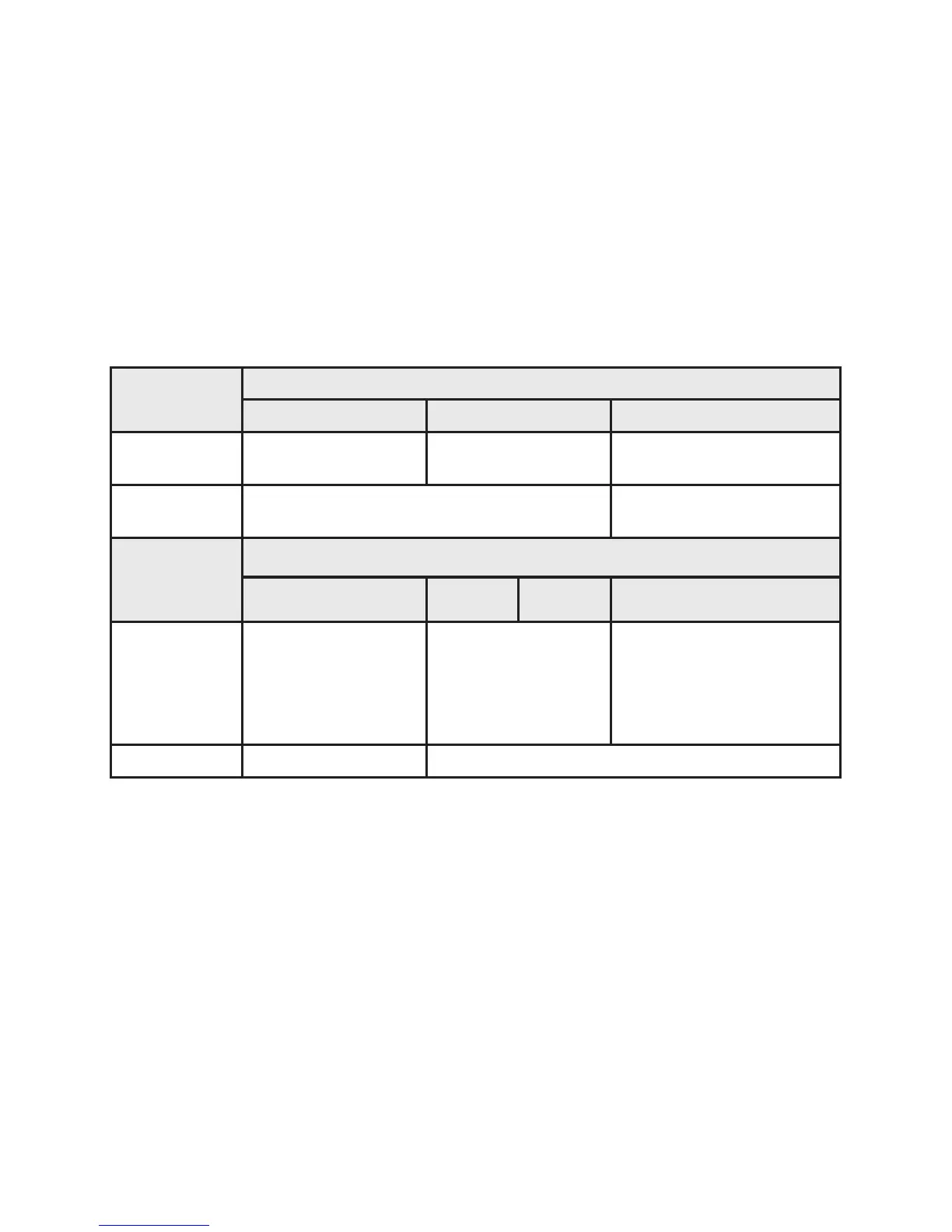
PV Cell Types
PV cells are most commonly made of Silicon, and come in two varieties, crystalline and
thin-lm type, as detailed in Table 2.1
Cell types include Mono-crystalline Silicon, Poly-crystalline Silicon, Amorphous Silicon
(a-Si), Gallium Arsenide (GaAs), Copper Indium Diselenide (CuInSe2, „CIS“), Cadmium
Telluride, or a combination of two materials in a tandem cell.
Bulk type / Wafer-based (Crystalline)
Mono Crystalline Si Poly Crystalline Si Poly Crystalline Band
Pros High efciency
High efciency with
respect to price
-
Cons
Increased manufacturing cost caused by the
supply shortage of silicon
-
Thin lm type
Amorphous Si CIGS CdTe Polymer organic
Pros Low price
Low price
Able to automate
all manufacturing
process
Low manufacturing
Can be more efcient
(still in research)
Cons Low efciency Low efciency
Table 2.1 PV Cell Types
PV Module / Panel and PV Array
To increase their utility, a number of individual PV cells are interconnected together
in a sealed, weatherproof package called a Panel (Module). For example, a 12 V Panel
(Module) will have 36 cells connected in series and a 24 V Panel (Module) will have 72
PV Cells connected in series
To achieve the desired voltage and current, Modules are wired in series and parallel
into what is called a PV Array. The exibility of the modular PV system allows
designers to create solar power systems that can meet a wide variety of electrical
needs. Fig. 2.5 shows PV cell, Panel (Module) and Array.


 To Next Page