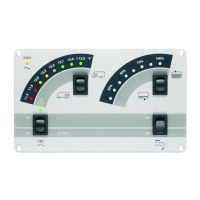
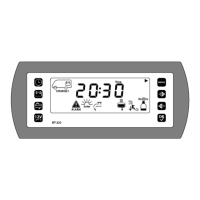
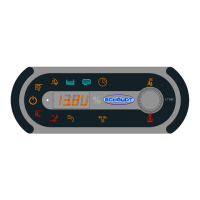
Instruction Man u al Instrument Panels IT 96-A, IT 96-2
8
Issued: 26.11.2007 830.636 BA / EN
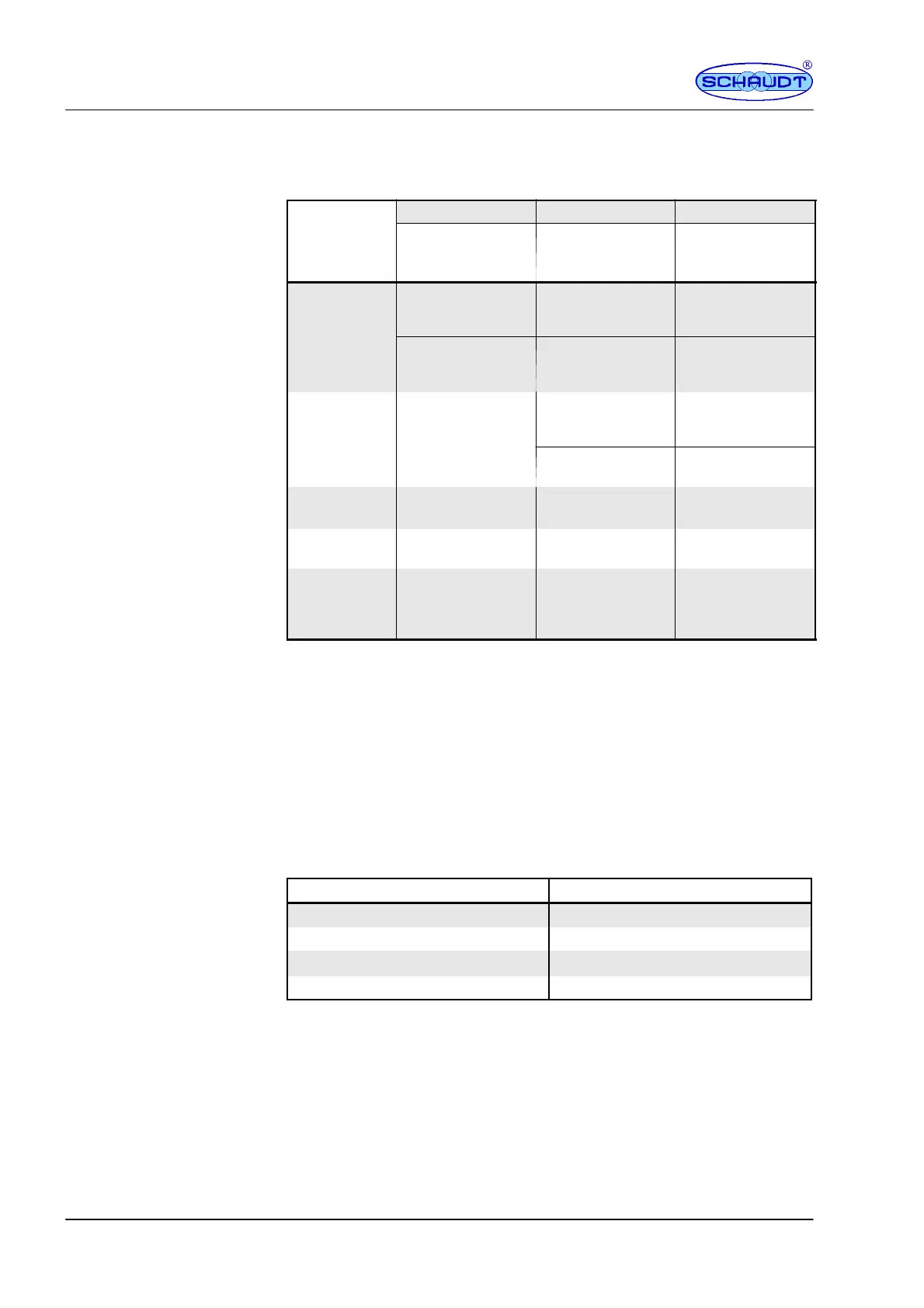
The following table shows how to interpret the leisure battery voltage dis-
played at the display panel correctly.
These values apply to actual operation, not off-load voltage.
Battery operation Mobile operation Power operation
Battery
voltage
Vehicle stationary,
no 230 V
connection
Vehicle moving Vehicle stationary,
230 V connection
Less than 11 V
Risk of total
dischar
e
if consumers are
switched off:
battery empty
the alternator is not
charging the battery
the electrobloc is
not charging the
battery
if consumers are
switched on:
battery overload
12V power supply
overloaded
12V power supply
overloaded
11,5 V to
13.2 V
normal range no charge
by the
alternator
1)
the electrobloc is
not charging the
battery
1)
12V power supply
overloaded
1)
12V power supply
overloaded
1)
13,3 V to
13.7 V
occurs only briefly
after charging
battery being
charged
battery being
charged
13,8 V to
14.4 V
– battery being
charged
battery being
charged
right red area
on the display
instrument
– battery
overcharged,
defective regulator
on alternator
battery
overcharged,
defective
electrobloc
1)
If voltage does not exceed this range for several hours.
Measuring the off-load voltage is a simple and effective method of checking
the condition of the battery. Off-load voltage is the voltage of the charged
battery in a passive state, with no current being supplied or drawn.
Take the measurement several hours after the last charging. In the mean-
time, no significant load should have been placed on the battery, which
means no current should have been drawn from it. If the off-load voltage of
the battery is less than 12.0 V, there is a risk of total discharge.
The following table shows how to interpret the displayed off-load voltage cor-
rectly. These values apply for gel batteries.
Values for off-load voltage Charging condition of the battery
Less than 12 V Totally discharged
12.2 V 25 %
12.3 V 50 %
More than 12.8 V Full
Off-load voltage


 To Next Page