7
Scanner
®
2000 microEFM for Foundation™ Fieldbus Section 1
Section 1—Introduction
The NuFlo™ Scanner
®
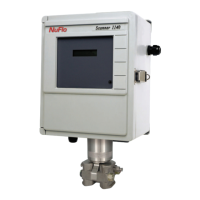
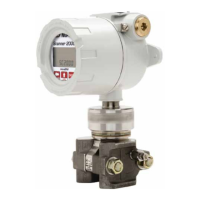
2000 microEFM for Foundation™ Fieldbus (Figure 1.1, page 8) is a FISCO-certied
ow computer that communicates via both RTU Modbus
®
and H1 eldbus protocol. The device computes
volumes of gas, liquid and steam using a differential pressure or pulse output from a primary metering device
and makes the data available for download via Modbus communications.
When properly congured, the device converts values from predened Modbus process variable registers to
Foundation™ eldbus signals for use in building eldbus control strategies. Additionally, other input values,
ow volumes, and calculations can be read by a eldbus host and recorded. For a complete list of parameters
supported by the device, see the Foundation™ Fieldbus Protocol Manual for Scanner 2000.
The Modbus to
Foundation™ eldbus conversion is made possible by an integrated eldbus module. The
module is connected to the Scanner 2000 main circuitry by way of a second “interface” board which receives
the power/communications input from the eldbus network, and facilitates communications between the
main board and the eldbus module. The three boards, a switchplate with display, and a lithium battery pack
are housed inside a compact aluminum alloy enclosure. The device is rated for intrinsic safety, and is ATEX
approved for use in hazardous areas.
A customer-supplied eldbus power supply is the primary power source. However, should the primary power
supply be lost, the lithium battery pack independently powers the unit to sustain data collection.
Static pressure and differential pressure inputs are supplied via an integral multi-variable transmitter. The
Scanner 2000 also supports inputs for process temperature (RTD) and turbine signals, a digital output, and an
optional external communications adapter. For a complete list of specications, see Table 1.1, page 11.
The Scanner 2000’s Modbus parameters are congured using ModWorX Pro, a full-featured software
application supplied with every Scanner 2000 shipment, providing on-screen tools for conguring hardware
and ow calculations, calibrating inputs, and collecting and viewing ow history. Basic settings can also be
changed using the keypad on the front of the instrument. See Section 4—Scanner 2000 Conguration and
Operation, page 55, for details.
Fieldbus communications are congured using a customer-supplied conguration tool. See Section 5—
Fieldbus Conguration and Operation, page 63, for instructions on conguring
Foundation™ eldbus
parameters.
Note The Scanner 2000 for Foundation™ Fieldbus will be referred to as simply Scanner 2000 throughout
this document.
MeasurementCapabilities
The Scanner 2000 microEFM measures and computes standard volumes of gas, steam, petroleum liquids,
and generic liquids with a high degree of accuracy. These measurements can be combined with a process
temperature input to yield compensated liquid measurements as well.
Gas, liquid, and steam measurements are typically based on the differential pressure output of an orice
plate, cone meter, or averaging pitot tube (such as Annubar
®
), or the linear pulse output of a turbine, positive
displacement or vortex owmeter.
The Scanner 2000 reliably supports AGA-3, ISO-5167 liquid measurement, and AGA-7 gas measurement.


 To Next Page