EasyManua.ls Logo

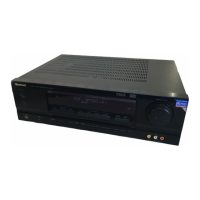
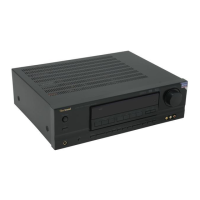
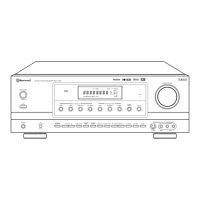
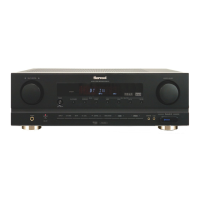
Sherwood RD-5405 - User Manual

Sherwood RD-5405
119 pages
Print Icon
To Next Page IconTo Next Page
Loading...
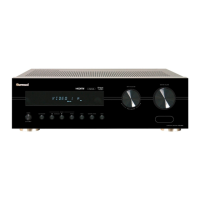
RD-5405
AUDIO/VIDEO RECEIVER
OPERATING INSTRUCTIONS
INSTRUCCIONES DE FUNCIONAMIENTO
RECEPTOR DE AUDIO/VIDEO
RECEPTEUR AUDIO/VIDEO
MODE D'EMPLOI
5404 cover_A_cover.qxp 2010-04-08 오후 6:01 페이지 1

Table of Contents

Questions and Answers

  • S
    Sarah BarrettAug 16, 2025
    Why is there no sound coming from my Sherwood RD-5405 Receiver?
    • J
      Julie MorrowAug 16, 2025
      If there is no sound coming from your Sherwood Receiver, there could be several reasons: * The speaker cords might be disconnected, so check the speaker connections. * The master volume might be adjusted too low, so adjust the master volume. * The MUTE button on the remote control might be pressed to ON, so press the MUTE button to cancel the muting effect. * The input source might be selected incorrectly, so select the desired input source correctly. * There might be incorrect connections between the components, so make connections correctly.
  • A
    Angela MitchellAug 19, 2025
    What to do if my Sherwood RD-5405 has no power?
    • J
      John WilliamsSep 12, 2025
      If your Sherwood Receiver has no power, it could be due to a disconnected AC input cord. Ensure the cord is securely connected. Alternatively, there might be a poor connection at the AC wall outlet, or the outlet could be inactive. Check the outlet using a lamp or another appliance.
  • A
    amandajordanAug 22, 2025
    Why is my Sherwood Receiver remote control unit not operating?
    • T
      Theresa BarryAug 22, 2025
      If your Sherwood Receiver remote control unit is not operating, it could be because the batteries are not loaded or exhausted. Replace the batteries. Another reason could be that the remote sensor is obstructed. Remove the obstacle.
  • D
    danielwatsonAug 26, 2025
    Why are stations cannot be received on my Sherwood RD-5405?
    • C
      Crystal WilliamsAug 26, 2025
      If stations cannot be received on your Sherwood Receiver, it may be because no antenna is connected. Connect an antenna. Another reason could be that the desired station frequency is not tuned in. Tune in the desired station frequency. Also, the antenna might be in the wrong position, so move the antenna and retry tuning.
  • A
    Amanda JamesAug 28, 2025
    What to do if there is no sound from the surround speakers on my Sherwood RD-5405 Receiver?
    • L
      Laura Dalton DDSAug 28, 2025
      If there is no sound from the surround speakers on your Sherwood Receiver, it could be due to several reasons: * Surround mode is switched off (stereo mode). Select a surround mode. * Master volume and surround level are too low. Adjust master volume and surround level. * A monaural source is used. Select a stereo or surround source. * Surround speaker setting is “N”. Select the desired surround speaker setting.
  • Y
    ymartinezAug 31, 2025
    Why is there poor FM reception on my Sherwood Receiver?
    • A
      Adrian LarsenAug 31, 2025
      If you are experiencing poor FM reception on your Sherwood Receiver, it could be because no antenna is connected. Connect an antenna. Alternatively, the antenna might not be positioned for the best reception. Change the position of the antenna.
  • B
    brittany05Sep 3, 2025
    What to do if there is no sound from the center speaker on my Sherwood RD-5405?
    • M
      matthew09Sep 3, 2025
      If there is no sound from the center speaker on your Sherwood Receiver, it could be because: * Surround mode is switched off (stereo mode). Select the desired surround mode. * Center speaker setting is “N”. Select the desired center speaker setting. * Master volume and center level are too low. Adjust master volume and center level.
  • B
    Bruce FrenchSep 5, 2025
    Why is there continuous hissing noise during FM reception on my Sherwood Receiver?
    • D
      Denise AllenSep 6, 2025
      If you are experiencing a continuous hissing noise during FM reception, especially when a stereo broadcast is received, it could be due to weak signals. Change the position of the antenna.
  • T
    Thomas SmithSep 9, 2025
    Why is there continuous hissing noise during AM reception on my Sherwood Receiver?
    • K
      Kristina RileySep 9, 2025
      If there is continuous or intermittent hissing noise during AM reception, especially at night, it is likely caused by motors, fluorescent lamps, or lightning. Keep the receiver away from noise sources.
  • A
    Andrea SmithSep 12, 2025
    What to do if preset stations cannot be received on my Sherwood Receiver?
    • V
      Victor AlvarezSep 12, 2025
      If preset stations cannot be received on your Sherwood Receiver, it could be because an incorrect station frequency has been memorized. Memorize the correct station frequency. Alternatively, the memorized stations might have been cleared. Memorize the stations again.

Summary

Important Safety Instructions

Portable Cart Warning

Warning about moving a cart/apparatus combination to avoid injury from tip-over.

Introduction

Pre-Operation Instructions

Essential reading before operating the unit for the first time.

Installation Precautions

Guidance on proper installation to ensure ventilation and heat dispersal.

CATV System Installer Guidance

Specific grounding guidelines for CATV system installers.

FCC Compliance Information

Details on the device's compliance with FCC regulations for digital devices.

USA;Canada Safety Precautions

Safety measures specific to operation in the USA and Canada.

System Connections

Connecting Antennas

Instructions for connecting FM and AM antennas for optimal reception.

Connecting Audio;Video Components

Connecting Digital Inputs

Instructions for connecting digital audio inputs (optical and coaxial).

Connecting Subwoofer Pre Out

Connecting Speakers

Instructions for connecting front, surround, and center speakers.

Speaker Wire Connection Guide

Step-by-step instructions on how to strip and connect speaker wires securely.

AC Input Cord Connection

Instruction to plug the AC input cord into a wall outlet.

Speaker Placement Recommendations

Front and Center Speaker Placement

Recommendations for placing front and center speakers for optimal sound.

Surround Speaker Placement

Guidelines for positioning surround speakers for immersive audio.

Subwoofer Placement

Guidance on placing the subwoofer for powerful deep bass sounds.

Front Panel Controls Overview

Power Switch

Description of the power switch for turning the unit on and off.

Power On;Standby Button

Explanation of the power ON/STANDBY button functionality.

Standby Indicator Light

Description of the standby indicator light status.

Fluorescent Display Information

Explanation of the information shown on the fluorescent display.

Remote Sensor Location

Location and function of the remote control sensor.

Input Selector;Multi-Control Knob

How to use the input selector and multi-control knob.

Master Volume Control Knob

Description of the master volume control knob.

Surround Mode Adjustment Buttons

Buttons for adjusting the surround sound mode.

Stereo Button Function

Function of the stereo button.

Band Selection Button

Button for selecting radio bands.

Memory;Enter Button

Button for memory functions and entering selections.

Mode Selection Button

Button for selecting different operating modes.

Remote Control Functions

Remote Power On Button

Button to turn the unit on via the remote.

Remote Standby Button

Button to put the unit into standby mode via the remote.

Remote Tuning Buttons

Buttons for tuning radio stations using the remote.

Remote Numeric Buttons

Buttons for direct input of numbers via the remote.

Remote Sleep Timer Button

Button to set the sleep timer using the remote.

Remote Mute Button

Button to mute the audio output using the remote.

Remote Tuning Controls

Tuning controls on the remote.

Remote Preset Buttons

Buttons for selecting preset stations using the remote.

Remote Volume Control Buttons

Buttons for adjusting the volume using the remote.

Remote Channel Level Button

Button for adjusting individual channel levels via the remote.

Remote Tone Mode Button

Button for selecting tone adjustment modes via the remote.

Remote Test Tone Button

Button to activate the test tone function via the remote.

Remote Setup Button

Button to access the setup menu via the remote.

Remote Navigation and Enter Buttons

Navigation and confirmation buttons for menus on the remote.

Remote Display Button

Button to change the display mode via the remote.

Remote Dimmer Button

Button to adjust display brightness via the remote.

Remote Stereo Button

Button to select stereo mode via the remote.

Remote Sound Parameter Button

Button to adjust sound parameters via the remote.

Remote Surround Mode Buttons

Buttons for adjusting surround sound modes via the remote.

Remote Digital;Analog Mode Button

Button to select digital or analog input modes via the remote.

Remote Input Selector Buttons

Buttons to select input sources via the remote.

Remote Control Operation Range

Loading Remote Control Batteries

Instructions on how to insert batteries into the remote control.

Operations Overview

Listening to Program Sources

Guide on how to select and listen to audio program sources.

Using VIDEO 1 and VIDEO 2 Input Sources

Selecting Digital or Analog Input

How to choose between digital (optical/coaxial) or analog input.

Adjusting Overall Volume

Instructions for adjusting the main volume level.

Muting the Sound

How to mute the audio output temporarily.

Adjusting Tone (Bass and Treble)

Surround Sound Modes

Dolby Digital Mode

Details about the Dolby Digital multi-channel audio format.

Dolby Pro Logic II Surround

Explanation of Dolby Pro Logic II surround processing.

Dolby Pro Logic II Movie Mode

Using Dolby Pro Logic II for enhancing movie sound effects.

Dolby Pro Logic II Music Mode

Using Dolby Pro Logic II for enhancing music sound quality.

Dolby Pro Logic Mode

Expanding 2-channel sources for 4-channel playback.

Matrix Surround Mode

Reproducing delayed signals for expanded sound.

Church Surround Mode

Simulating church ambience for specific music genres.

Theater Surround Mode

Creating a movie theater-like sound experience.

Hall Surround Mode

Providing concert hall ambience for music.

Stadium Surround Mode

Creating an expansive sound field for sports events.

Enjoying Surround Sound

Selecting Surround Mode

Steps for selecting manual or auto surround modes.

Canceling Surround for Stereo

How to switch back to stereo or 2CH downmix mode.

2 CH Downmix Mode

Mixing multi-channel signals into 2 front channels.

Adjusting Sound Parameters

Night Mode Adjustment

Adjusting dynamic range compression for faint sound.

Panorama Mode Adjustment

Expanding stereo image for wraparound effect.

Center Width Control

Adjusting the center image placement.

Dimension Control Adjustment

Adjusting soundfield direction.

Adjusting Channel Levels with Test Tone

Adjusting Current Channel Levels

Memorizing Channel Level Adjustments

Saving current channel level adjustments into preset memory.

Recalling Memorized Channel Levels

Retrieving previously saved channel level settings.

Memorizing Adjusted Channel Levels

Recalling Memorized Channel Levels

Loading previously saved channel level settings from memory.

Listening to Radio Broadcasts

Auto Tuning Radio Stations

Automatically searching for and tuning to radio stations.

Manual Tuning Radio Stations

Manually tuning to specific radio station frequencies.

Auto Presetting Radio Stations

Automatically storing found FM stations into memory.

Manual Radio Station Presetting

Tuning to Preset Stations

Selecting and playing back stations stored in memory.

Recording Audio Signals

Recording to Tape

Steps for recording onto a tape deck.

Recording to Video 1 Input

Steps for recording audio signals onto VIDEO 1.

Other Functions

Operating the Sleep Timer

Setting the timer for automatic shut-off.

Adjusting Display Brightness

Changing the brightness level of the display.

Displaying Operation Status

Cycling through different display modes (surround, volume, input).

Front Panel Function Usage

Using Preset Tuning Mode (Front Panel)

Using the front panel for preset station tuning.

Using Tuning Mode (Front Panel)

Using the front panel for radio tuning.

Using Channel Level Adjustment (Front Panel)

Adjusting channel levels via the front panel.

Using D;A Set Mode (Front Panel)

Selecting digital or analog input modes from the front panel.

Using Tone Adjustment Mode (Front Panel)

Adjusting bass and treble via the front panel.

System Setup Menu

System Setup: System Menu

Setting up system-wide parameters.

System Setup: Input Menu

Configuring input sources and settings.

System Setup: Speaker Settings

Adjusting speaker settings.

System Setup: Channel Level Menu

Setting individual channel levels.

System Setup: Parameter Menu

Adjusting sound parameters.

System Setup Menu Flow

Setting the System Parameters

System Settings: Subwoofer Mode

Selecting the subwoofer mode.

System Settings: Tone Adjustment

Adjusting tone (bass and treble) settings.

Tone Adjustment Details

Setting Input Sources and Assignments

Setting Digital Inputs (DIGITAL IN)

Assigning digital inputs (optical/coaxial) to sources.

Setting Auto Surround Mode

Setting auto or manual surround mode selection.

Setting Speaker Configuration

Speaker Setup: Configuration (Size)

Selecting speaker sizes (Large, Small, None).

Speaker Setup: Distance Setting

Setting speaker distances for delay time adjustment.

Speaker Setup: Crossover Frequency

Selecting the crossover frequency for speakers.

Configuration Details (Speaker Size)

Distance Setting Details

Crossover Frequency Setting Details

Setting Channel Levels

Adjusting Current Channel Levels

Fine-tuning levels for each channel.

Memorizing Channel Level Adjustments

Saving current channel level adjustments.

Recalling Memorized Channel Levels

Loading saved channel level settings.

Memorizing Adjusted Channel Levels

Recalling Memorized Channel Levels

Loading previously saved channel level settings from memory.

Setting Sound Parameters

Night Mode Parameter Adjustment

Adjusting dynamic range compression for faint sound.

Dolby PLII Music Parameter Adjustment

Panorama Mode Parameter Adjustment

Expanding stereo image for wraparound effect.

Center Width Control Parameter

Adjusting the center image placement.

Dimension Control Parameter

Adjusting soundfield direction.

Troubleshooting Guide

Technical Specifications

Sherwood RD-5405 Specifications

General IconGeneral
Output impedance6 Ω
Audio output channels2.0 channels
Power output per channel (20-20KHz@8 Ohm)60 W
HDMI in2
Audio (L/R) in5
Digital audio optical in1
Speakers connectivity type-
Ethernet LANNo
Supported radio bandsAM, FM
DisplayLED
Product colorBlack
Audio decodersDolby Digital, Dolby Pro Logic II
Weight and Dimensions IconWeight and Dimensions
Depth381 mm
Width431 mm
Height127 mm

Related product manuals