LUBRICATION AND MAINTENANCE
45
MAINTENANCE AND INSPECTION OF
THE ROPS
NOTE: Inspect the ROPS after the first 20 hours of
operation. Following the initial inspection, the
ROPS should be checked after every 500 hours of
operation or every six months, whichever comes
first.
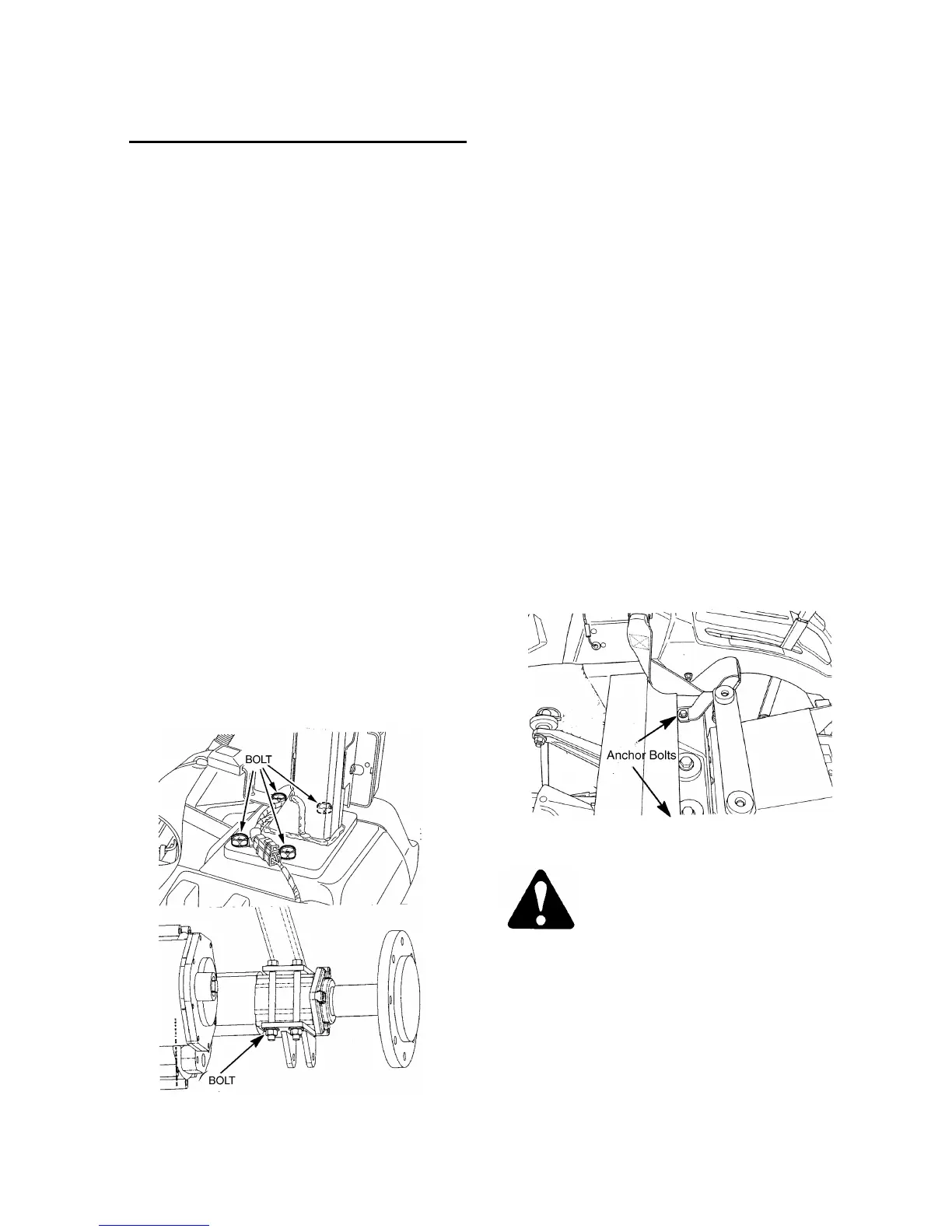
1. Check the torque of the ROPS to axle mounting
bolts, Figure 67. Tighten both front nut and bolt
assemblies to the corrected torque of 74.5 Nm
(55lbs.ft.) if necessary, with the torque being
applied to the nut. The rear bolt (not shown)
should be tightened to 166 Nm (123 ft.lbs.)
2. Also check the torque of the ROPS to fender
mounting bolts, Figure 67. Tighten the bolts to
the correct torque of 74.5 Nm (55 lbs.) if neces-
sary.
POSSIBLE DAMAGE TO THE ROPS
If the machine has rolled over or the ROPS has
been in some other type of accident (such as hit-
ting an overhead object during transport) you must
replace the ROPS to get the original protection.
Figure 67 - Mounting Bolts/ Nuts
After an accident, check for damage to (1) the
ROPS, (2) the operator’s seat, (3) the seat belt and
the seat belt mountings. Before you operate the
machine, replace all damaged parts.
IMPORTANT:
::
:Do not try to weld or straighten the
ROPS.
SEAT BELT MAINTENANCE
1. Inspect the operator’s seat and the mounting
parts for the seat belt. If necessary, tighten both
seat belt anchor Bolts, Figure 69 (second bolt
not visible), to the correct torque of 74.5 Nm (55
ft.lbs.) and replace parts that show wear or dam-
age.
2.
Use soap and water to clean the seat belt if
necessary
. Do not use carbon tetrachloride,
naphtha, etc., as these substances will
weaken the webbing. Additionally, do not
bleach or re-dye webbing, as these products
will also weaken the webbing.
Figure 69 - Seat Belt
WARNING:
::
:Always wear your seat belt.
Never wear the seat belt if the tractor is
not equipped with a ROPS or Safety
Cab.
FALLING OBJECT PROTECTIVE
STRUCTURE(FOPS)
When tractors are equipped with front-end Loaders
and are not equipped with safety cabs, it is rec-
ommended the tractor be equipped with a FOPS
canopy to protect the operator from falling objects.



 To Next Page