Page 5-di/of 40
Prolonged immersion in hot water may cause hyperthermia
2
, while immersion in cold water may cause
hypothermia
3
, with symptoms such as: Dizziness, fainting, drowsiness, lethargy
4
. Consequences of
hyperthermia and hypothermia may be: unawareness of imminent danger, lack of heat or cold perception,
failure to recognise the need to exit the pool, physical inability to exit the pool, damages to foetus for
pregnant women, unconsciousness with consequent drowning risks.
Energy savings.
1.4.
The heat pump slowly heats pool water. For weekend use, keeping pool temperature at the desired value
even when not in use is recommended. If temperature is allowed to drastically reduce, several days may be
required to restore the desired temperature. In the event of prolonged pool disuse (more than one week),
turning off the heat pump or reducing the set temperature by several degrees is recommended to save
energy.
The difference between the ambient temperature and water temperature should never be over 15 [°C]. For
this reason, do not use the heat pump when the ambient temperature is under 15 [°C]. Please see
Paragraph 5.2.7.
For improved energy savings, using the automatic start and stop functions is recommended. Please see
Paragraph 5.2.8 and Paragraph 5.2.9.
Once the ideal water temperature is set, use the key lock function to prevent changes to the set temperature
and/or prevent other adjustments. Please see Paragraph 5.2.11.
Protect the pool from wind.
When the pool is not in use, cover it with a tarp to limit heat dispersion.
General information.
1.5.
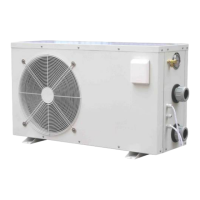
SERIES BP heat pumps are devices accessible to the public and were designed to heat and cool water
intended for home pools.
SERIES BP heat pumps must not be used with other heating systems such as electric heaters.
This manual provides instructions for the installation and use of SERIES BP heat pumps. Carefully read
this manual before installation. Failure to observe the manual instructions may cause personal or property
damages or damage the heat pump.
Failure to observe the instructions in this manual immediately null and voids the warranty.
SHOTT International SRL is not liable for any damages due to improper heat pump use.
The manual must be kept integral and in good conditions. It must accompany the heat pump until it is
decommissioned.
In the event of malfunctions, consult the instruction manual and, if necessary, contact specialised
technicians.
Installation and maintenance must be performed by qualified technicians unless otherwise indicated in the
manual.
Initial system commissioning must only be performed by specialised technicians.
Working on the heat pump when connected to the electrical mains is strictly prohibited. Only begin work
after taking the safety measures.
The heat pump is not suited for people (even children) who suffer from physical, sensorial or mental
handicaps or people who do not have sufficient experience or training unless instructed on heat pump use
and assisted by a person in charge of their safety. Supervise children to ensure they do not play with the
device.
SHOTT International SRL continually strives to improve all types and models. We trust the user will
understand the technical modifications SHOTT International SRL reserves the right to make on the shape
and fittings on SERIES BP heat pumps.
Definitions
5
.
1.6.
Power cord: flexible cord, for power supply, attached to the device.
Tool: Screwdriver, coin or any other object that can be used to move a screw or similar fastening device.
Protection device: Device whose operations prevent hazardous situations in abnormal operating conditions.
Contact switch disconnection: Disconnection of both power conductors with a single contact opening
action.
Heat pump: device that absorbs heat at a given temperature and releases it at a higher temperature.
Heat exchanger: device specifically designed to transfer heat between two physically separate fluids.
Compressor: device specifically designed to increase fluid pressure.
Plate heat exchanger: heat exchanger where coolant is vaporised by heat absorption.
Pressure limiter device: mechanism that automatically responds to a set pressure, interrupting the
operations of the element that controls pressure.
2
Increase in body temperature over physiological limits, maximum limit 37 [°C].
3
Decrease in body temperature over physiological limits, minimum limit 35 [°C].
4
State of inactivity or lack of reactivity that nears unconsciousness.
5
Definitions in accordance with regulation CEI EN 60335.


 To Next Page