7 | Page
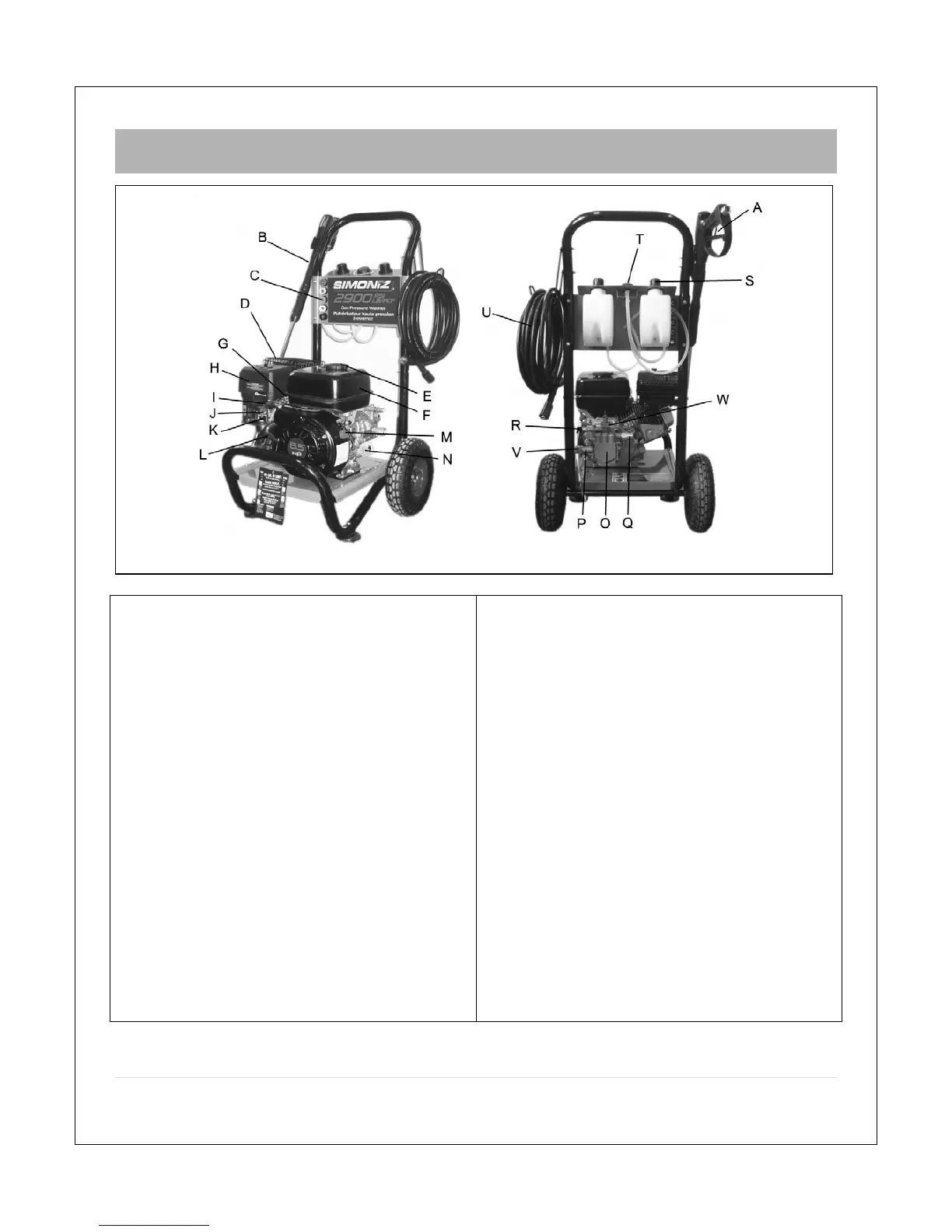
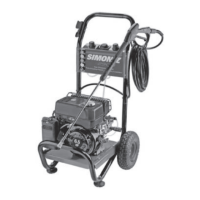
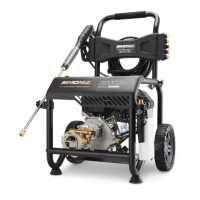
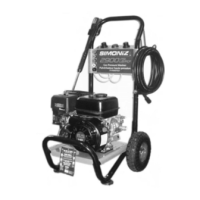
PRESSURE WASHER FEATURES
A – Trigger Locking Latch –Will prevent from mis-
operating or spraying accidentally.
B – Wand –Will extend your reach for easier cleaning.
C – Spray Nozzles – 0°, 15°, 25°, 40°, soap tip; Use
to apply the right pressure for each specific project
D – Muffler – Ensure you avoid contact as this will be
hot during and shortly after use. Avoid resting the
pressure hose on muffler.
E – Fuel Cap – Ensure cap is on tight during use.
F – Fuel Tank – Has a 4 L capacity.
G – Spark Plug –Should be checked every 100 hours
of operation.
H – Air Filter – Filter should be replaced annually to
ensure optimal performance
I – Throttle Lever – This will adjust the engine speed
J
– Choke Lever –Will control incoming air.
K – Fuel Valve – Regulates the flow of fuel to the
engine. Must be fully open before starting engine.
L – Recoil Starter – This will start the engine
M –O/I Switch – Ensure this is set to ‘I’
before attempting to start engine.
N – Oil Dipstick – Ensure the unit has the proper
level of oil before starting engine. Use
only SAE 10W-30 oil.
O – Pump – Increases the water pressure
P – Pump Inlet – Using included quick-connect
coupling, attach your garden hose here.
Q – Pump outlet – Attach your pressure hose here.
R –Thermal Relief Valve – This includes a drain
pipe to be used if resting water inside pump
becomes too hot. This will help prevent damage
to pump.
S – Detergent Tank Caps – Take these caps off to fill
either detergent tank with pressure washer
approved detergent.
T – Detergent Dial – Allows you to switch between
different detergents without stopping.
U – Pressure Hose – Attach to pump and gun.
30’ (9 m).
V – Garden Hose Quick-Connect – Use this to make
it easier to connect and disconnect garden hose
from pump inlet.
W – Pump Breather- Will prevent pressure inside
pump from going too high.



 To Next Page