EasyManua.ls Logo

Simplex 4100-3109 IDNet 2 - User Manual

Simplex 4100-3109 IDNet 2
14 pages
Print Icon
To Next Page IconTo Next Page
Loading...
579-1169 Rev E
4100-3109 IDNet 2, 4100-3110 IDNet 2+2 and 4100-3111 IDNet Loop card Installation Instructions
*05791169E*
Cautions, warnings, and regulatory information
READ AND SAVE THESE INSTRUCTIONS Follow the instructions in this installation manual. These instructions must be followed to avoid damage to
this product and associated equipment. Product operation and reliability depend upon proper installation.
DO NOT INSTALL ANY SIMPLEX™ PRODUCT THAT APPEARS DAMAGED Upon unpacking your Simplex product, inspect the contents
of the carton for shipping damage. If damage is apparent, immediately file a claim with the carrier and notify an authorized Simplex
product supplier.
ELECTRICAL HAZARD Disconnect electrical field power when making any internal adjustments or repairs. All repairs should be
performed by a representative or an authorized agent of your local Simplex product supplier.
STATIC HAZARD Static electricity can damage components. Handle as follows:
Ground yourself before opening or installing components.
Prior to installation, keep components wrapped in anti-static material at all times.
EYE SAFETY HAZARD Under certain fiber optic application conditions, the optical output of this device may exceed eye safety limits. Do
not use magnification (such as a microscope or other focusing equipment) when viewing the output of this device.
SULFURIC ACID WARNING Battery contains sulfuric acid, which can cause severe burns to the skin and eyes and can destroy fabric.
Replace any leaking or damaged battery while wearing appropriate protective gear. If you come in contact with sulfuric acid, immediately
flush skin or eyes with water for 15 minutes and seek immediate medical attention.
FCC RULES AND REGULATIONS – PART 15 This equipment has been tested and found to comply with the limits for a Class A digital device, pursuant
to Part 15 of the FCC Rules. These limits are designed to provide reasonable protection against harmful interference when the equipment is operated
in a commercial environment. This equipment generates, uses, and can radiate radio frequency energy and, if not installed and used in accordance
with the instruction manual, may cause harmful interference to radio communications. Operation of this equipment in a residential area is likely to
cause harmful interference in which case the user will be required to correct the interference at his own expense.
SYSTEM REACCPTANCE TEST AFTER SOFTWARE CHANGES To ensure proper system operation, this product must be tested in accordance with
NFPA-72, after any programming operation or change in site-specific software. Reacceptance testing is required after any change, addition or deletion
of system components, or after any modification, repair or adjustment to system hardware or wiring. All components, circuits, system operations, or
software functions known to be affected by a change must be 100% tested. In addition, to ensure that other operations are not inadvertently affected,
at least 10% of initiating devices that are not directly affected by the change, up to a maximum of 50 devices, must also be tested and proper system
operation verified.
NFPA 72® is a registered trademark of the National Fire Protection Association.
Introduction
The IDNet 2* card provides the Fire Alarm Control Panel (FACP) with one
isolated IDNet Signaling Line Circuit (SLC) (or channel) and with up to
four isolated loop outputs. This card is used with compatible** IDNet
and MAPNET II communicating devices and allows the system CPU to
communicate with up to 250 initiating devices, such as smoke sensors and
pull stations. Isolated IDNet communications provide overall operation
improvement, and isolated output loops allow a short circuit on one loop
to avoid impacting the other loops.
There are two available configurations for the IDNet 2 card:
4100-3109 IDNet 2 card: This is the basic configuration which provides
the FACP with two Class B (or Class A) loop outputs that are isolated
from each other as well.
4100-3110 IDNet 2+2 card: In this configuration, the 4100-3109 IDNet
2 card is fitted with two 4100-3111 IDNet Loop cards and provides the
FACP with four Class B (or Class A) isolated IDNet loops. Two isolated
loops are provided by the card and one isolated loop is added per IDNet
Loop card.
*= Unless specified otherwise, the term “IDNet 2” is used in this manual to
designate both the IDNet 2 and the IDNet 2+2 cards.
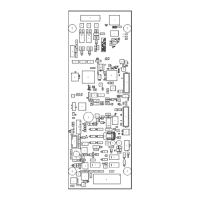
IDNet 2 Card
IDNet Loop Card
IDNet 2+2 Card
Note: The 4100-3111 IDNet Loop daughter card can be purchased separately and placed on a pre-installed IDNet 2 card that is not EPS-mounted.
However, once it is added to the IDNet card, the compatibility and programming requirements will become the same as with the IDNet 2+2 card.
Important: Verify FACP system programmer, executive, and slave software compatibility when installing, or replacing system components. Refer to the
Technical Support Information and Downloads website for compatibility information.


Questions and Answers

Summary

Cautions, Warnings, and Regulatory Information

Safety and Hazard Warnings

Covers electrical, static, eye safety, and sulfuric acid hazards.

Regulatory Compliance and Testing

Details FCC rules and system reacceptance testing requirements.

Introduction to IDNet 2 Cards

IDNet 2 Card Overview

The IDNet 2 card provides isolated IDNet SLC for communication with devices.

IDNet 2 Card Configurations

Details the basic IDNet 2 and the IDNet 2+2 card configurations.

Card Layout and Compatibility

Hardware Compatibility

Lists compatible FACP hardware for IDNet 2 and IDNet 2+2 cards.

Software Compatibility

Specifies required ES Panel Programmer and 4100U Master software versions.

IDNet 2 Card Layout

Illustrates the physical layout of the IDNet 2 and IDNet 2+2 cards.

LED Identification and Address Setting

IDNet 2 Card LED Definitions

Defines the function of each LED on the IDNet 2 card.

Setting the IDNet 2 Card Address

Explains using DIP switch SW1 for baud rate and card addressing.

IDNet 2 Card Address Configuration

Address Mapping Table

Provides a table mapping DIP switch settings to card addresses.

Installation and Mounting Procedures

Mounting the IDNet 2;2+2 Card

Step-by-step guide for mounting the IDNet 2/2+2 card onto the PDI or ES-PS.

Adding IDNet Loop Cards to IDNet 2

Instructions for adding IDNet Loop cards to an existing IDNet 2 card.

Wiring Overview and Parameters

IDNet Wiring Configurations (Class A;B)

Explains Class A and Class B wiring for IDNet circuits.

Wiring Distance and Capacitance Limits

Specifies maximum wiring distances and channel capacitance.

Wiring Considerations with Protectors

Notes on using shielded wire and overvoltage protectors.

Class A and Class B Wiring Procedures

Class A Wiring Procedure

Step-by-step instructions for wiring loops in Class A configuration.

Class B Wiring Procedure

Step-by-step instructions for wiring loops in Class B configuration.

Class B Loop Wiring Details

IDNet Loop Class B Wiring Diagram

Illustrates different circuit configurations for Class B wiring.

Class B Wiring Notes

Further notes on addressing and wiring for Class B.

Programming the IDNet 2 Card

Adding IDNet 2 to ES Programmer

Steps to add the IDNet 2 card to the ES Panel Programmer software.

Configuring Card Properties Tab

Details on setting card address, description, and other properties.

Card Properties Tab Configuration

Card Properties Tab Fields Explained

Explains the fields within the Card Properties tab in the programmer.

Point and Loop Editing in Programmer

Configuring the Point Editing Tab

How to manage and edit point types for devices on the IDNet loop.

Configuring the Loop Editing Tab

How to configure the loops, including setting device types and labels.

Troubleshooting IDNet 2 Card Issues

Common Trouble Messages and Causes

Lists common trouble messages and their potential causes.

Loop Statuses and Card Specifications

Supported Loop Statuses

Reports on loop statuses like connected, isolated, open, and short circuits.

IDNet 2 Card Specifications

Provides operating and electrical specifications for the IDNet 2 card.

IDNet Loop Card Specifications

Provides operating and electrical specifications for the IDNet Loop card.

Summary

Cautions, Warnings, and Regulatory Information

Safety and Hazard Warnings

Covers electrical, static, eye safety, and sulfuric acid hazards.

Regulatory Compliance and Testing

Details FCC rules and system reacceptance testing requirements.

Introduction to IDNet 2 Cards

IDNet 2 Card Overview

The IDNet 2 card provides isolated IDNet SLC for communication with devices.

IDNet 2 Card Configurations

Details the basic IDNet 2 and the IDNet 2+2 card configurations.

Card Layout and Compatibility

Hardware Compatibility

Lists compatible FACP hardware for IDNet 2 and IDNet 2+2 cards.

Software Compatibility

Specifies required ES Panel Programmer and 4100U Master software versions.

IDNet 2 Card Layout

Illustrates the physical layout of the IDNet 2 and IDNet 2+2 cards.

LED Identification and Address Setting

IDNet 2 Card LED Definitions

Defines the function of each LED on the IDNet 2 card.

Setting the IDNet 2 Card Address

Explains using DIP switch SW1 for baud rate and card addressing.

IDNet 2 Card Address Configuration

Address Mapping Table

Provides a table mapping DIP switch settings to card addresses.

Installation and Mounting Procedures

Mounting the IDNet 2;2+2 Card

Step-by-step guide for mounting the IDNet 2/2+2 card onto the PDI or ES-PS.

Adding IDNet Loop Cards to IDNet 2

Instructions for adding IDNet Loop cards to an existing IDNet 2 card.

Wiring Overview and Parameters

IDNet Wiring Configurations (Class A;B)

Explains Class A and Class B wiring for IDNet circuits.

Wiring Distance and Capacitance Limits

Specifies maximum wiring distances and channel capacitance.

Wiring Considerations with Protectors

Notes on using shielded wire and overvoltage protectors.

Class A and Class B Wiring Procedures

Class A Wiring Procedure

Step-by-step instructions for wiring loops in Class A configuration.

Class B Wiring Procedure

Step-by-step instructions for wiring loops in Class B configuration.

Class B Loop Wiring Details

IDNet Loop Class B Wiring Diagram

Illustrates different circuit configurations for Class B wiring.

Class B Wiring Notes

Further notes on addressing and wiring for Class B.

Programming the IDNet 2 Card

Adding IDNet 2 to ES Programmer

Steps to add the IDNet 2 card to the ES Panel Programmer software.

Configuring Card Properties Tab

Details on setting card address, description, and other properties.

Card Properties Tab Configuration

Card Properties Tab Fields Explained

Explains the fields within the Card Properties tab in the programmer.

Point and Loop Editing in Programmer

Configuring the Point Editing Tab

How to manage and edit point types for devices on the IDNet loop.

Configuring the Loop Editing Tab

How to configure the loops, including setting device types and labels.

Troubleshooting IDNet 2 Card Issues

Common Trouble Messages and Causes

Lists common trouble messages and their potential causes.

Loop Statuses and Card Specifications

Supported Loop Statuses

Reports on loop statuses like connected, isolated, open, and short circuits.

IDNet 2 Card Specifications

Provides operating and electrical specifications for the IDNet 2 card.

IDNet Loop Card Specifications

Provides operating and electrical specifications for the IDNet Loop card.

Overview

The Simplex 4100-3109 IDNet 2, 4100-3110 IDNet 2+2, and 4100-3111 IDNet Loop cards are essential components for Fire Alarm Control Panels (FACPs), providing isolated IDNet Signaling Line Circuits (SLCs) and isolated loop outputs. These cards facilitate communication between the FACP CPU and up to 250 addressable initiating devices, such as smoke sensors and pull stations. The isolated IDNet communications enhance overall system operation, and the isolated output loops ensure that a short circuit on one loop does not affect other loops.

Function Description:

The IDNet 2 card serves as the interface between the FACP and addressable devices. It provides one isolated IDNet SLC (or channel) and offers up to four isolated loop outputs. There are two main configurations:

  • 4100-3109 IDNet 2 card: This basic configuration provides the FACP with two Class B (or Class A) loop outputs that are isolated from each other.
  • 4100-3110 IDNet 2+2 card: This configuration includes the 4100-3109 IDNet 2 card fitted with two 4100-3111 IDNet Loop cards, providing the FACP with four Class B (or Class A) isolated IDNet loops. Two isolated loops are provided by the base card, and one isolated loop is added per IDNet Loop card. The 4100-3111 IDNet Loop daughter card can be purchased separately and added to a pre-installed IDNet 2 card.

Each IDNet output from the IDNet 2 or IDNet Loop cards can be wired as either an isolated Class A circuit or as two isolated Class B circuits.

  • Class A Wiring: Provides an alternate communication path, maintaining communication to all devices even with a single open circuit fault. It requires two wires routed from the IDNet 2 Primary Terminals (B+, B-) to each device, and then back to the IDNet Secondary Terminals (A+, A-). Wiring is in/out, and "T" tapping is not allowed.
  • Class B Wiring: Allows "T" tapping. IDNet wiring is inherently supervised due to individual device-level communications, eliminating the need for end-of-line resistors.

Important Technical Specifications:

Hardware Compatibility:

  • IDNet 2: Compatible with 4100ES bays, EPS modules, and 4100U bays.
  • IDNet 2+2: Compatible with 4100ES bays, 4100U bays, and ES-PS modules.

Software Compatibility:

  • Requires revision 2.04 or higher of the ES Panel Programmer Software.
  • Requires revision 12.08 or higher of the 4100U Programmer and Master software.
  • Refer to IDNET and MAPNET II Addressable Device Communications Compatibility Chart S4090-0011 for device compatibility.

Wiring Capacitance Parameters:

  • Maximum Supported Channel Capacitance: Total of all four Isolated Outputs. The sum of line-to-line capacitance, plus the capacitance of either line-to-shield (if shield is present) = 0.6 µF (600 nF).
  • Capacitance between IDNet SLC wiring (between wires of the same polarity; plus to plus, minus to minus): 1 µF maximum (for multiple IDNet loops).

Wiring Distance Limits (determined by maximum resistance, capacitance, or stated distance, whichever occurs first):

  • Class B Wiring, Total Channel Wiring Parameters, Including T-Taps:
    • Up to 125 devices: 50 Ω maximum total loop resistance. 4000 ft (1219 m) per run for 18 AWG, 12,500 ft (3810 m) total. 5000 ft (1524 m) per run for 16 AWG, 12,500 ft (3810 m) total.
    • 126 to 250 devices: 35 Ω maximum total loop resistance. 2500 ft (762 m) per run for 18 AWG, 10,000 ft (3048 m) total. 2500 ft (762 m) per run for 16 AWG, 10,000 ft (3048 m) total.
  • Class A Wiring, Total Channel Wiring Parameters:
    • Up to 125 devices: 50 Ω maximum total loop resistance. 4000 ft (1219 m) per loop for 18 AWG, 12,500 ft (3810 m) total. 5000 ft (1524 m) per loop for 16 AWG, 12,500 ft (3810 m) total.
    • 126 to 250 devices: 35 Ω maximum total loop resistance. 2500 ft (762 m) per loop for 18 AWG, 10,000 ft (3048 m) total. 2500 ft (762 m) per loop for 16 AWG, 10,000 ft (3048 m) total.

Wiring Considerations using 2081-9044 Overvoltage Protectors:

  • External wiring must be shielded (for lightning suppression) and 2081-9044 Overvoltage Protectors must be installed at building exit and entrance locations.
  • Capacitance: Each protector adds 0.006 µF across the connected line.
  • Resistance: Each protector adds 3 Ω per line of series resistance; both IDNet lines are protected; 6 Ω per protector will be added to total loop resistance.
  • Maximum distance: Of a single protected wiring run is 3270 ft (1 km).

Operating Conditions:

  • Operating Temperature Range: 32°F - 120°F (0°C-49°C).
  • Operating Humidity Range: Up to 93% relative humidity at 90°F (32°C), non-condensing.

Electrical Specifications (IDNet 2 Card):

  • Channel Voltage to Remote Devices: 30 VDC (normal); 35 VDC maximum. During an alarm or when activating a large quantity of device outputs, the channel output voltage increases to 35 VDC. Data rate is 3333 bps. Output circuits are supervised and power-limited.
  • Earth Detection Threshold: 10k ohms minimum from either positive or negative terminals.
  • Card Supply Requirements: 19.5 V-32V/350 mA maximum. 100 mA for the first device, 0.8 mA for each additional IDNet device.

Electrical Specifications (IDNet Loop Card):

  • Channel Voltage to Remote Devices: 30 VDC (normal); 35 VDC maximum. During an alarm or when activating a large quantity of device outputs, the channel output voltage increases to 35 VDC. Data rate is 3333 bps. Output circuits are supervised and power-limited.
  • Earth Detection Threshold: 10k ohms minimum from either positive or negative terminals.
  • Card Supply Requirements: 19.5 V-32 V.

Usage Features:

Mounting:

  • The IDNet 2 and IDNet 2+2 cards mount onto the Power Distribution Interface (PDI) in an FACP expansion cabinet or in the expansion slot of an ES Power Supply Card (ES-PS card).
  • Installation involves selecting an empty PDI connector, inserting washers and metal standoffs, connecting the PDI connector on the back of the card to the PDI connector, and securing the card with provided hardware.
  • Adding IDNet Loop cards to an IDNet 2 card involves removing screws, inserting metal and plastic standoffs, connecting the IDNet Loop card to the IDNet 2 card, and securing it.

Addressing and Configuration:

  • The IDNet 2 card features an 8-position DIP Switch (SW1) for setting the card's address within the FACP and the baud rate for internal communications. SW1-1 sets the baud rate to ON. SW1-2 through SW1-8 set the card's address, which must match the value assigned by the Panel Programmer.
  • The card is equipped with 8 LEDs (Loop A, B, C, D, Earth-, Earth+, IDNet, Comms) that indicate card troubles and communication status.
  • Programming is done through the ES Panel Programmer software, where the IDNet 2 card is added to the FACP hardware configuration. This includes configuring the Card Properties tab (Card Address, Description, Labels, Annunciator, Location, TrueAlarm/Signal IAM LED activation, and current draw), Point Editing tab (managing and editing point types for devices on the IDNet loop), and Loop Editing tab (configuring loop types, custom labels, and action messages).

Wiring Guidelines:

  • Class A Wiring: Jumpers assigned to the loop must be set to the "A" position. Shielded wire is not recommended; if present, the shield must be cut and taped off to prevent contact with other components, maintaining metallic continuity and insulation throughout the cable length. Wiring is routed from Primary Terminals (B+, B-) to the first device, then in/out to subsequent devices, and finally back to Secondary Terminals (A+, A-) on the panel.
  • Class B Wiring: Jumpers assigned to the loop must be set to the "B" position. Both B+, B- and A+, A- terminals are available for parallel connections. Up to 4 circuits can stem from the terminal block. Shielded wire is not recommended; if present, the shield must be cut and taped off at each end (in the panel and at the last device in each run) to prevent contact with other components, maintaining metallic continuity and insulation throughout the cable length.

Maintenance Features:

Troubleshooting:

  • The FACP display provides various trouble messages to aid in troubleshooting, including:
    • Extra Device: Indicates unconfigured devices or devices at incorrect addresses. An extra device on address 253 or 254 indicates a Loop Module has been detected but not programmed.
    • Wrong Device: Device detected at an address does not match what is programmed.
    • Earth Fault Search: IDNet 2 card is searching for earth faults.
    • Channel Fail: Configured devices are not communicating on the channel.
    • No Answer: Device is missing, damaged, improperly configured, or duplicate devices are present. A No Answer trouble on address 253 or 254 indicates a loop module has been programmed but not detected.
    • Bad Answer: Faulty device, noisy communications channel, or duplicate devices are present.
    • Output Abnormal: Occurs when 24V is not present on IDNet devices, TrueAlarm sensor bases with relay driver outputs are not properly supervised, or isolator devices are in isolation mode.
  • Additional troubleshooting information about duplicate devices, weak answers, and other problems can be obtained through panel diagnostics.
  • The 8 LEDs on the IDNet 2 card provide visual indications of troubles on specific loops (A, B, C, D), earth faults (Earth-, Earth+), IDNet channel problems (IDNet), and communication issues with the FACP CPU (Comms).
  • Loop statuses (Loop Connected OFF, Loop Isolated ON, Break in loop wiring OPEN CKT TROUBLE, Short circuit SHORT CKT TROUBLE) are reported on isolator points. These can be made Public to the network for external node access.
  • If expansion loop cards are programmed but not connected, "No Answer" troubles are indicated. If a loop card is present but not programmed, an "Extra Device" card status trouble is indicated for the card and appropriate address (253, 254, or both) is logged.

Safety and Regulatory Information:

  • Always read and save installation instructions to prevent damage and ensure proper operation.
  • Inspect products for shipping damage upon arrival.
  • Disconnect electrical field power before internal adjustments or repairs.
  • Handle components with anti-static precautions to prevent damage from static electricity.
  • Exercise eye safety when viewing optical output, avoiding magnification.
  • Be aware of sulfuric acid warning for batteries; wear protective gear and flush skin/eyes with water if contact occurs.
  • Complies with FCC Rules and Regulations - Part 15 for Class A digital devices.
  • Requires reacceptance testing per NFPA-72 after any programming changes, system component changes, or hardware/wiring modifications.

Simplex 4100-3109 IDNet 2 Specifications

General IconGeneral
BrandSimplex
Model4100-3109 IDNet 2
CategoryComputer Hardware
LanguageEnglish

Related product manuals