6
1.3 Why is body analysis sensible?
A balanced and controlled diet and exercise are the true “secrets” for great health, moderate body weight, and
general wellbeing.
For this, a Soehnle body analysis scale will enable you to determine the body values that are relevant for your
health.
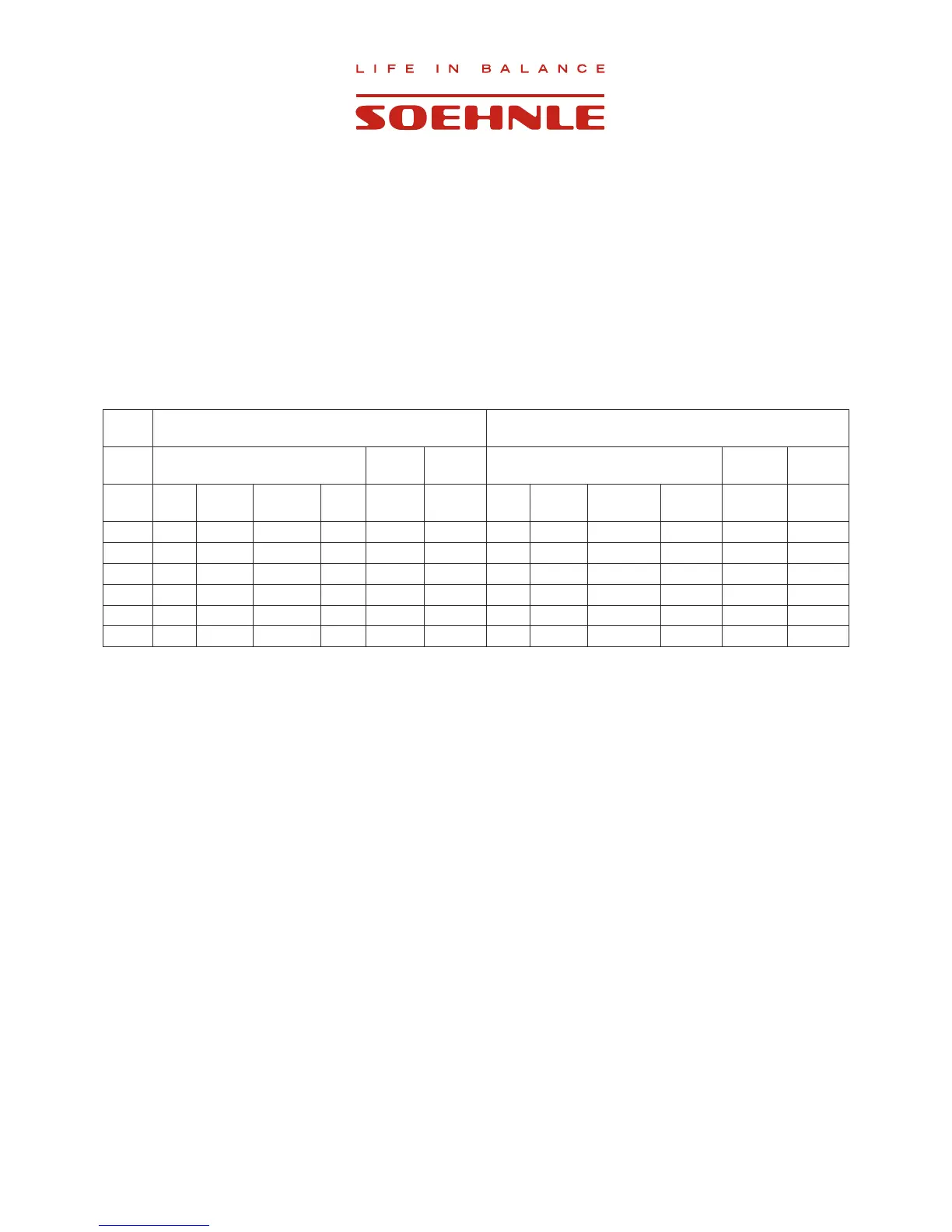
Values recommended by health experts
Men
Women
Age Body fat*
Body
water
Muscle
mass
Body fat*
Body
water
Muscle
mass
low normal
Above-
average
Very
high
normal normal low normal
Above-
average
Very
high
normal normal
16-18 < 8 8-18 18-24 > 24 > 58.5 > 38 < 15 15-25 25-33 > 33 > 52.5 > 28
18-30 < 8 8-18 18-24 > 24 > 57 > 38 < 20 20-29 29-36 > 36 > 49.5 > 28
30-40 < 11 11-20 20-26 > 26 > 56 > 38 < 22 22-31 31-38 > 38 > 47.5 > 28
40-50 < 13 13-22 22-28 > 28 > 55 > 38 < 24 24-33 33-40 > 40 > 46.5 > 28
50-60 < 15 15-24 24-30 > 30 > 54 > 38 < 26 26-35 35-42 > 42 > 46 > 28
60+ < 17 17-26 26-34 > 34 > 53 > 38 < 28 28-37 37-47 > 47 > 45 > 28
* Based on NIH/WHO BMI guidelines (US National Institute of Health/World Health Organization).
1.4 Bio Impedanz Analysis (BIA)
BIA is the common measurement method among Body Balance body analysis scales. This method does not
directly measure values like body fat, body water, and muscle mass but instead measures the electric resistance
(impedance) of the body.
The impedance measurement is performed by 4 electrodes located on the platform of the scale. This is done by
DKDUPOHVVZHDNHOHFWULFDOVLJQDOZKLFKLVVHQGWKURXJKWKHERG\P$7KHHOHFWULFFXUUHQWLVDEOHWRÀRZ
EHWWHUWKURXJKERG\ÀXLGVZDWHUZKLFKDUHFRQWDLQHGFKLHÀ\LQWKHPXVFOHVRIWKHKXPDQERG\WKDQWKURXJKERG\
fat. The higher the body‘s resistance against the electric signal, the higher the body fat content and the lower the
body water content. And vice-versa: the higher the muscle mass in percent, the higher the body water content in
percent and the lower the body fat content in percent.



 To Next Page