Need help?
Do you have a question about the Spectra 1728 and is the answer not in the manual?
Overview of system capabilities, including zone expandability, partitions, and remote controls.
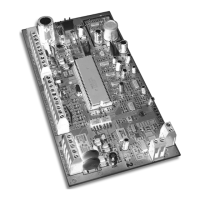
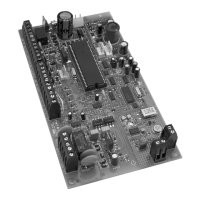
Technical details of control panels, wireless modules, and remote controls, including power, dimensions, and current consumption.
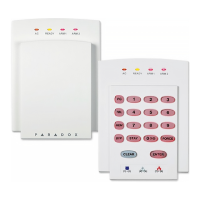
Information on various system components like keypads, wireless modules, and expansion modules.
Guidance on selecting an appropriate site for the control panel and ensuring proper ventilation and connections.
Details on connecting the AC power transformer and required specifications for transformer for system power.
Instructions for connecting and testing the 12VDC backup battery for maintaining power during AC loss.
Information on using auxiliary power terminals to power system accessories and understanding current limits and protection.
How to connect bells and sirens to the panel's bell output and understanding current limits and protection.
Connecting smoke detectors to the control panel, requiring EOL resistors for fire zones and defining fire alarm behavior.
Using Winload software for remote or on-site programming of Spectra control panels via computer interface.
Step-by-step guide to enter programming mode and use keypad for system configuration using section numbers.
Copying panel programming to and from a Paradox Memory Key for quick deployment and system replication.
The default installer code and how to change it for entering programming mode and system setup.
The default system master code and how to change it for system-wide access and programming user codes.
Defining user capabilities, arming methods (Regular, Stay, Force), and partition assignments for each user code.
Assigning definitions like Entry Delay, Follow, Instant, or Fire to each zone for specific system behavior and alarm response.
Assigning zones to either Partition 1 or Partition 2 for creating separate security system areas with independent control.
Configuring zone-specific features like Auto Zone Shutdown, Bypass Enable, and Stay Zone settings for enhanced control.
Preventing system arming if a battery failure or low voltage condition is detected, ensuring system readiness.
Preventing system arming if any tamper trouble conditions are present in the system, ensuring device integrity.
Programming the system to automatically arm at a specific time each day, simplifying daily arming routines.
Automatically arming the system if no movement is detected in a partition for a specified period, enhancing security.
Enabling detection of tamper switches or wire faults on zones and defining system response, including trouble reports.
Enabling or disabling the system's reporting and dialing capabilities to a central station for event notification.
Programming hexadecimal codes for various system events to be transmitted to the central station for identification.
Programming specific events that will trigger a PGM output to activate or deactivate, controlling external devices.
Enabling the partitioning feature to divide the system into two independent areas, Partition 1 and 2, for flexible security management.
Configuring how the control panel answers incoming calls from WinLoad software, including ring counts and answering machine override.
Setting a unique identifier for the control panel to match with the WinLoad software for communication authentication.
Setting a password for the PC to authenticate with the control panel for WinLoad communication, ensuring secure access.
Assigning 6-digit serial numbers of wireless transmitters to expansion inputs (zones) for system integration.
Enabling specific inputs on the Zone Expansion Module to be assigned as Expansion Inputs, increasing zone count.
Assigning User Access Codes to remote controls, granting them specific system permissions and access levels.
Programming individual buttons or combinations on remote controls to perform specific actions like arming or disarming.
How to view and interpret system trouble conditions displayed on the keypad, identifying potential issues.
Procedures for programming, changing, and deleting user access codes, managing system entry.
Steps for disarming the system or deactivating an alarm using a valid access code, including entry delay usage.
Standard method for arming all zones in a partition, including "READY" status and Exit Delay for user departure.
Arming the system while allowing users to remain in the protected area, bypassing certain zones for comfort and security.
Rapidly arming the system, allowing open zones (Force Zones) to be bypassed, useful for occupied areas.
 General
| Display Type | LCD |
|---|---|
| Operating Temperature | 0°C to 50°C (32°F to 122°F) |
| Storage Temperature | -20°C to 60°C (-4°F to 140°F) |
| Communication Ports | Ethernet, USB, RS-485 |
| Mounting | Panel mount |
| Certifications | CE, FCC |


 To Next Page