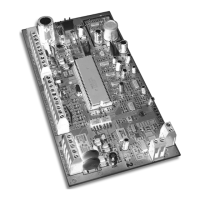
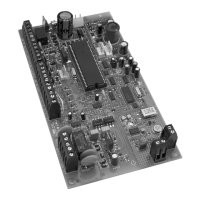
Need help?
Do you have a question about the Spectra 1728EX and is the answer not in the manual?
Details the comprehensive features of the Spectra control panels.
Provides technical specifications for Spectra control panels and accessories.
Guidance on selecting an appropriate site and mounting the control panel.
Instructions for proper grounding of the control panel for safety.
Details on connecting the AC power transformer and requirements.
Instructions for connecting and maintaining the backup battery.
Procedure for connecting the telephone line for communication.
How to connect bells, sirens, and other warning devices.
Instructions for installing keypads and connecting them to the panel.
Connecting single zone detection devices like motion detectors or door contacts.
Connecting the Liberator wireless bus module for wireless devices.
Connecting zone expansion modules for additional hardwired inputs.
Using Winload software for remote or on-site panel programming.
Step-by-step guide to entering programming mode via keypad.
Setting the length (4 or 6 digits) for access codes.
How to set or change the Installer Code for programming access.
How to set or change the System Master Code for system control.
Defining user code capabilities for arming, disarming, and PGM activation.
Defines zone types like Entry Delay, Instant, Fire, etc.
Assigning zones to Partition 1 or Partition 2.
Configuring zone-specific options like Auto Shutdown, Bypass, Stay.
Configuring the first entry delay timer for zones.
Defining 24Hr. Burglary, Fire, and Keyswitch zone types.
Assigning zones to partitions for system management.
Configuring zone-specific options: Auto Shutdown, Bypass, Stay.
Setting alarm responses: steady, pulsed, silent, or report only.
Restricting arming if the backup battery fails.
Restricting arming if a tamper condition exists.
Setting the exit delay period before arming.
Setting the duration for the bell or siren output after an alarm.
Defining how the system responds to tamper or wire faults.
Configuring panic alarm functions (Emergency, Auxiliary, Fire).
Enabling or disabling the reporting and dialing functions.
Programming hexadecimal codes for various system events.
Programming report codes for arming events.
Programming report codes for disarming events.
Programming central station and backup telephone numbers.
Selecting communication formats for central station reporting.
Determining which phone number reports will be sent to.
Programming events to activate PGMs.
Programming events to deactivate PGMs.
Enabling and configuring the system's partitioning feature.
Configuring how the panel answers incoming WinLoad calls.
Assigning wireless transmitters to expansion inputs/zones.
Enabling supervision for wireless transmitters.
Enabling zone inputs on the Zone Expansion Module.
Assigning user access codes to remote controls.
Programming specific actions for remote control buttons.
How to view and interpret system trouble conditions on keypads.
Procedure for programming user access codes.
Steps to disarm the system or deactivate an alarm.
How to perform regular arming of the system.
How to perform Stay Arming of the system.
How to perform Force Arming of the system.
Activating panic alarms for emergencies.
 General
| Brand | Spectra |
|---|---|
| Model | 1728EX |
| Category | Control Panel |
| Language | English |

 To Next Page